
Distracted Driving Myths That Give Drivers a False Sense of Safety

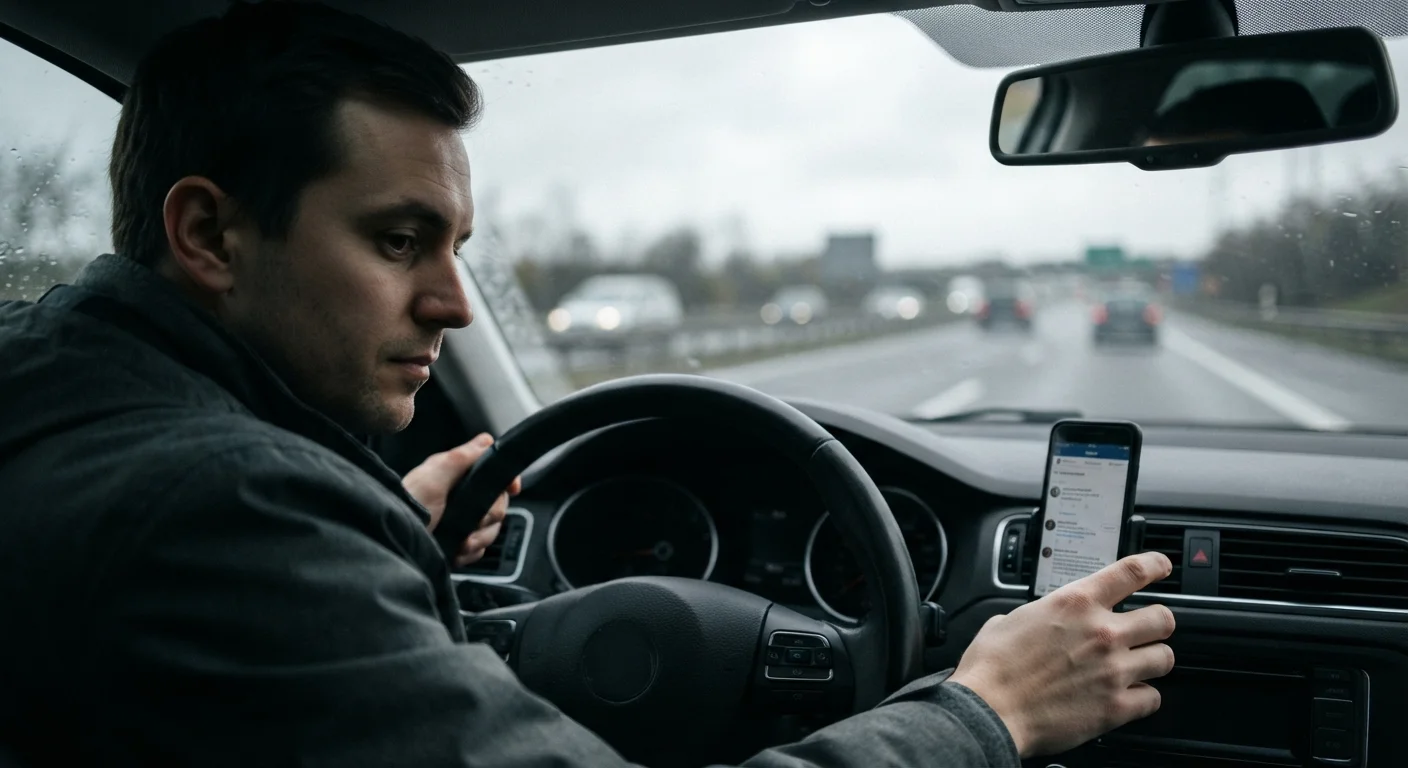
Photo: UltraSearches.com | Search Results You Can Trust editorial
Key Takeaways
- Hands-free phone calls are not cognitively safe - your brain is still significantly distracted.
- A quick glance away from the road at highway speed can cover the length of a football field.
- Multitasking while driving is a myth; the human brain switches tasks rather than handling them simultaneously.
- Familiarity with a route does not reduce the cognitive demands of driving.
- Voice-to-text features still take mental attention away from the road.
Why Distraction Myths Are Dangerous
Most drivers consider themselves safer than average - a statistical impossibility that points to a broader problem with self-assessment behind the wheel. When a behavior feels safe, people rarely scrutinize it. Distracted driving myths persist not because drivers are reckless, but because the risks are invisible until something goes wrong.
Understanding where these misconceptions come from - and what the evidence actually shows - is the first step toward genuinely safer habits. The myths below are among the most widespread, and each one creates a measurable gap between perceived and actual risk.
Distraction Kills - The Numbers Are Clear
The Most Common Myths, Corrected
The following myth-and-fact pairs cover the beliefs most likely to give drivers an unwarranted sense of safety. Pay particular attention to the explanations - the why behind each correction is what makes the information stick and translates into changed behavior on the road.
Myth
Using a hands-free device keeps me safe because my hands are on the wheel.
Fact
Hands-free calls reduce manual distraction but do not eliminate cognitive distraction - the mental load of conversation still degrades driving performance.
The wheel-grip argument sounds reasonable, but research consistently shows the conversation itself is the problem. Studies by the AAA Foundation for Traffic Safety found that hands-free phone calls produce a moderate to high level of cognitive distraction. Drivers can miss seeing up to 50% of what's in their visual field - a phenomenon called inattention blindness - even while technically looking ahead. Reaction times slow, lane-keeping suffers, and hazard detection drops. Holding a phone is illegal in many states; conducting a complex conversation while driving is still risky regardless of how you hold the device.
Myth
A quick glance at my phone only takes a second - that's not enough time for anything to go wrong.
Fact
At 55 mph, a 5-second glance means your vehicle travels roughly the length of a football field without your eyes on the road.
Speed transforms brief inattention into serious danger. Five seconds feels inconsequential in everyday life, but on the highway it equates to approximately 400 feet of unsupervised travel. Hazards - a braking car, a pedestrian stepping off a curb, a debris field - can appear and become unavoidable in that window. The NHTSA identifies sending or reading a text as one of the most dangerous distracted-driving behaviors precisely because of this distance problem. See our guide to highway hazards for more on how speed changes risk calculations.
Myth
I'm good at multitasking, so driving while doing other things is fine for me.
Fact
True simultaneous multitasking is not how the human brain works - it rapidly switches between tasks, leaving gaps in attention each time.
The concept of multitasking is largely a cognitive illusion. Neuroscience research indicates the brain serializes competing tasks rather than running them in parallel, incurring a switching cost each time attention shifts. For driving, those gaps - however brief - are when crashes happen. Drivers who consider themselves skilled multitaskers often demonstrate worse performance in driving simulations precisely because overconfidence leads them to take on more concurrent tasks. Defensive driving techniques are built on the opposite principle: full, sustained attention to the road environment.
Myth
I know this road by heart, so I don't need to concentrate as hard.
Fact
Route familiarity can increase complacency and actually reduce vigilance for unexpected hazards that don't follow the usual pattern.
Familiarity breeds a kind of autopilot mindset. Drivers on well-known routes tend to allocate less conscious attention to the road, which means they respond more slowly when something unexpected occurs - a child darting out, a new pothole, a vehicle stopped at an unusual location. Traffic safety researchers refer to this as habituation: the brain filters out what it expects to see and can fail to register what it doesn't expect. Most crashes occur within a few miles of home, partly because this is where familiarity-driven complacency peaks.
Myth
Eating or drinking while driving is fine as long as I keep at least one hand on the wheel.
Fact
Eating while driving is a manual, visual, and cognitive distraction combined - one of the more hazardous in-vehicle behaviors.
Food and beverages require hand removal, occasional glances away from the road, and mental attention to avoid spills. When a spill does occur, the startle response often produces sudden, uncontrolled steering movements. A study by Lytx (a fleet safety technology firm) found that eating behind the wheel nearly doubles the risk of a near-miss event. The distraction is compounded because drivers rarely perceive eating as risky - unlike phone use, it carries no social stigma or legal penalty in most states, so the habit goes unchecked.
Myth
Modern driver assistance systems mean I can pay less attention - the car will catch my mistakes.
Fact
Driver assistance features are designed to supplement attention, not replace it. All current systems require an alert, engaged driver to function safely.
Lane-keeping assist, automatic emergency braking, and adaptive cruise control reduce certain crash types under specific conditions, but they have documented limitations: poor weather, faded lane markings, unexpected objects, and complex intersections can all degrade their performance. Over-reliance on these features - sometimes called automation complacency - is an emerging safety concern. See our analysis of driving assistance technology limits for a detailed breakdown of what these systems can and cannot do.
Voice-to-Text Is Not a Safe Alternative
If you're also curious how similar myth-driven thinking affects vehicle costs, our piece on car maintenance myths shows how misplaced confidence costs drivers money as well as safety.
Building Habits That Reflect the Real Risks
Knowing the facts matters less than acting on them consistently. A few practical habit shifts reduce distraction without significantly impacting convenience:
- Set your GPS before moving. Program your destination while parked. If you need to change a route mid-trip, pull over.
- Put the phone in do-not-disturb mode. Most smartphones offer a driving mode that silences notifications automatically. Use it every trip, not just long ones.
- Prepare food and drinks before driving. Eat before you get in the car or wait until you've arrived. Coffee lids and travel containers reduce but do not eliminate spill risk.
- Treat every road as unfamiliar. Actively scanning for hazards on your regular commute counters the complacency that familiarity produces.
New and experienced drivers alike benefit from revisiting these fundamentals. Our foundational road safety guide covers how to build these habits early - and why they compound over a lifetime of driving.
3,308
Distracted driving fatalities in one year
According to the National Highway Traffic Safety Administration (NHTSA), distracted driving killed 3,308 people in a single reported year in the United States.
~400 ft
Distance traveled in a 5-second glance at 55 mph
The NHTSA uses this figure to illustrate how briefly looking away at highway speeds covers the length of a full football field without eyes on the road.
2x
Increased near-miss risk while eating behind the wheel
Fleet safety firm Lytx found that eating while driving nearly doubles the likelihood of a near-miss event compared to undistracted driving.
This article provides general road safety information for educational purposes. Always follow your state's traffic laws and consult qualified driving safety resources for guidance specific to your situation.
The content on this site is for informational purposes only and is not a substitute for professional advice. Always consult a qualified professional for guidance specific to your situation.