
What a Nutrition Label Is Actually Telling You

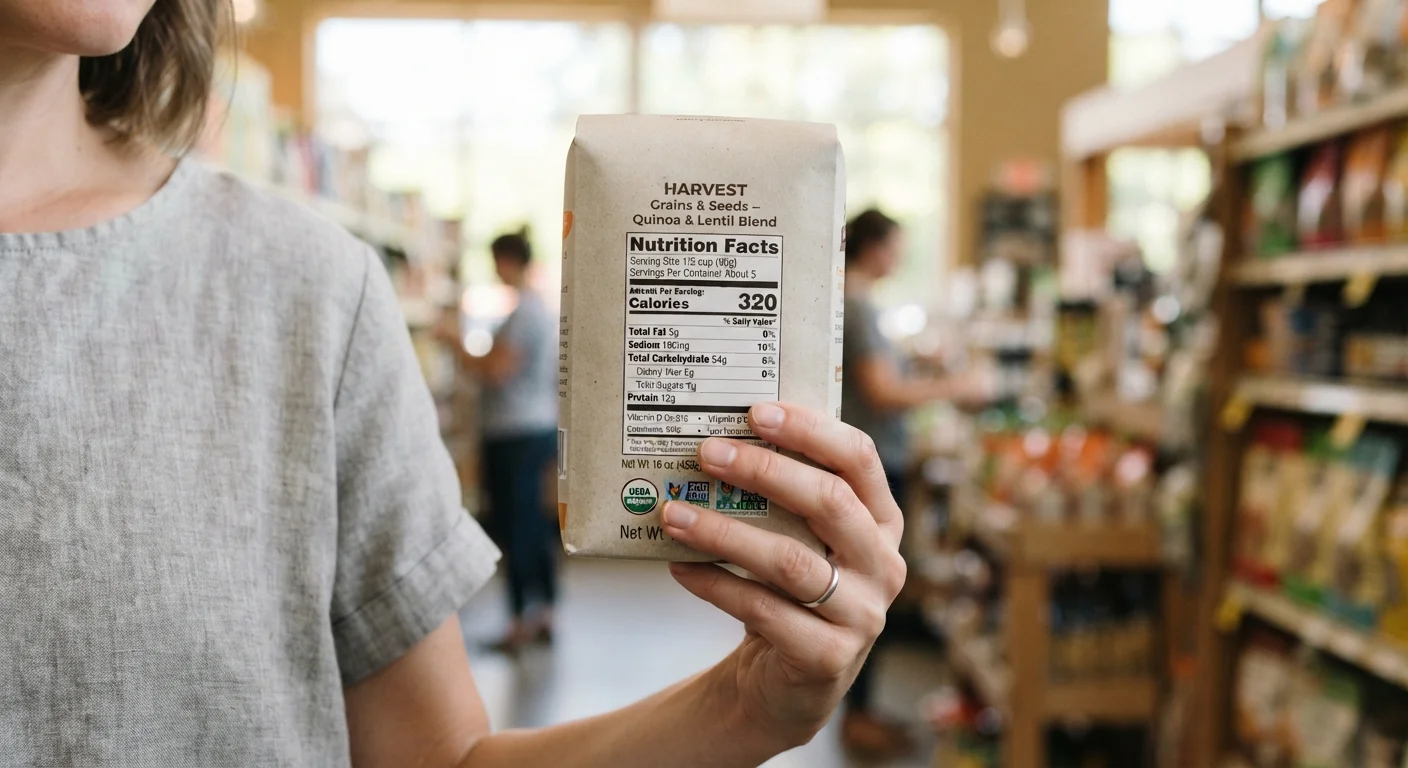
Photo: UltraSearches.com | Search Results You Can Trust editorial
Key Takeaways
- Serving size on a label reflects a reference amount, not a recommended portion for you personally.
- The % Daily Value (%DV) is based on a 2,000-calorie reference diet and helps you gauge nutrient density.
- Added sugars are now listed separately from total sugars, making it easier to spot heavily sweetened products.
- Ingredients are listed in descending order by weight - the first few ingredients make up the bulk of the food.
- Labels are a tool for comparison, not a strict prescription for how you must eat.
Start With Serving Size - It Changes Everything
The first thing to look at on any nutrition label isn't calories - it's the serving size. Every number on the label refers to that specific amount, not the whole package. If a bag of chips lists one serving as 15 chips but you eat 30, every value on that label doubles for your actual intake.
The FDA updated serving size standards so they better reflect how much people realistically eat. A bottle of soda that's clearly meant to be consumed in one sitting, for instance, must now be labeled as a single serving rather than split into two. Still, always check the servings per container line - many seemingly single-serve packages contain two or more servings.
Check the Container Before You Calculate
Calories and Macronutrients: What the Numbers Represent
Calories measure the energy a food provides. The label breaks this down further into the three macronutrients - fat, carbohydrates, and protein - each of which plays a distinct role in the body. For a plain-language explanation of how your body uses each one, see our guide on protein, carbs, and fat.
Under total fat, the label distinguishes between saturated fat and trans fat. Saturated fat should be moderated according to most dietary guidelines; artificial trans fats are largely banned in the U.S. food supply. Carbohydrates are broken into dietary fiber and total sugars - with added sugars now their own separate line. Fiber is a nutrient most Americans under-consume, so it's worth paying attention to. A %DV of 20% or more for fiber per serving indicates a notably fiber-rich food.
70%
Americans who consume too much sodium
According to the CDC, approximately 70% of Americans consume more sodium than the recommended daily limit, making the sodium row one of the most actionable parts of the label.
17 tsp
Average daily added sugar intake in U.S.
The CDC has reported that U.S. adults consume roughly 17 teaspoons of added sugars per day on average, well above the American Heart Association's general guidance.
95%
Americans falling short on dietary fiber
Research published in the American Journal of Lifestyle Medicine found that only about 5% of Americans meet recommended fiber intake, highlighting fiber as a key nutrient to watch on labels.
Understanding % Daily Value
The right-hand column of numbers - the % Daily Value (%DV) - is one of the most useful but frequently misunderstood parts of the label. It tells you what percentage of a day's worth of a given nutrient one serving provides, based on a 2,000-calorie reference diet. Your individual needs may vary based on age, activity level, health status, and other factors.
A quick rule of thumb: 5% DV or less is low; 20% DV or more is high. Apply this to nutrients you want to limit (saturated fat, sodium, added sugars) as well as those you want to get enough of (fiber, vitamin D, calcium, iron, potassium). When comparing two similar products, the %DV column makes side-by-side analysis straightforward.
The 2,000-Calorie Reference Is a Baseline
The Ingredients List: Reading Between the Lines
The ingredients list sits beneath the Nutrition Facts panel and deserves equal attention. Ingredients are ordered by weight - the first listed are present in the largest amounts. If the first two or three ingredients are refined grains, sweeteners, or oils, that food's nutritional foundation is built on those components.
Watch for multiple names for the same ingredient. Added sugars, for example, can appear as cane juice, dextrose, maltose, high-fructose corn syrup, agave nectar, and more. Seeing several of these spread through the list is a sign of a high added-sugar product even if no single one appears near the top. For context on where packaged foods fall on the broader spectrum of processing, our article on whole foods vs. processed foods offers a useful framework.
Using Labels as a Tool, Not a Rulebook
Nutrition labels are designed for comparison and general awareness - not as a prescription for how you must eat at every meal. They work best when used to notice patterns: consistently high sodium across the packaged foods you buy, or low fiber in foods you eat frequently. If you're looking for practical ways to structure meals without obsessive tracking, our piece on building a balanced plate without counting every calorie complements label-reading well.
No single food defines a diet. A label showing high saturated fat doesn't make a food off-limits - context, overall diet quality, and personal health goals all matter. Use the label as one informed input among several, and consider speaking with a registered dietitian if you have specific health conditions or dietary goals that need personalized guidance.
This article is for general informational and educational purposes only and is not a substitute for professional medical or dietary advice. Consult a qualified healthcare provider or registered dietitian for guidance tailored to your individual health needs.
Frequently Asked Questions
The content on this site is for informational purposes only and is not a substitute for professional advice. Always consult a qualified professional for guidance specific to your situation.