
Whole Foods vs. Processed Foods: Understanding the Spectrum

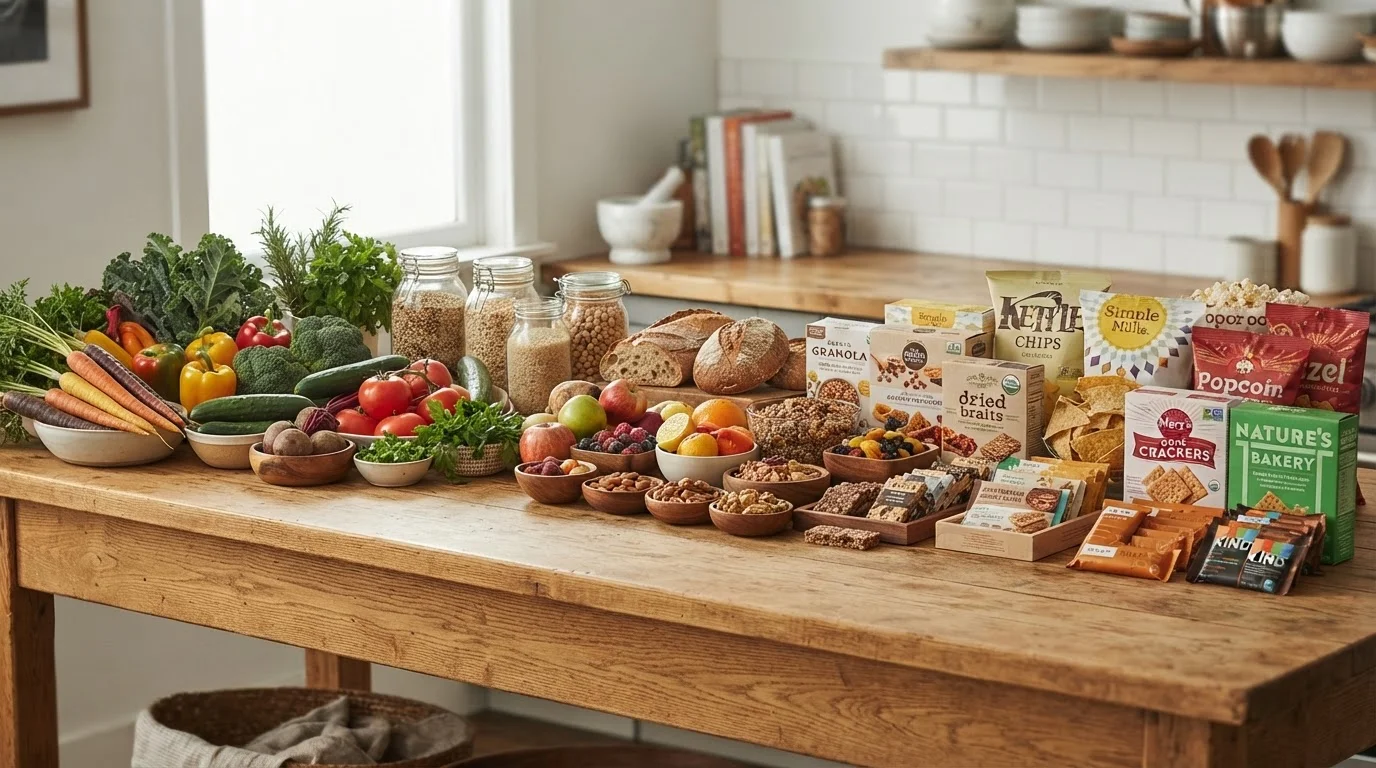
Photo: UltraSearches.com | Search Results You Can Trust editorial
Key Takeaways
- Food processing exists on a continuum, from minimal changes like washing to extensive reformulation with additives.
- Not all processed foods are nutritionally poor - canned beans and plain yogurt count as processed foods.
- Ultra-processed foods, defined by the NOVA classification, are most strongly linked to adverse health outcomes.
- Whole foods generally deliver more fiber, vitamins, and minerals per calorie than heavily processed alternatives.
- Practical eating habits blend both categories - the goal is informed balance, not rigid elimination.
What Do These Terms Actually Mean?
The phrase "processed food" often triggers an immediate negative reaction, but that reaction can lead to oversimplified decisions. In nutritional science, food processing refers to any deliberate change made to food before it reaches the consumer - which includes washing, freezing, fermenting, canning, and adding preservatives alike.
A whole food, by contrast, is generally understood as a food that is consumed in a form close to how it appears in nature - a raw apple, a handful of oats, or a piece of fresh fish. These foods undergo little to no modification between harvest and plate.
The most widely used scientific framework for sorting processed foods is the NOVA classification system, developed by researchers at the University of São Paulo. NOVA divides foods into four groups: unprocessed or minimally processed foods, processed culinary ingredients (like oils and flour), processed foods (such as canned tomatoes or cheese), and ultra-processed foods (such as packaged snack cakes or flavored chips). This spectrum view is far more useful than a simple binary.
Understanding where a food falls on this spectrum - rather than relying on vague labels like "natural" or "clean" - is what equips consumers to make genuinely informed choices. See our guide to reading nutrition labels for help translating what's on the package.
How They Compare: Processing Level, Nutrients, and Practical Use
When comparing whole foods and processed foods, the most important variable is degree of processing. Minimally processed foods - frozen peas, plain canned beans, pasteurized milk - retain most of their original nutritional profile. Ultra-processed foods, however, are typically engineered for palatability and shelf life, often at the cost of fiber, vitamins, and mineral content.
| Criterion | Whole Foods | Processed Foods |
|---|---|---|
| Definition | Unaltered or minimally changed from natural state | Any food modified before consumption - wide range |
| Fiber content | Typically high; structure intact | Often reduced, especially in ultra-processed products |
| Added sugar | None; only naturally occurring sugars | Frequently added, especially in ultra-processed foods |
| Sodium level | Naturally very low | Can be high; varies by product and processing level |
| Shelf life | Short; requires refrigeration or timely use | Extended; preservatives and packaging help |
| Convenience | Requires more preparation time | Often ready-to-eat or quick to prepare |
| Cost | Varies; fresh produce can be expensive seasonally | Often lower cost; shelf-stable options are affordable |
| Nutrient density | Generally high per calorie | Highly variable; minimally processed can be excellent |
Research published in journals including the British Medical Journal has found associations between higher ultra-processed food consumption and increased risk of cardiovascular disease, obesity, and type 2 diabetes. However, it's important to note that most of this evidence is observational - it shows correlation, not confirmed causation - and dietary patterns as a whole matter more than any single food category.
Whole foods, meanwhile, are rich in dietary fiber, phytonutrients, and micronutrients that support digestive health, immune function, and metabolic regulation. If you're curious about specific nutrient gaps, our overview of dietary fiber explains why most Americans fall short and which everyday foods can help.
57%
Share of U.S. calories from ultra-processed foods
A study published in BMJ Open estimated that ultra-processed foods account for more than half of daily caloric intake in the average American diet.
~95%
Americans falling short of fiber recommendations
The Dietary Guidelines for Americans identifies dietary fiber as a nutrient of public health concern, with most adults consuming well below recommended amounts.
4 groups
NOVA food classification categories
The NOVA system, developed by University of São Paulo researchers, organizes foods by degree and purpose of processing rather than by nutrient content alone.
Building a Practical Approach Without Going to Extremes
Eliminating all processed foods from your diet is neither realistic nor necessary for good health. The goal is a predominantly whole-food dietary pattern that strategically incorporates processed options where they genuinely serve you - in terms of convenience, cost, or food access.
A few practical principles that align with mainstream dietary guidance:
- Use minimally processed foods as defaults: Canned fish, plain yogurt, frozen vegetables, and rolled oats are processed but nutritionally strong choices.
- Reserve ultra-processed foods for occasional use: The concern isn't a single serving - it's a dietary pattern dominated by these foods over time.
- Read labels with intent: Ingredient lists reveal processing level far better than front-of-package claims. Our guide to hidden added sugars shows how deceptive ingredient lists can be.
- Consider the whole meal context: A minimally processed grain served with vegetables and lean protein is a nutritionally sound meal even if the grain was packaged.
The 'Natural' Label Doesn't Signal Processing Level
No single food defines your diet. Sustainable, health-supporting eating is built on patterns - not perfect individual choices. If you have specific health conditions, dietary restrictions, or concerns about what's right for your situation, consulting a registered dietitian or your healthcare provider is the most reliable next step.
This article is for general informational and educational purposes only and is not a substitute for personalized medical or nutritional advice. Always consult a qualified healthcare professional before making significant changes to your diet.
The content on this site is for informational purposes only and is not a substitute for professional advice. Always consult a qualified professional for guidance specific to your situation.