
Appliance Lifespan Reference Guide: How Long Should Each One Last?

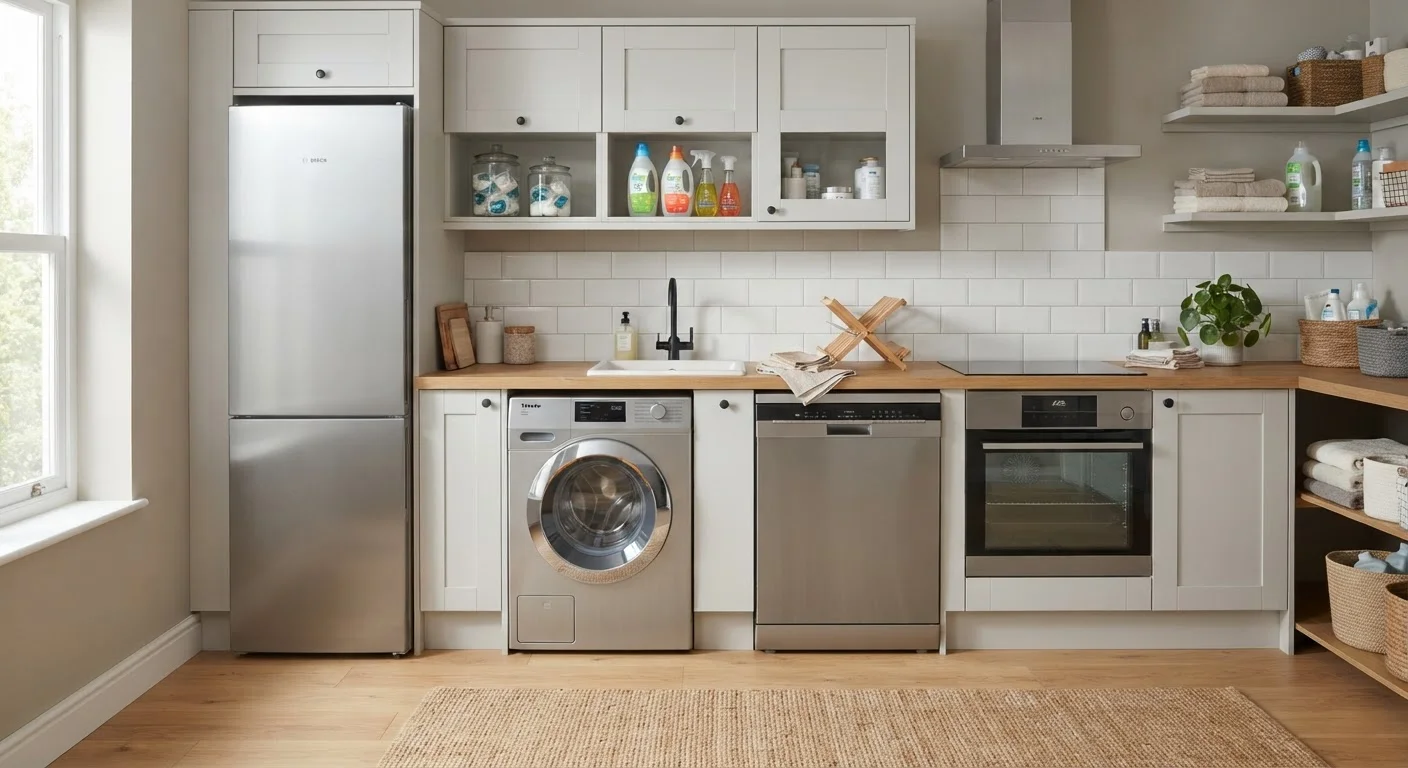
Photo: UltraSearches.com | Search Results You Can Trust editorial
Average Lifespans at a Glance
Understanding how long a typical appliance is designed to last can help you decide whether a repair bill is worth paying - or whether replacement makes more practical sense. The figures below reflect industry consensus drawn from sources such as the National Association of Home Builders and appliance repair industry data. Actual longevity varies based on usage intensity, maintenance habits, water quality, and installation conditions.
A few patterns are worth noting. Simpler appliances with fewer moving parts - ranges, wall ovens, chest freezers - tend to outlast machines with complex mechanical and electronic systems. High-efficiency models often pack in more sensors and components, which can introduce additional failure points over time, though they typically offset this through lower operating costs. For a fuller picture of how age and usage patterns shape energy draw, see everything that affects an appliance's energy consumption.
Key Terms and Factors That Affect Longevity
Lifespan estimates are averages, not guarantees. Several variables push appliances toward the shorter or longer end of their expected range.
Expected Lifespan
The average number of years an appliance type is designed to remain in reliable working condition under normal household use. This is a statistical midpoint, not a guarantee for any individual unit.
Compressor
The component in refrigerators and air conditioners that circulates refrigerant to maintain temperature. Compressor failure is one of the most expensive repairs and often signals end-of-life for the appliance.
Hard Water
Water with a high concentration of dissolved minerals, primarily calcium and magnesium. Over time, hard water leaves mineral deposits inside washers, dishwashers, and water heaters, reducing efficiency and accelerating wear.
Condenser Coils
Heat-exchange coils on the back or underside of a refrigerator that release heat into the surrounding air. Dust buildup on coils forces the compressor to work harder and shortens the appliance's lifespan if not cleaned periodically.
Door Gasket
The flexible rubber seal running around the perimeter of a refrigerator, oven, or dishwasher door. A worn or cracked gasket allows air or heat to escape, increasing energy consumption and stressing the appliance.
Planned Obsolescence
A product design or manufacturing approach where a product is intended to become outdated or fail within a certain period. Though debated in appliance contexts, it is worth distinguishing from genuine engineering trade-offs in complex machines.
Usage frequency is one of the most significant factors. A dishwasher run twice daily in a large household will accumulate wear far faster than one used a few times a week. Similarly, a refrigerator in a hot garage works its compressor harder than one in a climate-controlled kitchen. Water quality matters for washers, dishwashers, and ice makers - hard water accelerates mineral buildup on internal components and seals.
Maintenance consistency is the variable most directly in a homeowner's control. Cleaning condenser coils, replacing water filters, clearing dryer lint traps, and checking door gaskets regularly can meaningfully extend useful life. For a structured approach, the appliance maintenance checklist covers the key tasks by appliance type.
Installation Quality Also Plays a Role
Repair vs. Replace: Using Lifespan Data Practically
A commonly cited rule of thumb in the repair industry is the "50 percent rule": if a repair costs more than half the price of a comparable new unit, and the appliance has already passed the midpoint of its expected lifespan, replacement often makes more financial sense. This is a general heuristic, not a formula - factors like parts availability, energy efficiency improvements, and your household's specific needs all influence the calculus.
~9 years
Median age of replaced dishwashers
Industry repair data suggests many dishwashers are replaced before their potential end-of-life, often due to a single component failure.
50%
Repair-cost threshold often cited by technicians
When a repair estimate exceeds roughly half the cost of a comparable new appliance, replacement frequently becomes the more economical choice, especially past mid-lifespan.
15-20 years
Typical lifespan of a chest freezer
Chest freezers are among the longest-lasting home appliances due to their simple sealed design and fewer moving parts, per National Association of Home Builders data.
Warranty status is another useful signal. Most manufacturer warranties cover parts and labor for the first year; some extend compressor or motor coverage longer. Knowing where your appliance sits in its lifespan helps you evaluate whether an extended service plan offers real value. Our overview of appliance warranty coverage explains what standard plans typically include and exclude.
If you're furnishing a home for the first time and thinking through these decisions from the start, what new homeowners should know before stocking a kitchen offers grounded guidance on sizing, compatibility, and avoiding common early mistakes.
This article provides general consumer information for educational purposes only. Actual appliance lifespan varies by product, usage, and maintenance. Consult a qualified appliance technician for diagnosis or repair recommendations specific to your situation.
The content on this site is for informational purposes only and is not a substitute for professional advice. Always consult a qualified professional for guidance specific to your situation.