
Induction Cooking: How It Works and Whether It Suits Your Kitchen

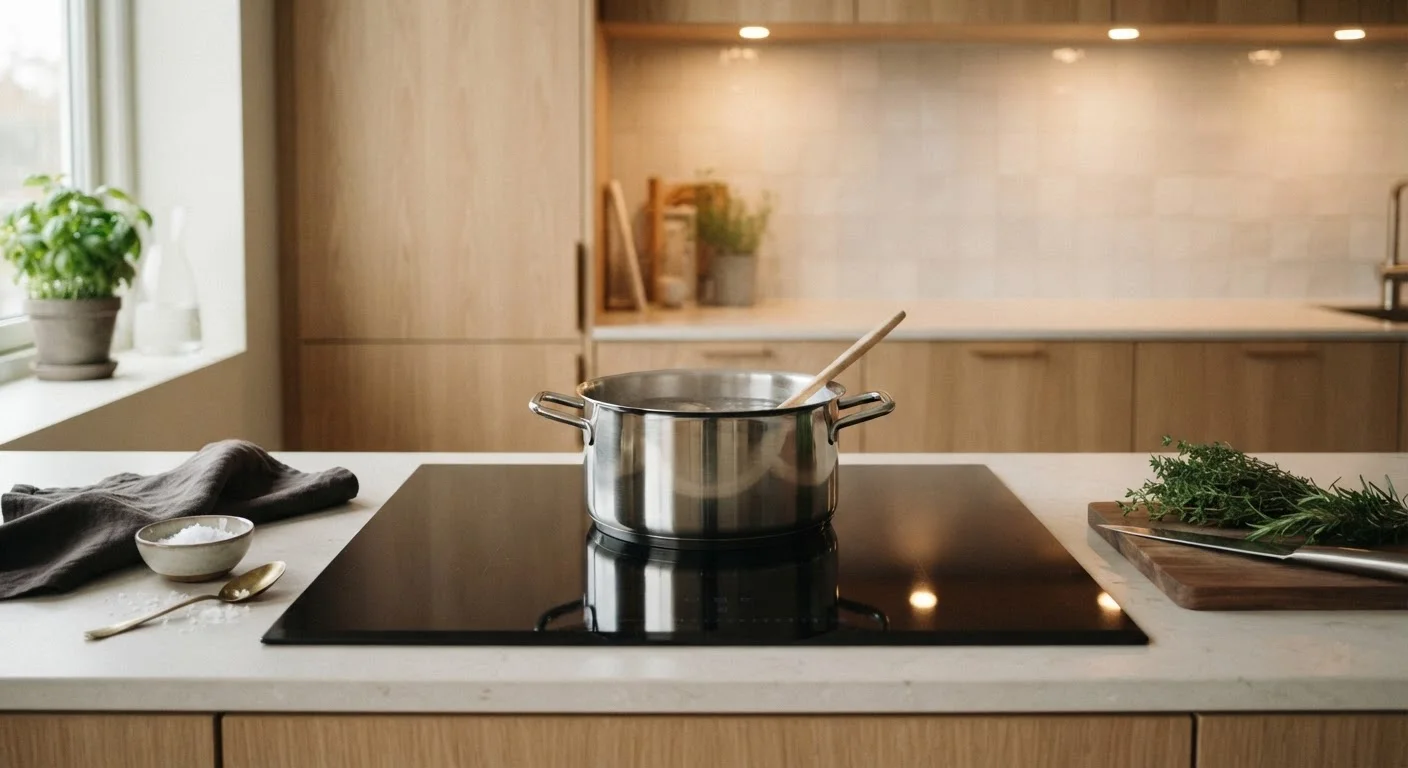
Photo: UltraSearches.com | Search Results You Can Trust editorial
Key Takeaways
- Induction cooktops heat cookware directly through electromagnetic energy, not a traditional flame or hot coil.
- Only cookware with a ferromagnetic base - such as cast iron or magnetic stainless steel - works on induction surfaces.
- Induction is generally more energy-efficient than gas or electric coil cooking because less heat is lost to the surrounding air.
- The cooktop surface stays cooler than gas or radiant-electric models, reducing certain burn risks.
- Installation requires a 240-volt electrical circuit, which may need an upgrade in older homes.
- Cookware compatibility and upfront cost are the two most common practical barriers to switching.
The Science Behind the Heat
Traditional gas burners combust fuel to create a flame; electric coil and radiant-glass cooktops pass current through a resistive element that glows hot. Both methods heat the air and the cookware surface together - which is why you can scorch a kitchen towel left near a hot burner.
Induction skips that intermediate step entirely. Beneath the ceramic glass surface sits a copper coil. When the cooktop is switched on, alternating current flows through the coil and creates a rapidly oscillating magnetic field above the surface. Place a ferromagnetic pan in that field and eddy currents form within the metal base, generating heat inside the cookware itself. Remove the pan and the field has nothing to act on - the surface stops producing meaningful heat almost immediately.
This direct energy transfer is why induction is measurably more efficient. The U.S. Department of Energy has noted that induction cooking can transfer roughly 85-90% of energy to food, compared to approximately 74% for smooth-top electric and around 40% for gas. Less wasted energy generally means lower operating costs over time, though actual savings depend on local electricity and gas rates.
~85-90%
Energy transferred to food via induction
The U.S. Department of Energy has cited induction cooking as significantly more efficient than gas or traditional electric coil methods.
~40%
Energy efficiency of a typical gas burner
A substantial share of gas combustion energy heats the surrounding air rather than the cookware, contributing to higher energy use per meal.
Cookware Compatibility: The Non-Negotiable Requirement
The single biggest practical constraint of induction is cookware. Because the technology depends on a magnetic field interacting with the pan, only materials that respond to magnetism will work.
- Compatible: Cast iron, enameled cast iron, magnetic stainless steel
- Not compatible: Aluminum, copper, glass, and ceramic - unless the manufacturer has bonded a magnetic base layer to the bottom
The quick test: press a refrigerator magnet to the base of the pan. A strong, consistent grip means it will work. A weak pull or no attraction at all means it will not. Many households already own at least some induction-ready pieces without realizing it, so an audit of existing cookware is a sensible first step before assuming a full replacement is needed.
Audit Your Cookware Before You Buy
Practical Trade-Offs to Weigh Before Switching
Induction has genuine advantages, but it isn't the right fit for every kitchen or cooking style. Consider the following factors honestly.
Upfront Cost
Induction cooktops and ranges typically carry higher purchase prices than equivalent gas or standard electric models. The gap has narrowed as the technology has matured, but it remains a real consideration - especially when cookware replacement is factored in.
Electrical Infrastructure
Full-size induction units require a 240-volt dedicated circuit. In older homes or apartments that currently have gas, this may require an electrician to run new wiring - an additional cost that varies widely by home layout and local labor rates. See our guide for new homeowners stocking a kitchen for a broader look at installation considerations.
Learning Curve
Induction responds almost instantly - both speeding up and slowing down - which cooks accustomed to gas often appreciate, but those used to radiant electric may find the precision unfamiliar at first. Temperature control is generally more exact, but it rewards attentiveness.
Noise
Some induction units produce a faint hum or clicking sound, particularly at high power levels or with certain pan types. This is normal and not a sign of malfunction, but it can be noticeable in quiet kitchens.
For a side-by-side look at how induction stacks up against its main alternatives, see Gas Range vs. Electric Range: Understanding the Real Trade-Offs.
Ventilation Still Matters With Induction
Is Induction Right for Your Kitchen?
Induction makes the most sense for households that already use - or are open to investing in - compatible cookware, have or can install the necessary electrical infrastructure, and value precision temperature control and faster response times. It also tends to be easier to clean, since spills don't bake onto a surface that isn't itself blazing hot.
It's a harder case for renters who can't modify electrical panels, cooks with a significant collection of non-magnetic cookware they aren't ready to replace, or households where a gas line is already present and cost recovery over time is a priority.
Portable single-burner induction units offer a low-commitment way to test the technology before committing to a full range - they run on a standard 120-volt outlet and are widely available at modest price points. This can be a practical way to evaluate whether the cooking style suits you without a major financial decision. Be aware of common appliance misconceptions that may color your expectations either way.
Frequently Asked Questions
The content on this site is for informational purposes only and is not a substitute for professional advice. Always consult a qualified professional for guidance specific to your situation.