
Spreadsheet vs. Budgeting App: Which Format Actually Fits Your Habits?

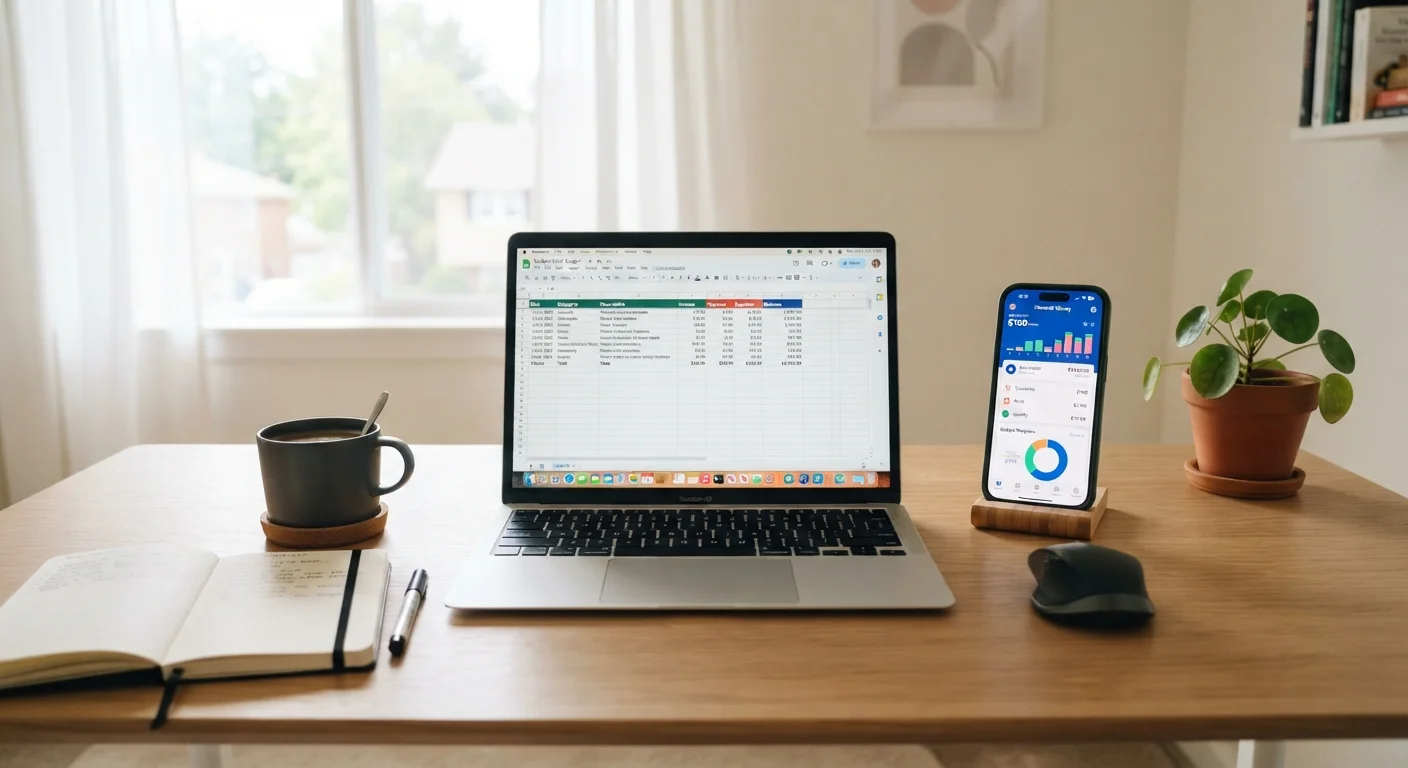
Photo: UltraSearches.com | Search Results You Can Trust editorial
Key Takeaways
- Spreadsheets offer maximum flexibility but require consistent manual upkeep to stay accurate.
- Budgeting apps automate transaction tracking but vary widely in privacy practices and cost.
- The format that fits your existing habits is more likely to produce lasting results.
- Neither tool guarantees success - the discipline behind the tool is what counts.
- Trying both formats briefly before committing can reveal which one you'll actually maintain.
What You're Really Choosing Between
Choosing between a spreadsheet and a budgeting app isn't really about technology - it's about which format matches how you already think and behave. If you open a spreadsheet and feel in control, that's meaningful data. If you've downloaded a budgeting app three times and deleted it each time, that's also meaningful data.
Both formats can help you build a clear picture of income versus spending. The difference lies in who does the work and how much structure comes pre-built. Spreadsheets are blank canvases; apps are furnished apartments. Neither is inherently better - but one will likely suit your rhythms more naturally.
If you're starting from zero, our plain-English guide to your first budget walks through the basics before you pick any tool at all.
| Criterion | Spreadsheet | Budgeting App |
|---|---|---|
| Setup time | Higher - build from scratch | Lower - guided onboarding |
| Customization | Unlimited flexibility | Limited by platform design |
| Transaction entry | Manual logging required | Auto-syncs with bank accounts |
| Cost | Free to low-cost | Often subscription-based |
| Privacy | Data stays local or in your cloud | Bank credentials shared with third party |
| Visual reporting | Manual charts or pivot tables | Built-in dashboards and alerts |
| Best habit match | Consistent, detail-oriented planners | Busy users who prefer automation |
The Case for Spreadsheets
A well-built spreadsheet gives you complete ownership over every category, formula, and layout. You can model irregular income, track multiple savings goals in parallel, or build a debt payoff tracker alongside your monthly budget - all in one file. There's no subscription fee for a basic tool like Google Sheets or Excel, and your data stays where you put it.
The trade-off is real, though: spreadsheets require manual data entry. Transactions don't appear automatically. If you miss a week of logging, reconciling becomes a chore, and many people abandon the system quietly rather than catch up. Spreadsheet budgeting rewards consistency; it penalizes gaps.
People who tend to thrive with spreadsheets often describe themselves as planners who find the act of entering numbers calming or satisfying. The manual process can actually reinforce awareness of spending - typing in a $60 impulse purchase feels different than watching it auto-categorize in an app.
~33%
Americans who follow a formal written budget
Surveys by Gallup and others have consistently found fewer than one in three Americans maintain a detailed written or tracked budget.
1 in 4
Adults using a personal finance app regularly
A 2023 survey by the American Bankers Association found roughly a quarter of U.S. adults use a financial management app at least monthly.
The Case for Budgeting Apps
Budgeting apps reduce friction by connecting directly to your financial accounts and categorizing transactions automatically. This means your budget reflects reality in near real-time rather than relying on you to remember and enter every purchase. For people with busy schedules or irregular spending patterns, that automation can be the difference between a budget that works and one that gets abandoned by February.
Apps also tend to offer visual dashboards - spending breakdowns by category, trend lines over months, and alerts when you approach a category limit. These features can make patterns visible that might be invisible in a row of numbers.
The limitations are worth naming honestly. Many capable apps carry monthly or annual subscription fees. Linking bank credentials to a third-party platform raises legitimate privacy and security questions that each reader should evaluate for themselves. And pre-set categories don't always match real life - renaming or restructuring them can feel clunky on some platforms.
For a complementary perspective, see how envelope budgeting has been adapted for digital use - it's a useful middle ground some people prefer.
How to Pick the One You'll Actually Use
The most sophisticated budgeting system in the world won't help if you stop using it after three weeks. Research in behavioral finance broadly supports the idea that the consistency of a habit matters more than the precision of the tool. A simple spreadsheet you open every Sunday will outperform a feature-rich app you check once a month.
A few honest questions to ask yourself:
- Do you enjoy working in spreadsheets for other things, or do you avoid them?
- Are you comfortable linking bank accounts to a third-party service?
- Do you want to build your own structure, or do you want guardrails already in place?
- Will you realistically enter transactions manually, or will that feel like homework?
If you're unsure, try both for two weeks each before committing. The format that creates less dread - or more satisfaction - is probably your answer. For more on building habits that last beyond the initial motivation surge, see budgeting habits that hold up over time.
Hybrid Approaches Are Also Valid
This article is for general informational purposes only and does not constitute personalized financial advice. For guidance specific to your financial situation, consider consulting a licensed financial professional.
The content on this site is for informational purposes only and is not a substitute for professional advice. Always consult a qualified professional for guidance specific to your situation.