
Tracking Your Spending: Methods That Actually Stick

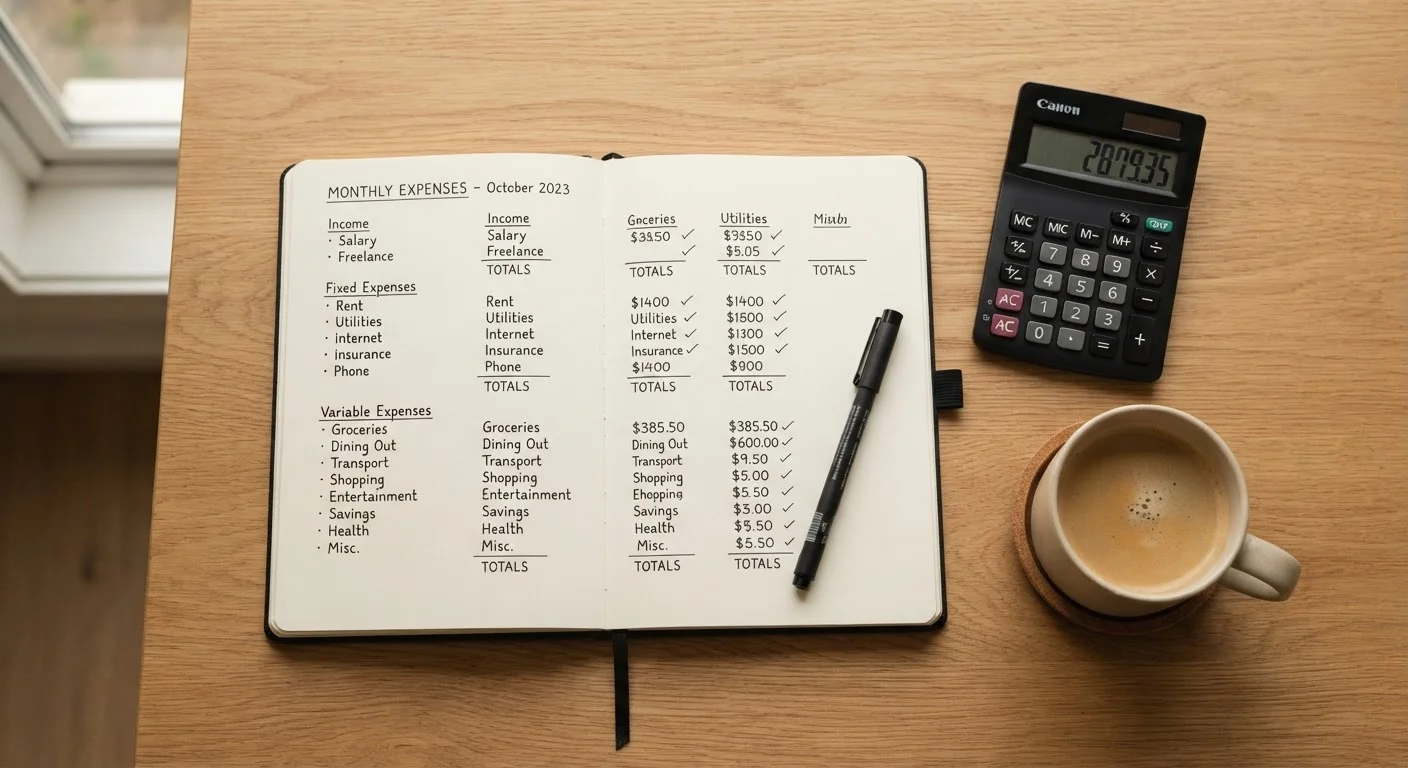
Photo: UltraSearches.com | Search Results You Can Trust editorial
Key Takeaways
- No single tracking method works for everyone - the best system is the one you'll actually maintain.
- Manual logging builds awareness faster than automated tools, but requires more consistent effort.
- Weekly check-ins catch overspending early, before it becomes end-of-month damage control.
- Categorizing expenses reveals spending patterns that raw transaction lists often hide.
- Combining two complementary methods - such as a weekly review plus category envelopes - can improve consistency.
Why Most Tracking Attempts Stall
Most people who try to track their spending quit within the first two weeks. The reason is rarely a lack of discipline - it's usually a mismatch between the method and how they actually live. Someone who hates spreadsheets won't maintain one. Someone who forgets to charge their phone won't rely on an app.
The goal here isn't to find the objectively "best" system. It's to identify one that fits your schedule, your comfort with numbers, and your spending patterns. If you're still building your first budget framework, the beginner's guide to budgeting is a useful starting point before diving into tracking mechanics.
Below are five approaches that tend to hold up over time - each with honest trade-offs.
The Daily Transaction Log
Write down every purchase - in a small notebook, a notes app, or a simple text file - as it happens or at the end of each day. No categories required at first, just raw entries: date, amount, description.
The power here is friction-free awareness. Seeing every dollar written out tends to slow impulsive spending in a way that reviewing a bank statement at month-end doesn't. The trade-off: it requires consistent daily effort and can feel tedious after a few weeks.
Best for: People who suspect their small, frequent purchases are their biggest problem but don't yet know which categories to blame.
Writing down purchases as they happen creates awareness that end-of-month reviews simply can't replicate.
The Weekly Category Review
Instead of logging every transaction in real time, you set aside 15-20 minutes once a week to pull up your bank or credit card statement and sort recent charges into categories: groceries, dining, transport, subscriptions, and so on.
This works well because it's periodic rather than constant - easier to sustain - and categories reveal patterns that raw transaction lists hide. Overspending in one area becomes visible before the full month is gone. The spreadsheet vs. app comparison is worth reading if you're unsure which tool to use for this review.
Best for: People with predictable schedules who can commit to one fixed weekly time slot.
A weekly category review catches overspending early - before it becomes end-of-month damage control.
The Cash Envelope System
Withdraw a set amount of physical cash for variable spending categories each pay period and keep them in labeled envelopes. When an envelope is empty, spending in that category stops until the next period.
The tactile nature of this method makes limits feel real in a way digital numbers often don't. It works especially well for categories that tend to creep - groceries, dining out, entertainment. The obvious downside: it doesn't work for online purchases or automatic payments, so it typically needs to be paired with another tracking method for fixed expenses.
Best for: People who consistently overspend in a few predictable categories and want a hard physical boundary.
Physical cash envelopes make spending limits tangible in a way that digital dashboards rarely achieve.
Automated Bank Categorization
Many banks and credit unions now offer built-in spending dashboards that automatically tag transactions by category. You review the summary rather than doing the tagging yourself.
The appeal is low effort - the data is already there, organized without manual entry. The catch is accuracy: automated systems frequently miscategorize transactions, and a restaurant charge might land in "entertainment" while a grocery delivery shows up as "shopping." Without a regular audit, the picture can mislead. Think of automated categorization as a starting point, not a finished report.
Best for: People who want a broad-strokes spending picture without any manual logging, provided they're willing to spot-check for errors.
Automated categorization is only reliable if you audit it regularly - errors compound silently over time.
The Two-Number Method
Identify two numbers each month: your total income and your total non-fixed spending (everything outside rent, utilities, and loan payments). The gap between them tells you whether you're trending toward saving or deficit.
This method strips tracking down to its simplest useful form. It won't tell you whether you're overspending on coffee versus clothing, but it will tell you quickly whether you have a problem at all. For households where detailed tracking has failed repeatedly, this low-overhead approach often serves as a sustainable bridge to more granular methods later. Automating the savings side of this equation is also worth considering - see how automatic transfers make saving easier to sustain.
Best for: People who have abandoned detailed tracking multiple times and need a minimal, durable alternative.
Two numbers - total income and total variable spending - can reveal whether your finances are on track without any detailed logging.
Making Your Method Last
Whichever method you choose, a few practices apply across the board. First, set a fixed review time - even 10 minutes on Sunday evening keeps the habit anchored. Second, don't aim for perfect records. A week of missing receipts doesn't mean the system failed; it means you skip ahead, not start over.
Start Smaller Than You Think You Should
For anyone managing recurring charges alongside daily expenses, it's worth reviewing how free trials convert to recurring charges - these are easy to miss in transaction logs. And if you want a structured monthly reset, a simple end-of-month money check-in can confirm your tracking reflects reality.
Tracking is only one side of the picture. Pairing it with budgeting habits that hold up over time helps turn short-term awareness into lasting financial stability.
This article is for general informational purposes only and does not constitute personalized financial advice. Consult a qualified financial professional for guidance specific to your situation.
The content on this site is for informational purposes only and is not a substitute for professional advice. Always consult a qualified professional for guidance specific to your situation.