
Managing Money When You Get Paid Biweekly vs. Twice a Month

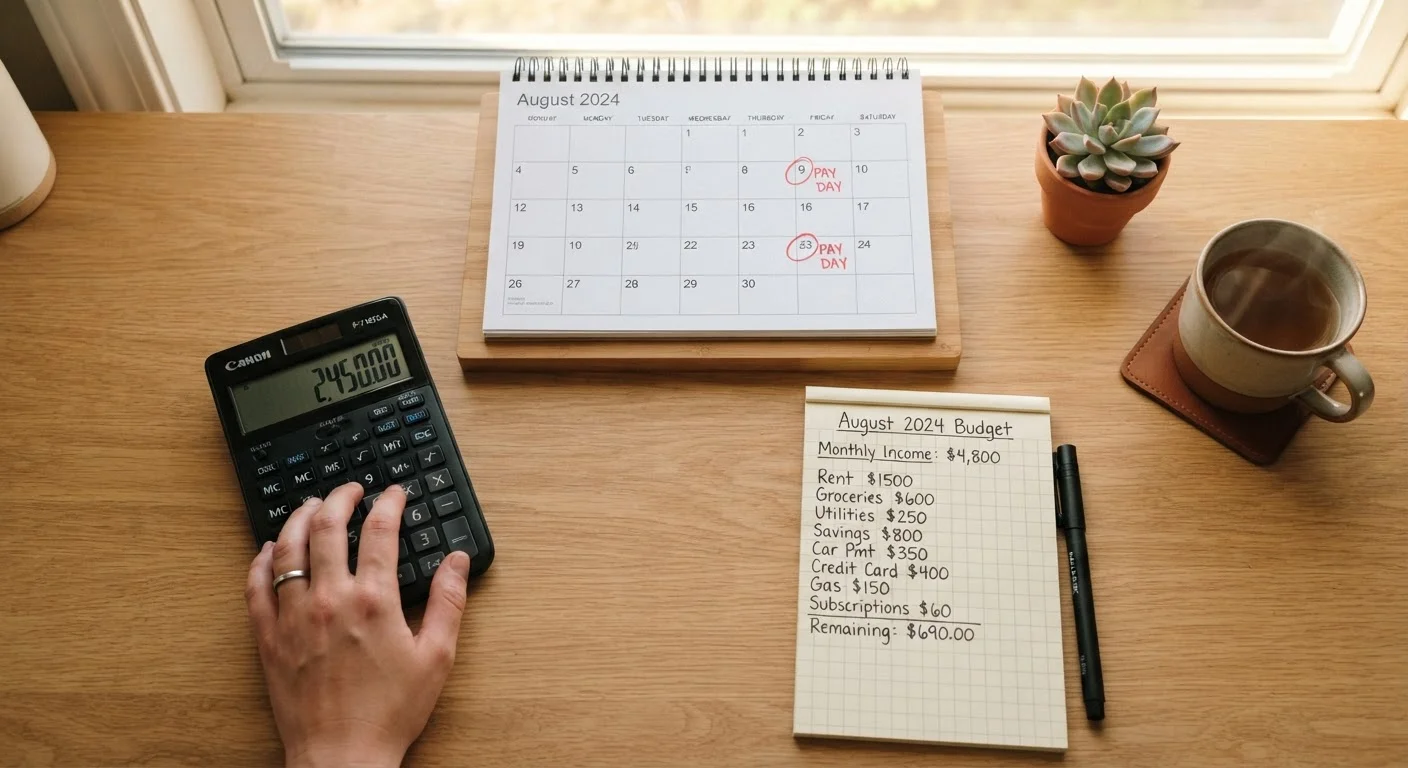
Photo: UltraSearches.com | Search Results You Can Trust editorial
Key Takeaways
- Biweekly pay means 26 paychecks per year; semimonthly pay means exactly 24 - the difference matters for budgeting.
- Two months each year, biweekly workers receive three paychecks instead of two, creating a planning opportunity.
- Semimonthly schedules align more predictably with monthly bills, but the paycheck dates shift day-to-day.
- Knowing your schedule lets you match bill due dates to pay dates and reduce the risk of overdrafts.
- Both schedules work well with a monthly budget framework when you account for the specific timing quirks of each.
The Core Difference: 26 vs. 24 Paychecks
Biweekly means you're paid every two weeks - every 14 days. That produces 26 paychecks over the course of a year. Semimonthly (sometimes called twice-monthly) means you're paid on two fixed dates each month - often the 1st and 15th, or the 15th and last day. That's exactly 24 paychecks per year.
The math feels similar until you run it out: a biweekly worker earning $52,000 annually receives roughly $2,000 per paycheck. A semimonthly worker at the same salary receives approximately $2,167 per paycheck. Same annual income, different amounts hitting your account each cycle.
Understanding which schedule you're on is the starting point for everything else in your budget. If you're not sure, check your pay stub or ask HR - the terms are often confused even by employers. For context on how your pay schedule interacts with withholding, see our piece on getting your W-4 right.
How Each Schedule Affects Monthly Bill Timing
Most recurring bills - rent, mortgage, utilities, subscriptions - are due on a monthly cycle. That's where the two schedules diverge in practical terms.
Semimonthly workers have it relatively straightforward: two paychecks land each month, full stop. If your pay dates are the 1st and 15th, you can designate the first check for rent or mortgage and the second for utilities, insurance, and discretionary spending. The predictability is a genuine advantage for bill scheduling.
The catch: because months have different numbers of days, a semimonthly payday that falls on a Saturday or Sunday often gets moved to Friday. Your mental calendar needs to stay flexible around this.
Biweekly workers face a slightly trickier structure. In most months, two paychecks arrive. But roughly two months per year, a third paycheck lands because of how the 14-day cycle lines up with the calendar. Most people don't notice this until it happens - and then don't have a plan for it.
| Biweekly (26/year) | Semimonthly (24/year) | |
|---|---|---|
| Paychecks per year | 26 | 24 |
| Paycheck amount (same salary) | Slightly smaller each cycle | Slightly larger each cycle |
| Monthly paycheck count | 2 most months, 3 twice a year | Always exactly 2 |
| Bill alignment | Requires paycheck-by-paycheck planning | Easier to match to monthly bills |
| Predictability of pay dates | Same weekday, shifts month to month | Fixed calendar dates, may shift for weekends |
| Annual savings opportunity | Two 'bonus' paychecks to redirect | No equivalent windfall months |
For a deeper look at organizing expenses by type, the guide to fixed vs. variable expenses is a useful companion read.
Budgeting Strategies for Each Schedule
Plan Your Three-Paycheck Months in Advance
If you're paid semimonthly: Build your budget around two equal halves of the month. List every bill due between the 1st and 15th, and assign it to your first check. Do the same for the 16th through month-end with your second check. Because your paycheck amount is the same every cycle, this approach is relatively stable.
One useful move: contact lenders or service providers to shift due dates so they better align with your pay dates. Many will accommodate a one-time date change.
If you're paid biweekly: Don't budget month-to-month - budget paycheck-to-paycheck. Assign specific bills to each paycheck rather than thinking in monthly totals. This reduces the risk of a large bill hitting right before payday when your account is at its lowest.
For the two "three-paycheck months" per year, treat the extra check as pre-planned money. Decide in advance whether it goes toward an emergency fund, a debt payment, or a savings goal. Without a plan, it disappears into everyday spending. This connects well to the broader ideas in budgeting when income isn't steady.
Which Approach Simplifies Your Financial Life Most
43%
U.S. workers paid biweekly
According to the U.S. Bureau of Labor Statistics, biweekly is the most common pay frequency among private-sector employers.
19%
U.S. workers paid semimonthly
BLS data indicates semimonthly pay is most prevalent in management, finance, and professional occupations.
On paper, semimonthly pay is the easier schedule to budget around - two equal amounts, two fixed calendar periods, no surprise extra months. For anyone with a mortgage or rent due on the 1st, it's a natural fit.
Biweekly pay asks a bit more of you structurally, but it delivers a real financial edge: those two extra paychecks per year amount to a full extra month's worth of gross pay. Directed toward high-interest debt or a savings goal, that can produce meaningful progress over time - as long as you plan for it rather than spend it reactively.
Either way, running a regular end-of-month check on where you stand helps you catch misalignments before they become overdrafts. The end-of-month money check-in outlines a simple process for doing exactly that. And if you want to close out each month with full clarity, the monthly budget review checklist walks through what to look for before the next cycle starts.
This article is for general informational purposes only and does not constitute personalized financial advice. Consult a qualified financial professional for guidance specific to your situation.
The content on this site is for informational purposes only and is not a substitute for professional advice. Always consult a qualified professional for guidance specific to your situation.