
Withholding Too Much - or Too Little - on Your W-4

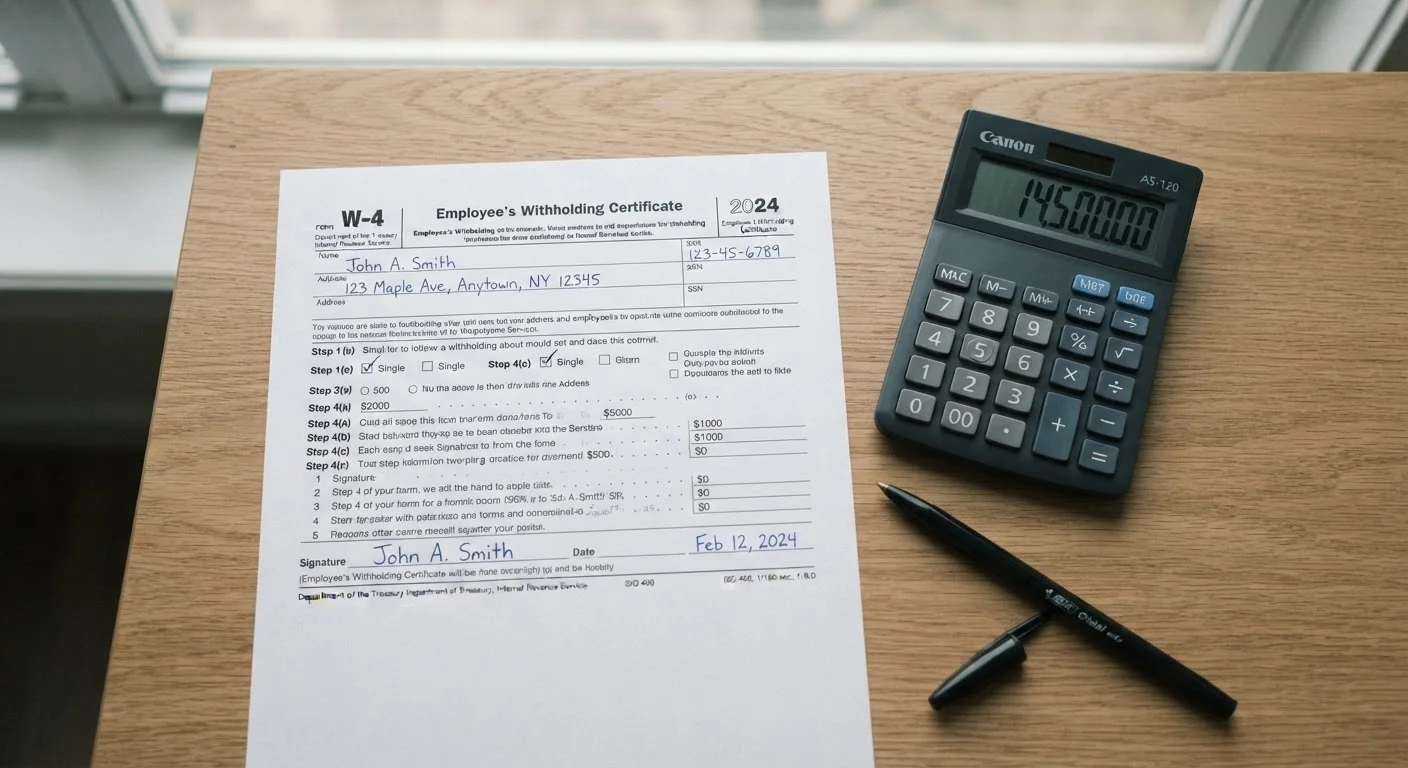
Photo: UltraSearches.com | Search Results You Can Trust editorial
Key Takeaways
- Withholding too little leads to a tax bill - and possibly underpayment penalties - at filing.
- Withholding too much gives the IRS an interest-free loan of your own money all year.
- Life changes like marriage, a new job, or a side income should trigger a W-4 review.
- The IRS Tax Withholding Estimator is a free tool that helps you dial in the right amount.
- You can submit an updated W-4 to your employer at any time - not just when you're hired.
Why Your W-4 Setting Matters More Than Most People Realize
Your W-4 is the form you give your employer that tells them how much federal income tax to withhold from each paycheck. Most people fill it out once on their first day and never look at it again - which is exactly where the problems start.
Too little withheld and you face a potentially painful bill in April. Too much withheld and you hand the IRS an interest-free loan for twelve months, getting that money back only when you file. Neither outcome is ideal. As a complement to this article, see what a refund vs. owing actually signals about your withholding.
The good news: the W-4 is adjustable. You can submit a revised form to your employer whenever your situation changes.
Setting the W-4 once and never updating it after major life changes.
Claiming too many allowances (under the old system) or leaving Step 3 credits blank, resulting in too little withheld.
Over-withholding to guarantee a large refund, treating it as a forced savings plan.
Failing to account for self-employment or gig income alongside a W-2 job.
Not adjusting withholding after a spouse's income changes significantly.
How to Correct Your Withholding - and Keep It Accurate
The IRS offers a free Tax Withholding Estimator at irs.gov that walks you through your income, deductions, and credits to recommend a specific withholding amount. It takes about 15 minutes and is updated each tax year. Have your most recent pay stub and last year's tax return handy before you start.
Once you have a target number, complete a new W-4 and hand it to your HR or payroll department. Changes typically take effect within one or two pay cycles.
~$3,000
Average federal tax refund per return
According to IRS filing statistics, the average federal refund is roughly $3,000 - meaning many households consistently over-withhold throughout the year.
1 in 5
Taxpayers who owe at filing
IRS data consistently shows that a significant share of filers end up owing money when they file, often due to under-withholding or unaccounted side income.
If your income is variable - freelance work, seasonal jobs, or commission - consider making estimated quarterly tax payments in addition to W-4 withholding. This keeps you out of underpayment territory without requiring you to over-withhold on a day job.
Building a tax review into your annual routine makes a real difference. Year-round habits that make tax season less painful offers practical ways to stay ahead of these decisions throughout the year rather than scrambling every April.
This article is for general informational purposes only and does not constitute tax, legal, or financial advice. Tax rules vary by individual situation. Consult a qualified tax professional for guidance specific to your circumstances.
The content on this site is for informational purposes only and is not a substitute for professional advice. Always consult a qualified professional for guidance specific to your situation.