
Tax Refund vs. Owing at Filing: Which Is Actually Better

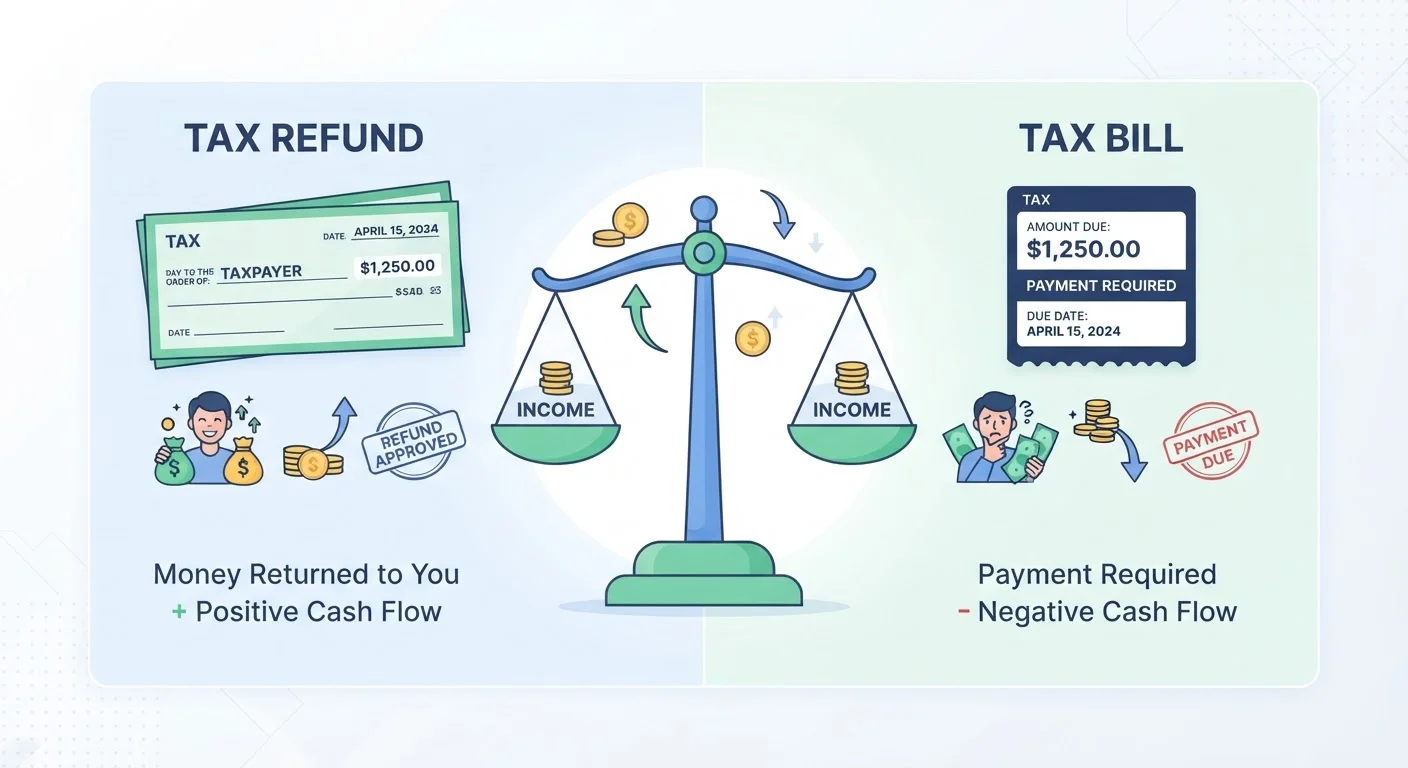
Photo: UltraSearches.com | Search Results You Can Trust editorial
Key Takeaways
- A large tax refund means you overpaid the IRS throughout the year - essentially giving an interest-free loan.
- Owing a small amount at filing often signals your withholding was well-calibrated to your actual tax liability.
- Owing a large balance - especially with penalties - signals under-withholding that needs to be corrected.
- Adjusting your W-4 with your employer is the primary tool for controlling your tax outcome.
- Neither outcome is inherently 'good' - the goal is accuracy, not a big check or a zero balance.
What Your Refund (or Bill) Actually Tells You
Every April, millions of Americans celebrate a tax refund as though they won something. Others dread the envelope because they owe. But both outcomes are really just feedback - a signal about how accurately your tax payments matched your actual liability across the year.
For employees, the federal income tax system is pay-as-you-go. Your employer withholds a portion of each paycheck and sends it to the IRS on your behalf. At filing, you calculate your true tax bill. If you withheld too much, you get a refund. If you withheld too little, you owe the difference. The IRS doesn't reward either outcome - it's purely arithmetic.
Understanding this math is the first step to making better decisions year-round. See our year-round habits guide for ways to make the process less stressful from January onward.
The Case Against a Big Refund
A large refund feels rewarding, but financially it means you overpaid the government all year and received nothing in return for that overpayment - no interest, no benefit. That money sitting with the IRS was unavailable to you for bills, savings, or debt payoff.
~$3,000
Average federal tax refund
The IRS has reported average refund amounts in this range in recent filing seasons, representing meaningful over-withholding for most households.
72%
Taxpayers who receive a refund
Roughly seven in ten filers get money back each year, according to IRS filing statistics, suggesting widespread over-withholding is common.
The behavioral argument for over-withholding is real: some people use a refund as a forced savings mechanism, knowing they won't set money aside otherwise. That's a valid personal strategy - but it comes at a cost. If you carry high-interest credit card debt, every dollar over-withheld is a dollar not reducing that balance.
There's also an opportunity cost argument. Money returned in April could have been earning interest in a high-yield savings account or money market fund throughout the year. Over-withholding forfeits that potential, however modest the amount.
Turn Your Refund Into a Better Habit
When Owing Money Is Fine - and When It Isn't
Owing a small amount at filing - say, under a few hundred dollars - is often a sign of well-calibrated withholding. Your paychecks were closer to your actual take-home, and you simply had a minor shortfall. That's not a crisis; it's precision.
The problems start when the balance is large or when the IRS assesses an underpayment penalty. The IRS generally charges a penalty if you owe more than $1,000 at filing and your withholding or estimated payments didn't cover at least 90% of your current-year tax liability or 100% of your prior-year liability (whichever is smaller). A surprise bill of several thousand dollars can also strain a monthly budget that wasn't prepared for it.
Underpayment Penalties Are Real Costs
People with freelance income, multiple jobs, investment gains, or major life changes (marriage, new dependents, a home purchase) are especially prone to under-withholding because their tax situation is more complex than a standard W-4 anticipates.
How to Get Closer to the Break-Even Point
The primary lever for employees is the W-4 form - the document you file with your employer that instructs how much to withhold from each paycheck. The IRS redesigned it to be more intuitive, replacing allowances with explicit dollar amounts and checkboxes for multiple jobs or dependents. Calibrating your W-4 correctly is one of the highest-impact steps you can take before a new tax year begins.
The IRS Tax Withholding Estimator (available at irs.gov) walks you through your income, deductions, and credits to suggest a withholding amount that targets a near-zero result. It takes about 15 minutes and is free.
If you're self-employed or have significant non-wage income, quarterly estimated payments replace withholding. Miscalculating those payments is how self-employed individuals end up with large April bills or penalties. Your pay frequency matters here too - how often you're paid affects how you allocate funds for those quarterly obligations.
This article provides general financial education and is not personalized tax advice. Consult a qualified tax professional for guidance specific to your situation.
The content on this site is for informational purposes only and is not a substitute for professional advice. Always consult a qualified professional for guidance specific to your situation.