
Enrichment for Pets: What It Means and Why It Goes Beyond Toys

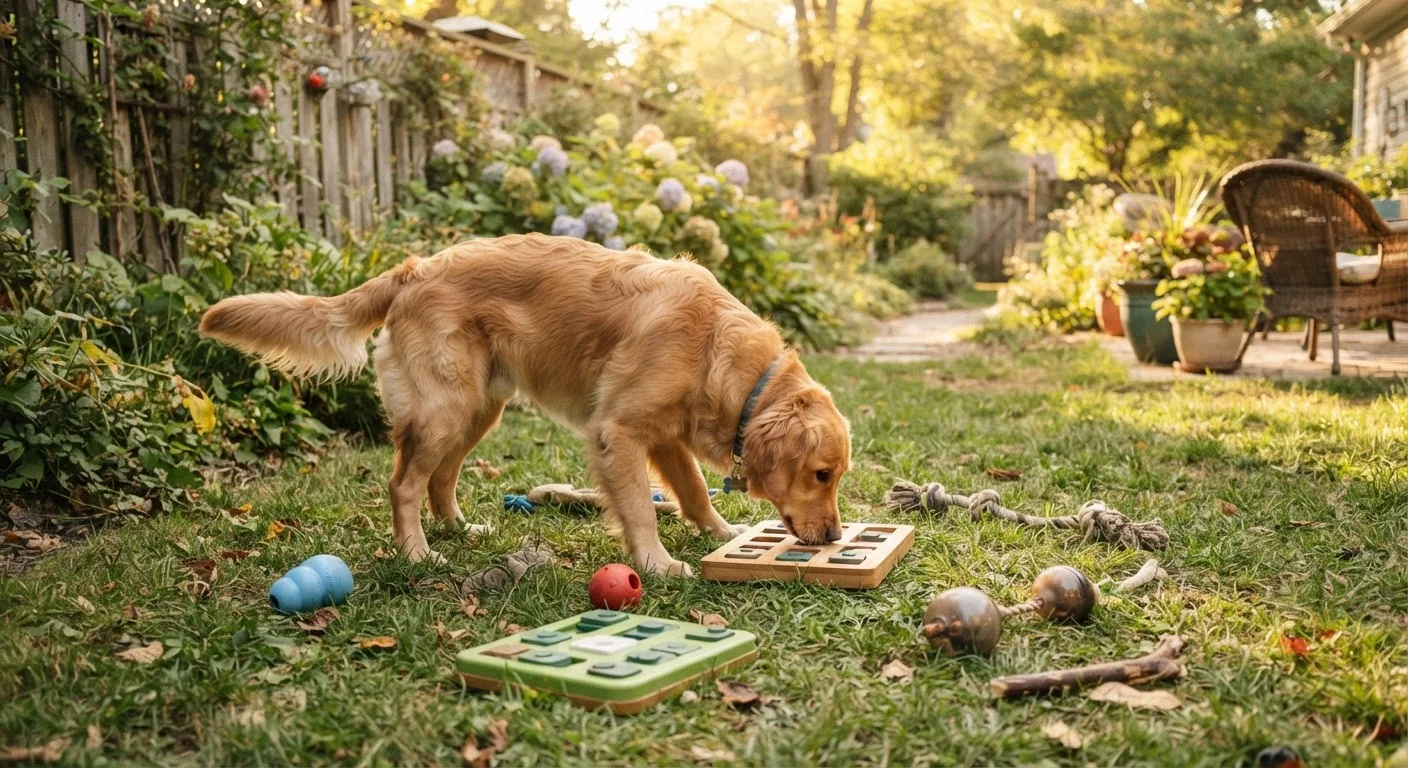
Photo: UltraSearches.com | Search Results You Can Trust editorial
Key Takeaways
- Enrichment addresses mental stimulation, not just physical exercise - both are necessary for a balanced pet.
- Different species and individual temperaments require different types of enrichment to be effective.
- Signs of under-enrichment include destructive behavior, excessive vocalization, and repetitive movements.
- Foraging and scent-based activities are among the most powerful forms of enrichment for most pets.
- Enrichment does not require expensive products - many effective options use everyday household items.
Why Enrichment Is More Than a Fancy Word for Toys
When most people hear "pet enrichment," they picture a colorful rubber toy or a rope pull. While those items can play a role, enrichment in its full meaning is something considerably deeper. It describes the conditions, activities, and interactions that allow an animal to express its natural behaviors, use its cognitive abilities, and experience a sense of agency in its environment.
Think about what a dog's ancestor did most of its waking hours: it sniffed, tracked, solved problems, and worked for food. A bowl of kibble placed on the kitchen floor takes roughly 45 seconds to consume - a fraction of the mental work that foraging in the wild would have required. That gap between what an animal is biologically wired to do and what its domestic life actually offers is where behavioral problems often take root.
Enrichment is the bridge that closes that gap. It is part of responsible pet ownership in the same way that veterinary care or proper nutrition is - not a bonus, but a baseline expectation.
~80%
Dogs showing behavior issues linked to boredom or insufficient stimulation
Veterinary behaviorists frequently cite under-stimulation as one of the most common underlying factors in canine behavioral complaints brought to clinics.
5 types
Core enrichment categories recognized in animal behavior science
Sensory, cognitive, feeding/foraging, social, and physical enrichment each target distinct aspects of an animal's behavioral needs.
The Five Core Types of Enrichment
Animal behavior researchers generally group enrichment into five categories, each targeting a distinct aspect of a pet's mental and physical life:
- Sensory enrichment engages sight, sound, smell, taste, and touch. For dogs, this might mean a sniff walk through a new neighborhood. For cats, it could be a bird feeder mounted outside a window.
- Cognitive enrichment challenges the animal to think and problem-solve. Puzzle feeders, training new cues, and interactive games fall into this category.
- Feeding and foraging enrichment distributes meals in ways that require effort to access - scatter feeding on grass, lick mats, or food hidden around a room.
- Social enrichment involves meaningful interaction with humans, other animals, or both. For dogs, play with a trusted canine companion counts. For prey species like rabbits, bonded pairs often fare better than solitary housing.
- Physical enrichment modifies the environment itself - climbing structures for cats, tunnels for small mammals, or varied terrain on walks for dogs.
Most pets benefit from a mix across all five categories, rather than heavy focus on just one.
Start Simple, Then Build Complexity
How Enrichment Needs Vary by Species and Temperament
There is no universal enrichment formula. A Border Collie and a Basset Hound share the same species label but have meaningfully different cognitive needs. A Bengal cat requires more stimulation than a laid-back domestic shorthair. Prey animals like guinea pigs and rabbits need safe hiding spaces and opportunities to forage - not the same kind of stimulation that would suit a terrier.
Temperament matters as much as species. An anxious dog may find a high-intensity agility course overwhelming, while a confident, high-drive dog finds it deeply satisfying. Matching the enrichment to the individual animal - not just the species - is what makes the difference between an activity that helps and one that stresses.
Age is another variable. Puppies and kittens need frequent, shorter bursts of stimulation as their attention spans develop, while senior pets may prefer gentler nose-work or calm exploratory activities. If you are thinking about how your pet's needs shift over time, our guide on how pets age through life stages offers a useful framework.
Recognizing Under-Enrichment - and Addressing It
Behavioral problems are frequently a symptom of insufficient mental stimulation rather than a character flaw in the animal. Common signs that a pet may be under-enriched include:
- Destructive chewing, scratching, or digging beyond what is age-typical
- Excessive barking, meowing, or other repetitive vocalizations
- Stereotypic behaviors - repetitive movements with no obvious purpose, like pacing or tail-chasing
- Attention-seeking to an extreme degree
- Lethargy or apparent depression in otherwise healthy animals
If you live in a smaller space, enrichment becomes especially important. Pets in apartments, for example, rely almost entirely on what their owners provide. Our article on keeping pets in apartments addresses how to set up an environment that meets their behavioral needs within limited square footage.
Before attributing problem behaviors to a training issue, consider whether the pet's daily life offers enough variety, challenge, and sensory experience. In many cases, consistently richer enrichment reduces or eliminates the behavior entirely - without any punishment-based intervention.
When to Involve a Professional
Frequently Asked Questions
The content on this site is for informational purposes only and is not a substitute for professional advice. Always consult a qualified professional for guidance specific to your situation.