
Electric Razor vs. Cartridge Blade: What Changes With Each Shave

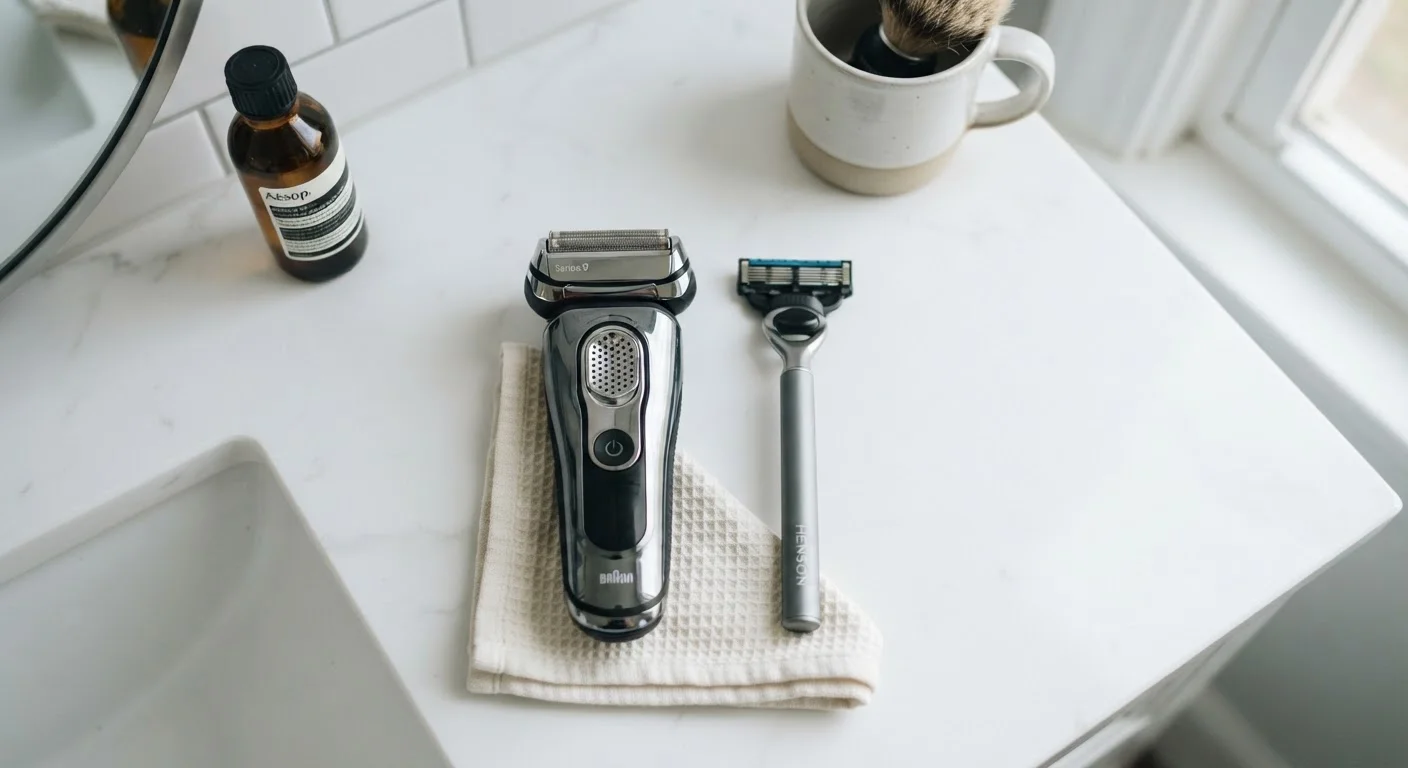
Photo: UltraSearches.com | Search Results You Can Trust editorial
Key Takeaways
- Cartridge blade razors generally deliver a closer shave than electric razors for most people.
- Electric razors tend to cause less skin irritation, making them better suited for sensitive skin.
- Electric razors have higher upfront costs but lower ongoing supply expenses compared to cartridge systems.
- Cartridge shaving requires prep - warm water, shaving cream - while electric shaving can be done dry.
- The right choice depends on your skin type, shave frequency, and how much time you have each morning.
How Each Method Actually Cuts Hair
Understanding the mechanics behind each tool explains almost everything about the tradeoffs you'll experience on your face or body.
An electric razor works by oscillating or rotating small blades beneath a protective metal screen (foil) or spinning heads (rotary). Hair is guided through tiny openings in that screen and trimmed just above the skin's surface. Because the blade never touches your skin directly, the process is inherently gentler - but it also means hair is cut slightly higher, resulting in a less-close finish.
A cartridge blade razor uses multiple stacked blades that drag across the skin in a single stroke. Each blade catches the hair at a progressively lower point, which is why multi-blade cartridges tend to shave so close. The tradeoff is that this repeated contact with skin increases the chance of irritation, especially over bony areas like the jaw or chin.
If you've been struggling with razor burn or ingrown hairs, the type of razor you're using may be a significant factor worth examining.
| Criterion | Electric Razor | Cartridge Blade Razor |
|---|---|---|
| Closeness of shave | Moderate - above skin surface | Close - at or below skin surface |
| Skin irritation risk | Generally lower | Higher, especially with dull blades |
| Ingrown hair risk | Lower | Higher, especially for coarse hair |
| Prep required | None - dry shave capable | Warm water and shaving cream recommended |
| Upfront cost | Higher | Lower |
| Ongoing supply cost | Lower (blade replacement ~annually) | Higher (cartridges every 5-7 shaves) |
| Best for sensitive skin | Yes | With care and proper technique |
| Handles multi-day stubble | Well | Can tug and clog |
Skin Irritation, Ingrown Hairs, and Sensitivity
For many people, skin comfort is the deciding factor - and here the two methods diverge considerably.
Cartridge blades, especially those with three or more blades, can pull hair slightly below the skin's surface before cutting. This achieves closeness, but it also raises the risk of ingrown hairs - where the cut hair curls back and re-enters the skin. People with curly or coarse hair types are particularly prone to this. Razor burn, the red, stinging irritation that appears minutes after shaving, is also more common with blade razors, especially when shaving against the grain or using a dull cartridge.
Electric razors sidestep much of this by keeping blade-to-skin contact minimal. Most dermatologists note that electric shaving is generally a lower-irritation option for people with sensitive skin or conditions like folliculitis (inflamed hair follicles). That said, some people find that rotary-style electric razors tug more than foil models, so the specific type of electric razor matters too.
Good prep habits help both methods. Exfoliating the skin before a cartridge shave can reduce ingrown hair risk - chemical and physical exfoliants work differently on skin, so it's worth understanding which approach suits your skin type.
A Note on Shaving Direction
Upkeep, Cost, and Daily Practicality
Neither method is truly low-maintenance - but the nature of the upkeep is different.
Electric razors require periodic cleaning (most are rinseable or come with a cleaning station), and the inner blades and foils need replacing roughly every 12-18 months depending on usage. The upfront cost for a quality electric razor is typically higher than a starter cartridge handle, but ongoing supply costs tend to be lower once you've made the initial investment.
Cartridge blades have a lower entry cost but ongoing cartridge replacements add up over time. A cartridge should ideally be replaced every five to seven shaves to maintain sharpness and hygiene - a dull blade drags and increases irritation risk. Shaving cream or gel is also a consistent recurring expense.
On a practical level, electric razors win for speed and flexibility. They can be used dry, without water or products, making them ideal for travel or rushed mornings. Cartridge shaving performs best with warm water and a quality lather, which adds a few minutes to your routine but also creates a more intentional, comfortable experience for those who enjoy it.
5-7 shaves
Recommended cartridge replacement interval
Dermatologists and grooming experts generally advise replacing cartridge blades every five to seven uses to avoid the increased irritation caused by dull edges.
12-18 months
Typical electric razor blade/foil lifespan
Most electric razor manufacturers recommend replacing inner blades and foil screens roughly once a year to maintain performance and hygiene.
The content on this site is for informational purposes only and is not a substitute for professional advice. Always consult a qualified professional for guidance specific to your situation.