
Chemical Exfoliants vs. Physical Scrubs: How Each One Works on Skin

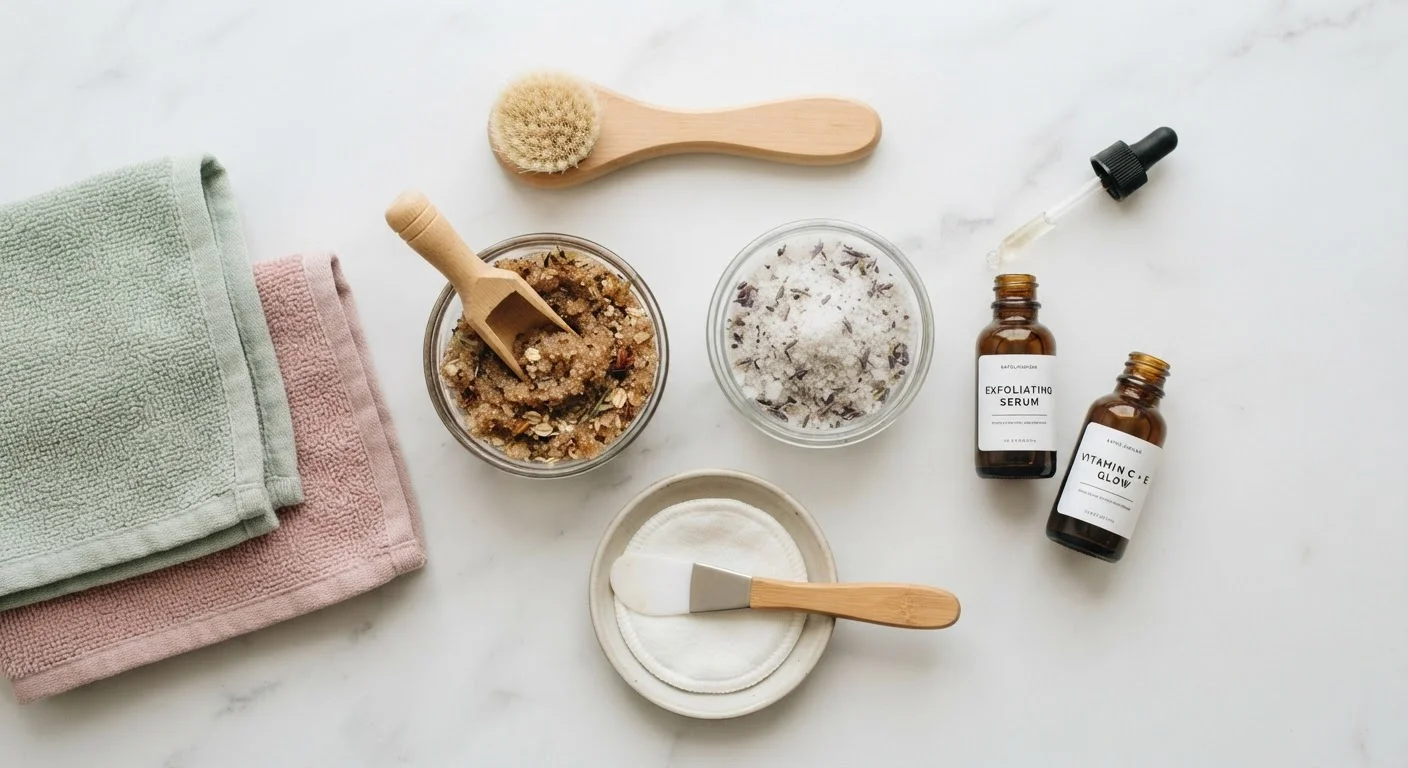
Photo: UltraSearches.com | Search Results You Can Trust editorial
Key Takeaways
- Chemical exfoliants use acids or enzymes to dissolve the bonds between dead skin cells without friction.
- Physical scrubs manually buff away dead cells using abrasive particles like sugar, salt, or beads.
- AHAs work mainly on the surface; BHAs penetrate pores, making them useful for oily and acne-prone skin.
- Over-scrubbing with physical exfoliants can cause micro-tears; harsh friction is the main risk to avoid.
- Most skin types can benefit from exfoliation - the right type and frequency depend on your skin's sensitivity.
- Always follow exfoliation with moisturizer and, during the day, a broad-spectrum SPF.
What Exfoliation Actually Does
Your skin naturally sheds dead cells in a cycle that typically takes several weeks - but that process can slow down due to age, environmental stress, or skin type. When dead cells linger on the surface, they can contribute to dullness, uneven texture, clogged pores, and flakiness. Exfoliation speeds up the removal of that buildup, revealing fresher skin underneath.
There are two fundamentally different ways to accomplish this: chemical exfoliants, which use acids or enzymes to loosen dead cell bonds, and physical scrubs, which use friction to manually buff them away. Both work - but the mechanism, intensity, and best-fit skin types differ meaningfully. Understanding those differences helps you choose what belongs in your routine. For more context on how exfoliation fits into a broader self-care practice, see how skincare and grooming routines overlap.
How Chemical Exfoliants Work
Chemical exfoliants don't scrub anything - they dissolve the bonds that hold dead skin cells to the surface. The two most common categories are AHAs (alpha-hydroxy acids) and BHAs (beta-hydroxy acids). Enzyme exfoliants, often derived from fruits like papaya or pineapple, offer a gentler variation on the same principle.
- AHAs - including glycolic acid and lactic acid - are water-soluble and work mainly on the skin's surface. They're widely used to address dullness, dry texture, and uneven tone.
- BHAs - most notably salicylic acid - are oil-soluble, meaning they can penetrate into pores to break down excess sebum and dead cells. This makes them particularly useful for oily and acne-prone skin.
- Enzyme exfoliants act more slowly and are generally considered milder, making them a popular option for sensitive skin types.
Most chemical exfoliants are applied as leave-on toners, serums, or pads. Concentration matters: lower percentages are appropriate for beginners or daily use, while higher-strength formulas are typically used less frequently.
| Criterion | Chemical Exfoliants | Physical Scrubs |
|---|---|---|
| Mechanism | Dissolves dead cell bonds with acids/enzymes | Physically buffs away dead cells with friction |
| Results timeline | Gradual; builds over consistent use | Immediate smoothness after each use |
| Best skin types | Most types; especially acne-prone, uneven tone | Normal to oily; body skin; beginners |
| Main risk | Irritation from high concentrations or overuse | Micro-tears and barrier damage from over-scrubbing |
| SPF needed after? | Yes - especially with AHAs | Recommended; less critical than with AHAs |
| Frequency (face) | Daily (low %) to 2-3x per week (higher %) | 1-2 times per week for most skin types |
| Ease of use | Requires reading labels for concentration | Intuitive - apply, massage, rinse |
This article provides general skincare education and is not medical or dermatological advice. If you have a skin condition, consult a qualified healthcare provider before starting a new exfoliation routine.
How Physical Scrubs Work
Physical exfoliants rely on mechanical friction. Abrasive particles in a scrub - which might be sugar, salt, ground oats, jojoba beads, or pumice - physically dislodge dead skin cells as you massage the product across your skin. The result is immediate: skin feels noticeably smoother right after use.
The main variable with physical scrubs is particle size and texture. Finer, rounder particles tend to be gentler and more suitable for the face, while coarser options are often better suited to the body - elbows, feet, and knees where skin is thicker. This distinction matters because harsh or irregular particles used on the face can create micro-abrasions that compromise the skin barrier over time.
A Note on Facial vs. Body Scrubs
When used with a light hand and appropriate frequency - typically once or twice a week for most skin types - physical scrubs are a reasonable exfoliation tool. The risk comes from overdoing it: using them too often or applying too much pressure can lead to irritation and barrier damage. Pairing your scrub session with a quality moisturizer afterward helps restore hydration. For more on what belongs in each step of your routine, see how moisturizers and serums work differently.
Choosing What Works for Your Skin
Neither option is universally better - the right pick depends on your skin type, concerns, and how your skin responds.
~28 days
Typical skin cell turnover cycle
Skin naturally sheds and renews its outer layer roughly every four weeks, though this process slows with age.
2x
How much longer turnover takes with age
Dermatologists generally note that cell turnover can take nearly twice as long in older adults compared to younger skin, making exfoliation increasingly relevant.
A few practical guidelines:
- Dry or flaky skin: AHAs like lactic acid can help improve texture and hydration with regular use. Avoid coarse scrubs on already-compromised skin.
- Oily or congested skin: BHAs are a strong match thanks to their pore-clearing ability. A gentle physical scrub can complement this on the body.
- Sensitive skin: Start slowly with enzyme exfoliants or a low-percentage AHA. Patch test any new product on a small area first.
- Darker skin tones: Post-inflammatory hyperpigmentation (darkening after irritation) is a real concern; gentle chemical exfoliation is often favored over aggressive physical scrubbing to minimize irritation risk.
Whatever you choose, always apply SPF the morning after chemical exfoliation - AHAs in particular can temporarily increase the skin's sensitivity to UV exposure. It's also worth separating your exfoliant from other active ingredients like retinoids on the same night to avoid over-stressing your skin barrier. And if you've run into persistent skin concerns, the evidence on common skincare myths may help you sort fact from fiction.
The content on this site is for informational purposes only and is not a substitute for professional advice. Always consult a qualified professional for guidance specific to your situation.