
Fragrance Basics: How Cologne and Perfume Are Actually Structured

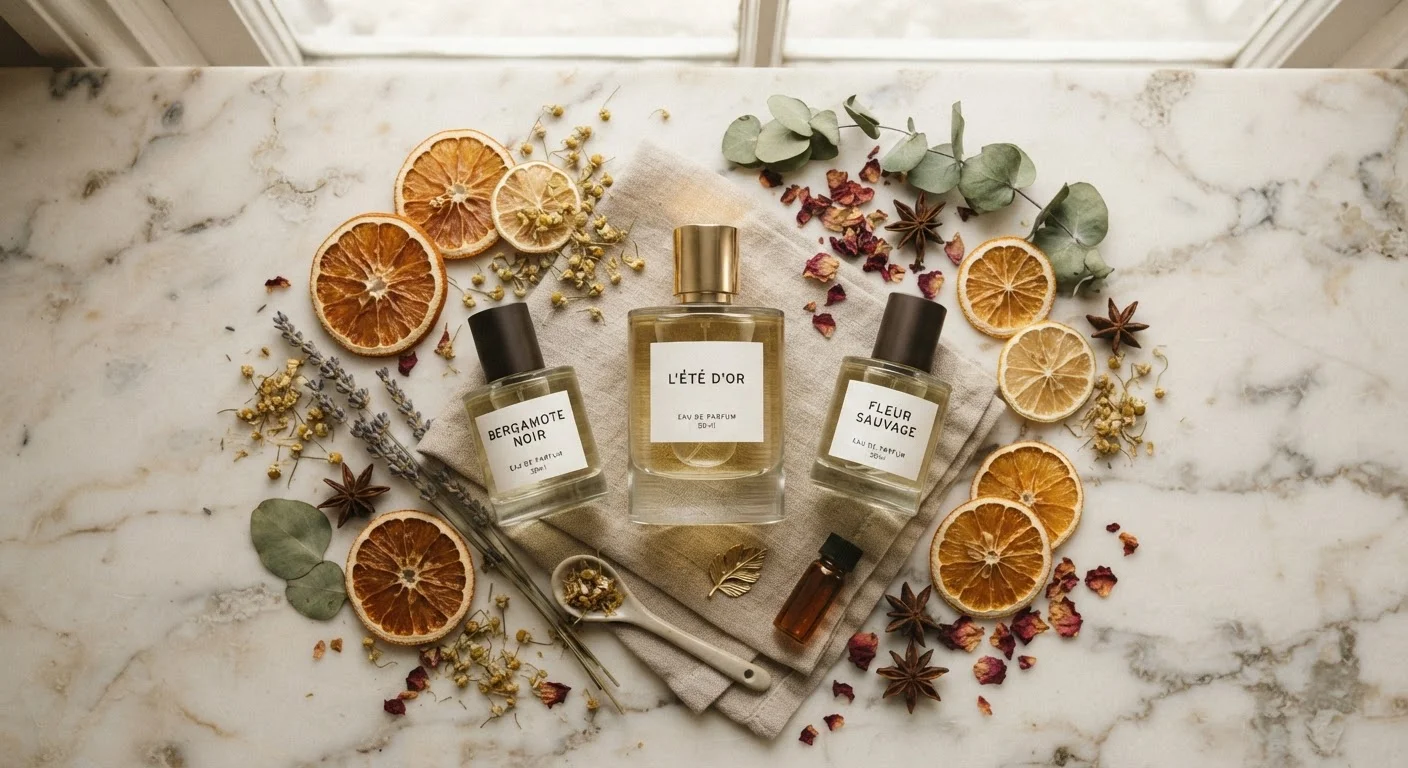
Photo: UltraSearches.com | Search Results You Can Trust editorial
Key Takeaways
- Fragrance unfolds in three layers: top notes, heart notes, and base notes.
- Top notes are what you smell first; they fade within 15-30 minutes.
- Heart notes form the core character of a fragrance and last 2-4 hours.
- Base notes are the longest-lasting layer, anchoring the scent for hours.
- A fragrance smells different in the bottle versus on warm skin because body heat activates the notes.
- Concentration - EDP, EDT, EDC - determines how much fragrant oil is present and affects longevity.
The Three-Act Structure of Every Scent
Think of a fragrance as a short story with three chapters. The opening grabs your attention, the middle develops the real personality, and the ending is what lingers in the room after you leave. This is exactly how fragrance is designed - in three distinct layers called top notes, heart notes, and base notes.
Each layer is made up of aromatic ingredients - natural extracts, resins, or synthetic molecules - chosen because they evaporate at different rates. The result is a scent that changes and evolves on your skin over time rather than smelling identical from application to dry-down.
“A perfume is like a piece of music - the opening notes draw you in, but it's the dry-down that stays with you.”
— Luca Turin, Biophysicist and fragrance critic, co-author of 'Perfumes: The Guide'
Top Notes: The First Impression
Top notes are the scents you smell the moment you spray a fragrance. They're light, bright, and designed to be immediately appealing - common examples include citrus (bergamot, lemon, grapefruit), green herbs like basil or mint, and light fruits. These molecules evaporate quickly, typically within 15 to 30 minutes.
Here's the important catch: top notes are not the true identity of a fragrance. They're the opening handshake, not the personality. If you're testing a cologne or perfume at a counter and judging it immediately off the blotter, you're only meeting the introduction. Give it time.
Test Fragrances on Skin, Not Just Paper
Heart Notes: The Core Character
As the top notes fade, the heart notes - sometimes called middle notes - emerge and carry the real character of the fragrance. This is the layer perfumers spend the most time crafting, because it's what defines the scent family: floral, spicy, woody, aromatic, or gourmand.
Common heart note ingredients include rose, jasmine, lavender, geranium, black pepper, cardamom, and green tea. They're more complex than top notes and persist on skin for roughly 2 to 4 hours. When someone says a fragrance is "floral" or "spicy," they're almost always describing its heart.
Base Notes: The Lasting Impression
Base notes are the foundation - rich, deep, and slow to evaporate. They begin to appear as the heart notes fade and can linger on skin and fabric for 4 to 8 hours or more. Common base note materials include sandalwood, cedarwood, vetiver, musk, amber, vanilla, and labdanum (a resin).
Base notes do more than just last - they also act as a fixative, helping the entire fragrance structure hold together longer on skin. A well-chosen base is what gives a fragrance its sense of warmth, depth, and signature.
~30 min
Typical top note evaporation time
Most fragrance experts agree top notes, being the most volatile, generally dissipate within 15-30 minutes of application.
20-30%
Fragrant oil in Parfum concentration
Parfum (Extrait de Parfum) carries the highest oil concentration, giving it the longest lasting power of any fragrance format.
3
Distinct layers in every fragrance
Every structured fragrance - from mass-market to niche - is built around the same top, heart, and base note architecture.
Why Concentration Matters
Beyond the note structure, the concentration of fragrant oil in the formula determines how long a scent performs and how it projects. Here's a quick breakdown of the most common formats:
- Parfum (Extrait): Highest concentration, around 20-30% oil. Rich and long-lasting.
- Eau de Parfum (EDP): Typically 15-20% oil. A strong balance of longevity and wearability.
- Eau de Toilette (EDT): Usually 5-15% oil. Lighter and suited to warmer weather or daytime wear.
- Eau de Cologne (EDC): Around 2-4% oil. Very light, refreshing, often needs reapplication.
Just like reading a skincare ingredient label, understanding what's actually in your bottle helps you make confident, informed choices rather than relying on marketing language alone.
The Word 'Cologne' Can Be Confusing
Applying Fragrance More Thoughtfully
Knowing how fragrance is structured changes the way you wear it. Apply to pulse points - wrists, neck, behind the ears - where body heat helps the notes develop fully. Avoid rubbing your wrists together after applying; this generates friction that can break down the top notes before they transition naturally.
Let the fragrance dry down for at least 30 minutes before deciding if you love it. Moisturized skin holds fragrance longer, so applying an unscented lotion first can meaningfully extend the wear of any concentration. Choosing between a lighter EDT or a richer EDP often comes down to occasion, season, and how much projection you want - not just which smells better in the bottle.
Frequently Asked Questions
The content on this site is for informational purposes only and is not a substitute for professional advice. Always consult a qualified professional for guidance specific to your situation.