
DIY Maintenance vs. Taking It to the Shop

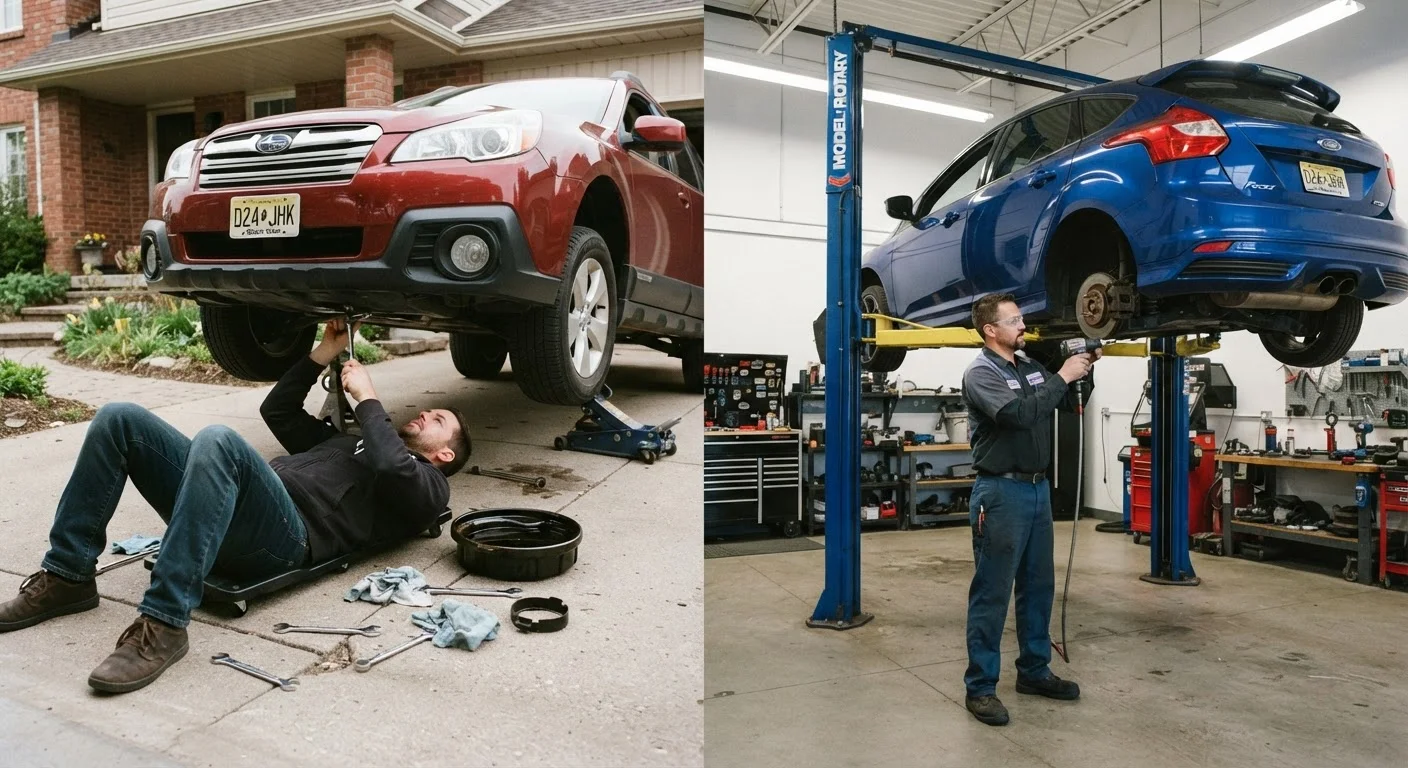
Photo: UltraSearches.com | Search Results You Can Trust editorial
Key Takeaways
- Simple tasks like air filter swaps, wiper replacements, and fluid top-offs are genuinely DIY-friendly with basic tools.
- Brake system work, suspension repairs, and anything requiring diagnostic computers typically demand professional equipment.
- A mistake on a safety-critical system can cost far more than the shop visit you were trying to avoid.
- Keeping a record of all maintenance - DIY or professional - protects resale value and warranty claims.
- Your owner's manual is the most underused and most reliable guide to your specific vehicle's needs.
Where the Line Actually Falls
The DIY-vs-shop question isn't really about mechanical confidence - it's about matching the task to the tools and stakes involved. Some maintenance items are genuinely accessible to any driver with an afternoon and a basic socket set. Others require specialized equipment, factory-level software, or safety conditions that a home driveway can't provide.
A useful starting framework: ask three questions before you start. Do I have the right tools? Is a mistake here reversible and low-risk? And does my vehicle's warranty or lease agreement restrict who performs this service? If the answer to any of these gives you pause, that's information worth acting on.
For a grounded look at what your car actually needs and when, see our routine maintenance schedule overview - it's a useful baseline before deciding who does the work.
Tasks That Fit a Driveway
Several common maintenance items are genuinely manageable at home, provided you follow the instructions in your owner's manual and work safely. These include:
- Engine air filter replacement - typically a tool-free or single-clip job taking under ten minutes.
- Cabin air filter replacement - usually behind the glove box; process varies by model but rarely requires tools.
- Windshield wiper blades - most modern blades click in and out; instructions are on the packaging.
- Tire pressure checks and inflation - a quality gauge and a compressor are all you need.
- Checking and topping off fluids - coolant reservoir, windshield washer fluid, and (on some vehicles) brake fluid are accessible under the hood. Note: adding fluid is different from diagnosing why a level is low repeatedly.
- Battery terminal cleaning - corrosion on terminals can cause starting problems; a wire brush and baking soda solution is a standard approach.
Document Every Service, DIY or Not
If you change your own oil - a moderately involved DIY task - make sure to use the viscosity grade specified in your owner's manual, dispose of used oil at a recycling center, and document the date and mileage. See our guide to keeping maintenance records for why that paper trail matters.
When the Shop Is the Right Call
Some jobs look approachable on a video tutorial but carry real risk when attempted without proper equipment or training. These generally belong in a shop:
- Brake pad and rotor replacement - while mechanically learnable, brake system errors have direct safety consequences. Modern vehicles also often require electronic brake retraction tools.
- Suspension and steering components - alignment specs require laser-aligned equipment after any suspension work; a driveway job that's off by a small margin accelerates tire wear and affects handling.
- Diagnostic trouble codes beyond basic OBD-II reading - a consumer code reader tells you a fault category; a shop scanner interrogates subsystems and freeze-frame data that consumer tools don't reach.
- Transmission service - fluid type, fill procedures, and torque specs are highly model-specific; errors can cause expensive damage.
- Airbag and SRS (supplemental restraint system) components - these systems carry live electrical charges and require disabling procedures that are not safely improvised.
Don't Clear a Code Without a Diagnosis
If your check engine light is on and accompanied by symptoms like rough running, stalling, or loss of power, a shop diagnosis is warranted before you invest in any parts. Clearing a code without fixing the underlying cause is a short-term workaround, not a repair.
| Task Type | DIY | Professional Shop | |
|---|---|---|---|
| Typical cost | Parts cost only | Parts + labor charges | |
| Tools required | Basic hand tools | Specialized & diagnostic equipment | |
| Safety risk if done wrong | Low (for routine tasks) | Managed by trained professional | |
| Warranty on work | None | Typically included | |
| Suitable task examples | Filters, wipers, fluid top-offs | Brakes, suspension, diagnostics | |
| Documentation for records | Self-managed | Shop provides invoice |
Cost Realities and the Hidden Expenses of DIY
DIY can reduce labor costs on appropriate tasks, but the full picture is more nuanced. Tool purchases add up - a torque wrench, jack stands, and specialty sockets can represent a meaningful upfront investment for occasional use. Misdiagnosis and re-work also carry costs: buying the wrong part, installing it incorrectly, or masking a deeper problem can turn a modest repair into a larger one.
Shops also carry liability for their work. Many offer warranties on parts and labor, which provides recourse if something fails. A DIY repair has no such safety net.
For drivers learning to evaluate shop pricing, our guide to reading a mechanic's estimate breaks down the line items you'll see on a repair order and what they actually represent. And if you've encountered advice suggesting shops are always overcharging, it's worth reviewing common maintenance myths that cost drivers money - some of those assumptions don't hold up.
This article provides general vehicle maintenance information for educational purposes. For repairs affecting vehicle safety, consult a qualified, licensed mechanic. Always follow manufacturer guidance specific to your vehicle.
The content on this site is for informational purposes only and is not a substitute for professional advice. Always consult a qualified professional for guidance specific to your situation.