
Synthetic vs. Conventional Motor Oil: Understanding the Difference

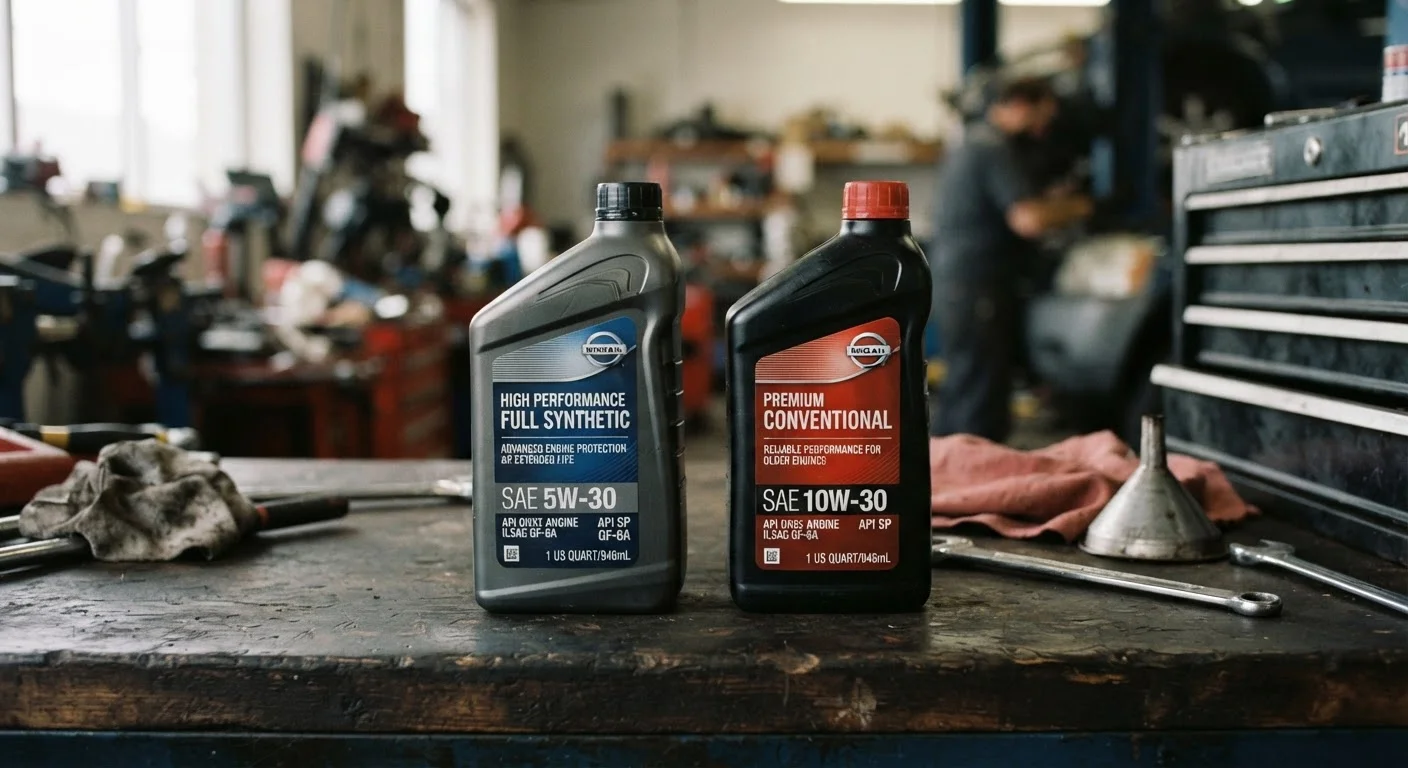
Photo: UltraSearches.com | Search Results You Can Trust editorial
Key Takeaways
- Synthetic oil is chemically engineered for more uniform molecules, offering better performance in extreme temperatures.
- Conventional oil comes from refined crude petroleum and works reliably in standard driving conditions.
- Synthetic oil typically allows longer change intervals, though your owner's manual always takes priority.
- The right oil type depends on your vehicle's specifications, climate, and driving habits - not brand loyalty.
- Switching from conventional to synthetic is generally safe for most modern engines; consult your mechanic for older vehicles.
What Makes These Oils Different
Motor oil performs one essential job: reduce friction between moving engine parts while carrying away heat and contaminants. Both synthetic and conventional oils do this, but they start from different raw materials and go through very different manufacturing processes.
Conventional motor oil is derived from refined crude petroleum. The refining process removes many impurities, but natural crude contains a mix of molecular structures that can vary in size and shape - a limitation that affects performance at temperature extremes.
Synthetic motor oil is chemically engineered, typically starting from a base stock (often a highly refined petroleum or a compound like polyalphaolefin) and built up to precise molecular specifications. This uniformity means fewer impurities and more predictable behavior under stress.
For a broader look at all the fluids your car depends on, see The Fluids Your Car Depends On.
| Criterion | Synthetic Motor Oil | Conventional Motor Oil |
|---|---|---|
| Base material | Chemically engineered base stocks | Refined crude petroleum |
| Molecular consistency | Highly uniform | Variable |
| Cold-weather flow | Superior at low temperatures | Thickens more in cold |
| Heat resistance | Resists oxidation longer | Breaks down faster under sustained heat |
| Typical change interval | 7,500-10,000+ miles (varies by vehicle) | 3,000-5,000 miles (varies by vehicle) |
| Cost per quart | Generally higher | Generally lower |
| Best conditions | Extreme temps, heavy loads, longer intervals | Mild climates, standard driving, older engines |
Performance in Real-World Conditions
The molecular consistency of synthetic oil translates into measurable advantages in two scenarios: extreme cold and extreme heat.
In cold weather, conventional oil thickens more than synthetic, which means the first seconds after a cold start - when most engine wear occurs - can be harder on components. Synthetic oils flow more readily at low temperatures, reaching critical parts faster.
In high heat or under heavy load (towing, stop-and-go traffic in summer, track driving), conventional oil can break down more quickly through a process called oxidation. Synthetic oils resist oxidation longer, maintaining their protective film under sustained stress.
~90%
Engine wear occurring at cold start
Industry engineering literature widely notes that the majority of engine wear occurs in the first moments after startup, before oil fully circulates.
7,500-10,000 mi
Typical synthetic oil change interval
Many vehicle manufacturers specify these intervals for full-synthetic oil; always verify against your owner's manual.
That said, conventional oil performs reliably for the vast majority of everyday driving. If your vehicle is relatively new, driven in a mild climate, and serviced on schedule, either type can protect your engine effectively when the correct grade is used.
Change Intervals and Practical Costs
One of the most common misconceptions in auto maintenance is the universal 3,000-mile oil change rule. Modern vehicles, particularly those filled with full synthetic, often have manufacturer-specified intervals of 7,500 to 10,000 miles - some even longer. For more on this and other outdated car care advice, see Car Maintenance Myths That Cost Drivers Real Money.
Synthetic oil typically costs more per quart than conventional. However, because it lasts longer between changes, the annual cost difference may be smaller than it appears at first. The key variable is how many miles you drive annually and what your manufacturer recommends.
Important: Your owner's manual specifies the oil viscosity grade (such as 5W-30) and, in many cases, a preferred oil type. Following those specifications matters for both engine protection and warranty compliance. If you are unsure what your vehicle requires, a qualified mechanic can advise you based on your specific make, model, and mileage.
Understanding why consistent oil changes matter regardless of oil type is covered in detail in Oil Changes: What Actually Happens If You Skip Them.
Synthetic Blends: A Middle Ground
The content on this site is for informational purposes only and is not a substitute for professional advice. Always consult a qualified professional for guidance specific to your situation.