
Your Car's Warning Lights, Decoded

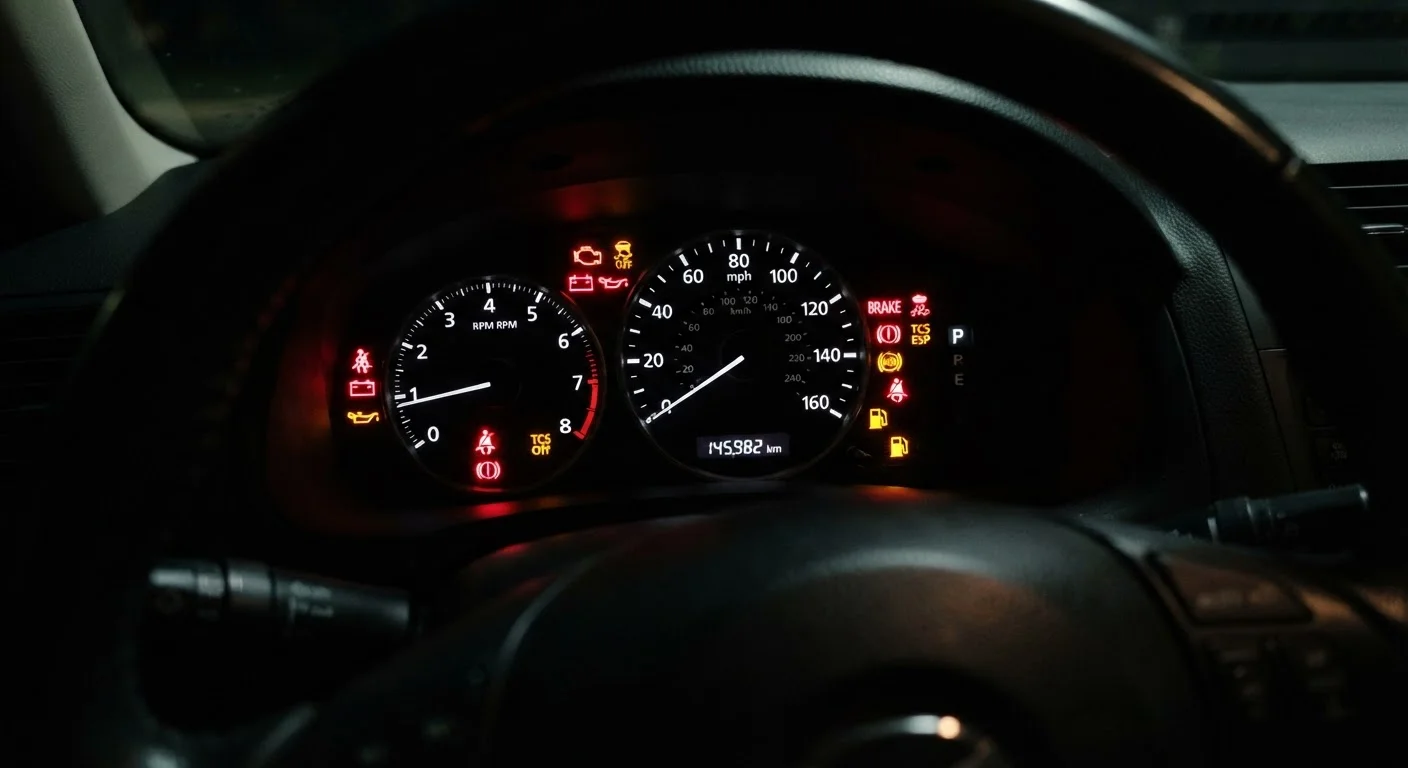
Photo: UltraSearches.com | Search Results You Can Trust editorial
Why Warning Lights Deserve Your Attention
Most drivers have experienced it: a light appears on the dashboard, and uncertainty sets in. Is it serious? Can you keep driving? Modern vehicles use a standardized system of warning icons that range from routine reminders to urgent alerts requiring immediate action. Understanding the difference is one of the most practical skills any driver can have.
Warning lights are generally color-coded by urgency. Red signals demand immediate attention - continuing to drive may cause damage or create a safety risk. Amber or yellow lights indicate a system that needs attention soon but isn't necessarily an emergency. Green or blue lights are informational, confirming that a feature is active.
Your owner's manual is the definitive reference for your specific vehicle. When in doubt, consult it or speak with a qualified mechanic.
| Colors used in U.S. dashboard warning systems | Red (urgent), Amber/Yellow (caution), Green/Blue (informational) (SAE International / NHTSA standards) |
| TPMS mandatory on U.S. passenger vehicles since | 2008 model year (NHTSA TPMS Final Rule) |
| Recommended action for a flashing check engine light | Reduce speed; seek service promptly - active misfire suspected (General industry guidance) |
| Time to engine damage with no oil pressure | Can occur within minutes of continued driving (General mechanical consensus) |
| Where to find your vehicle's correct tire PSI | Driver's door jamb sticker (not the tire sidewall) |
The Most Common Warning Lights Explained
The following lights appear across the majority of passenger vehicles sold in the U.S. and follow broadly consistent meanings, though your vehicle's manual always takes precedence.
Malfunction Indicator Lamp (MIL)
The formal name for the check engine light. It illuminates when the vehicle's onboard diagnostic system detects a fault code in the engine or emissions system. A technician uses a scan tool to read the specific code.
TPMS
Tire Pressure Monitoring System. A federally required sensor system (on U.S. vehicles since 2008) that alerts drivers when tire pressure drops to an unsafe level.
Catalytic Converter
An emissions control device in the exhaust system that converts harmful combustion byproducts into less harmful gases. Engine misfires can overheat and destroy it.
Oil Pressure
The force at which engine oil is circulated through the engine's lubrication system. Insufficient pressure means moving parts aren't being adequately lubricated, risking rapid engine damage.
Alternator
A generator driven by the engine that recharges the battery and powers electrical systems while the vehicle is running. A failing alternator is a common cause of the battery warning light.
Stability Control
An electronic safety system that automatically applies braking to individual wheels to help the driver maintain directional control during skids or loss of traction.
Check Engine (Malfunction Indicator Lamp)
This amber engine-shaped icon is among the most misunderstood lights on any dashboard. It can signal anything from a loose gas cap to a misfiring cylinder. A steady light generally means you can drive to a shop soon; a flashing check engine light typically indicates an active misfire that can damage the catalytic converter - reduce speed and seek service promptly.
Oil Pressure Warning
A red oil can symbol means your engine's oil pressure has dropped to a potentially damaging level. Pull over safely and turn off the engine as soon as it is safe to do so. Driving with low oil pressure can cause severe and expensive engine damage within minutes. Check the oil level once the engine is off. If the level is adequate and the light persists, have the vehicle towed - do not drive it. For more on engine fluids, see our guide to the fluids your car depends on.
Battery / Charging System
A red battery icon indicates the charging system isn't maintaining adequate voltage. The alternator, battery, or wiring may be at fault. You may have limited driving time before the vehicle loses power. Head to a mechanic without making unnecessary electrical demands (turn off the A/C, heated seats, etc.).
Coolant Temperature Warning
A thermometer icon submerged in liquid, typically red, signals that your engine is overheating. Pull over, turn off the engine, and allow it to cool before checking the coolant reservoir. Never open a hot radiator cap. Overheating can warp cylinder heads - a repair that runs into thousands of dollars.
Brake System Warning
A red circle with an exclamation point or the word BRAKE can indicate low brake fluid, a hydraulic fault, or that the parking brake is engaged. Release the parking brake and check if the light clears. If it remains on, have brakes inspected immediately. Brake wear has other warning signs too - grinding, pulling, or a soft pedal all warrant professional evaluation.
Tire Pressure Monitoring System (TPMS)
This amber icon - a cross-section of a tire with an exclamation point - activates when one or more tires fall significantly below the recommended pressure. Check all four tires with a gauge and inflate to the PSI listed on the driver's door jamb sticker. The light may also appear if a tire is dramatically over-inflated.
Traction Control / Stability Control
A car icon with squiggly lines underneath usually means the system is actively working to prevent wheel slip - normal during slippery conditions. If the light stays on continuously, the system may be disabled or malfunctioning and should be inspected.
When to Stop Immediately vs. Drive to a Shop
Not every warning light means you should pull over right now. Use this general framework - always verify against your owner's manual:
| Stop Immediately | Drive to Shop Soon | Monitor / Schedule Service |
|---|---|---|
| Oil pressure (red) | Check engine (steady amber) | Tire pressure (amber) |
| Overheating (red) | Battery / charging system | Service due reminder |
| Brake system fault (red) | Check engine (flashing - reduce speed) | Traction control (steady) |
If you're ever uncertain whether a light warrants stopping, err on the side of caution. A tow is far less expensive than a seized engine or failed brakes.
OBD-II Readers Can Help Narrow Down the Problem
This article provides general educational information about vehicle warning systems. It is not a substitute for your vehicle's owner's manual or advice from a qualified mechanic. Always consult a professional for diagnosis and repair decisions specific to your vehicle.
The content on this site is for informational purposes only and is not a substitute for professional advice. Always consult a qualified professional for guidance specific to your situation.