
School Zones, Work Zones, Emergency Vehicles: Rules Drivers Routinely Forget

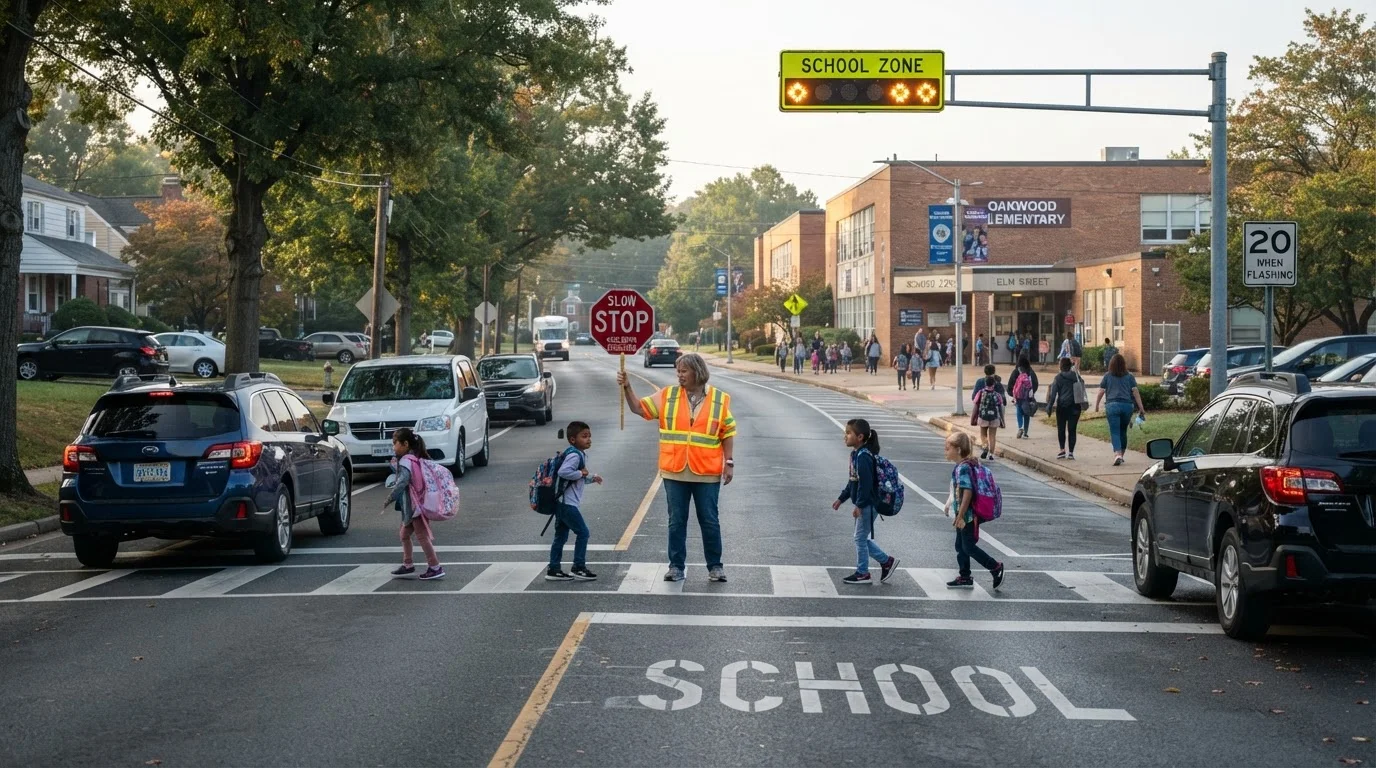
Photo: UltraSearches.com | Search Results You Can Trust editorial
School Zones: More Rules Than Just a Lower Speed Limit
Most drivers know to slow down near schools - but the specific obligations go well beyond the posted number on the sign. School zone speed limits in the U.S. typically range from 15 to 25 mph, but they're only in effect during designated hours, which vary by state and sometimes by district. Some jurisdictions activate limits whenever children are present; others tie them to a fixed time window. Driving through at 30 mph because the school appears empty can still result in a citation if the flashing lights or signs indicate the zone is active.
Additional rules drivers frequently overlook:
- No passing school buses with extended stop arms. In all 50 states, drivers traveling in both directions - including on divided roads in many states - must stop when a school bus has its stop arm extended and red lights flashing. Penalties for violations are substantial and can include license suspension.
- Crosswalk behavior. Pedestrians in a crosswalk have the right of way. Drivers must stop and remain stopped until the pedestrian has fully cleared the lane - not just stepped off the curb. See right-of-way rules for a full breakdown.
- No cell phone use. Many states impose blanket hand-held device bans in school zones, regardless of their general distracted driving laws.
Fines in school zones are frequently doubled or tripled compared to standard traffic infractions. Check your state DMV or local municipality for exact hours and penalty structures.
Work Zones: High Fines, Reduced Margins, Real Danger
Work zones are among the most dangerous road environments in the country. According to the Federal Highway Administration, thousands of crashes occur in work zones annually, injuring both road workers and drivers. The legal framework reflects that risk.
857
Work zone fatalities in one recent year (U.S.)
According to the Federal Highway Administration, work zone crashes killed 857 people in a recent reporting year, underscoring the acute danger of these environments.
2x-3x
Fine multiplier in most active work zones
The majority of U.S. states impose doubled or tripled fines for speeding and other moving violations committed within posted work zone boundaries.
Key rules that drivers routinely ignore:
- Reduced speed limits apply immediately. Work zone speed reductions begin at the first warning sign - not when you see the workers or cones. Maintaining highway speed until the last moment is both illegal and unsafe.
- Move Over laws apply to stationary work vehicles. Most states require drivers to move over a lane (or slow down significantly when a lane change isn't possible) when passing stopped vehicles with flashing amber lights, which includes many road maintenance trucks.
- Fines are doubled - and in some states, license points are doubled too. Many states enforce enhanced penalties in active work zones, with some imposing mandatory minimums for speeding violations.
- Workers have right of way in marked work areas. When flaggers are directing traffic, their instructions override standard traffic signals and signs. Ignoring a flagger is a moving violation.
The posted speed limit isn't always the safe speed - in work zones especially, conditions like narrowed lanes, uneven pavement, and unexpected stops demand additional buffer space and attention.
| Typical school zone speed | 15-25 mph (when active) (Varies by state and local ordinance) |
| School bus stop arm: required stop? | Yes - all 50 states; both directions on undivided roads (State traffic codes) |
| Move Over laws active in | All 50 U.S. states (National Conference of State Legislatures) |
| Work zone speed enforcement | Enhanced fines begin at the first warning sign (Federal Highway Administration guidance) |
| Flagger instructions override | Traffic signals and standard signs (Manual on Uniform Traffic Control Devices (MUTCD)) |
| Emergency vehicle: required action | Pull right and stop completely (Standard across U.S. state vehicle codes) |
Emergency Vehicles: What 'Move Over' Actually Requires
Move Over laws now exist in all 50 states, but compliance remains inconsistent. The core obligation: when an emergency vehicle is approaching with lights and sirens activated, drivers must pull to the right and stop - not just slow down, not just move to the right lane on a highway. Stop.
On multi-lane roads, the practical steps are:
- Check mirrors and signal before moving right.
- Pull as far right as safely possible - ideally to the shoulder or curb.
- Come to a complete stop and remain stopped until the emergency vehicle has passed.
- Do not proceed through an intersection if an emergency vehicle is approaching, even on a green light.
Move Over laws also apply to stationary emergency and law enforcement vehicles. When passing a stopped police car, ambulance, fire truck, or roadside assistance vehicle with lights flashing on a highway, drivers must move to an adjacent lane if it is safe to do so. When a lane change isn't possible, the law in most states requires a significant speed reduction - often to 20 mph below the posted limit. Violations typically carry fines starting at several hundred dollars and can result in license suspension for repeat offenses.
Understanding what road signs are communicating also helps drivers anticipate emergency scenarios earlier and react with more time to spare.
When You Can't Safely Move Over
For drivers building foundational habits, the road safety guide for new drivers covers these scenarios alongside the broader framework of defensive driving.
The content on this site is for informational purposes only and is not a substitute for professional advice. Always consult a qualified professional for guidance specific to your situation.