
Workplace Stress vs. Burnout: Why the Distinction Matters for Recovery

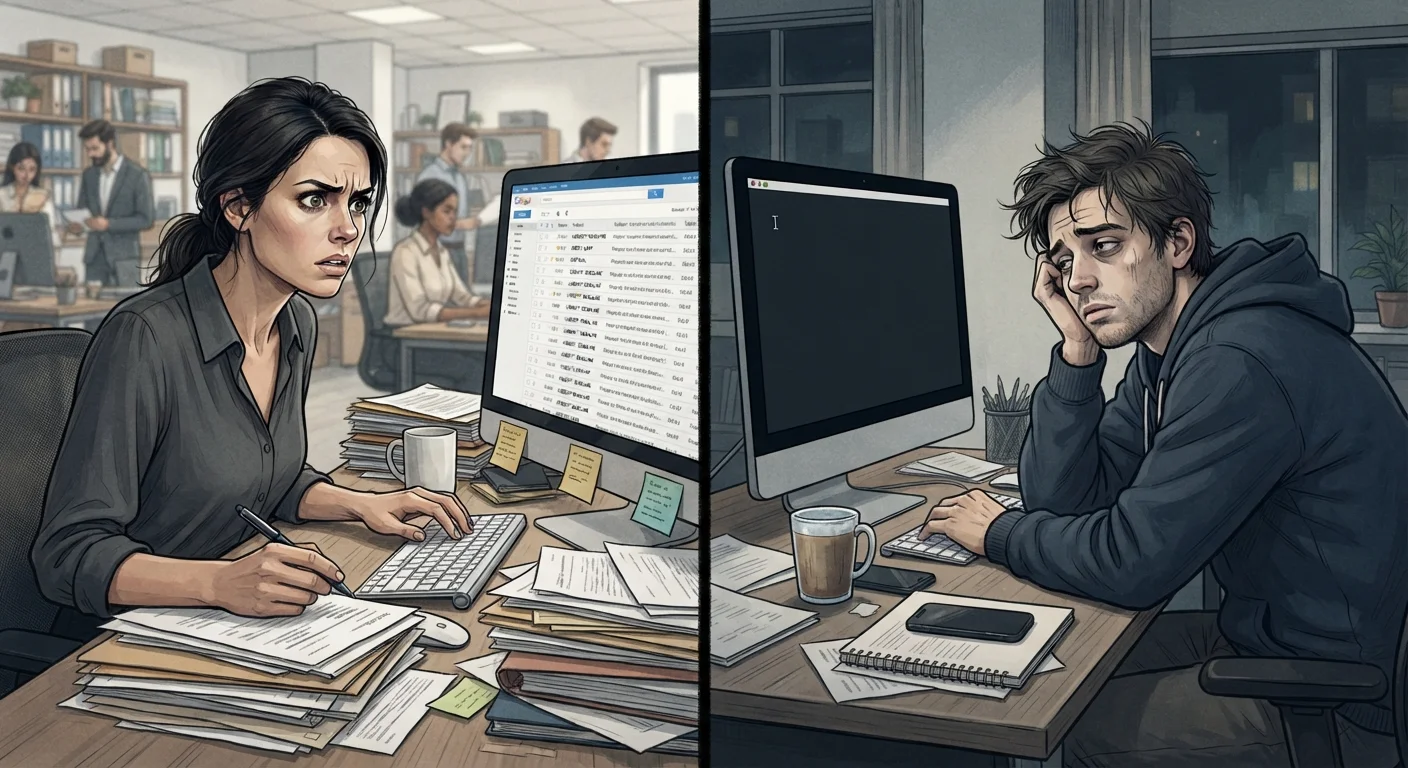
Photo: UltraSearches.com | Search Results You Can Trust editorial
Key Takeaways
- Stress typically involves too much pressure; burnout involves too little left to give.
- A stressed person often still feels urgency; someone burned out feels emotionally numb or detached.
- Rest can relieve stress, but burnout usually requires structural changes to workload, boundaries, or support.
- Misidentifying burnout as ordinary stress may delay appropriate and effective recovery.
- Both conditions carry real physical health consequences if left unaddressed.
- A mental health professional can help distinguish these states and guide next steps.
Two Different States, Frequently Confused
Most people use "stress" and "burnout" as if they mean the same thing. In everyday conversation, that's understandable - both feel awful, and both originate in the pressures of work. But clinically and practically, they are distinct experiences, and confusing them leads to recovery strategies that don't match the problem.
Workplace stress is generally defined as a state of tension produced when demands exceed a person's current capacity to cope. Crucially, a stressed person typically still wants to succeed - the pressure feels suffocating, but the underlying engagement with work is alive. Burnout, by contrast, is characterized by chronic exhaustion, growing cynicism toward one's job, and a reduced sense of personal accomplishment. The World Health Organization classifies burnout as an occupational phenomenon resulting from chronic workplace stress that has not been successfully managed.
The distinction matters because the remedies diverge. Chronic stress wears the body down through sustained activation of the body's stress-response systems - but stress, when addressed early, is generally reversible with the right interventions. Burnout signals that those systems have been running on empty for so long that a quick reset won't be enough.
How to Tell Them Apart: Key Differences
The clearest way to distinguish the two is to observe what happens when you step away from work - even briefly.
| Criterion | Workplace Stress | Burnout |
|---|---|---|
| Core feeling | Too much to handle | Nothing left to give |
| Emotional state | Anxious, urgent, irritable | Numb, detached, cynical |
| Engagement with work | Still present, though strained | Significantly diminished |
| Effect of rest | Meaningful relief | Little or no restoration |
| Onset | Often acute or situational | Gradual, chronic accumulation |
| Primary recovery approach | Stress-management techniques, rest | Structural change, professional support |
| Physical symptoms | Tension, headaches, poor sleep | Persistent fatigue, frequent illness |
A person experiencing stress often feels relief during a vacation or a quiet weekend. They may return to work recharged. Someone in burnout frequently finds that time off provides little restoration; the emptiness and detachment persist even after rest. That gap - between rest taken and recovery felt - is one of the most telling signs that burnout, not ordinary stress, is at work.
Emotionally, stress tends to produce urgency, irritability, and anxiety. Burnout more often manifests as emotional numbness, disengagement, or a creeping sense that nothing you do at work matters. Researchers Maslach and Leiter, whose work forms the foundation of burnout science, identified three core dimensions: exhaustion, cynicism, and inefficacy. Stress produces none of these in combination at the chronic level burnout does.
77%
Workers who have experienced burnout
A Deloitte workplace survey found that 77% of respondents had experienced burnout at their current job, with more than half citing it as occurring more than once.
3 dimensions
Core components of burnout (Maslach)
Researchers Christina Maslach and Michael Leiter identified exhaustion, cynicism, and reduced efficacy as the three defining dimensions of occupational burnout.
Why the Right Label Shapes the Right Recovery
Applying a stress remedy to burnout is one of the most common recovery mistakes. A mental health day, a weekend hike, or a mindfulness session may genuinely ease acute stress. Applied to burnout, these same tools often feel hollow - and when they fail to help, people sometimes blame themselves rather than recognizing the mismatch. Self-care advice frequently misses the mark precisely because it addresses stress-level symptoms while burnout requires deeper structural change.
Recovering from burnout typically involves addressing root causes: unsustainable workload, lack of autonomy, absence of meaningful recognition, or a breakdown in workplace community. That may mean negotiating role boundaries, seeking manager support, reducing responsibilities, or in some cases, changing environments altogether. It also often benefits from professional guidance - a therapist, counselor, or occupational health provider can help someone understand what they're experiencing and build a realistic recovery plan.
For stress, evidence-based strategies such as structured relaxation, breathing and meditation practices, physical activity, and improved sleep hygiene can make a genuine difference. These are valuable tools - but they work best when the underlying problem is acute overload, not chronic depletion.
If you're uncertain which state describes your experience, that uncertainty itself is worth taking seriously. A mental health day can be valuable - but only if it's matched to the right problem. Speaking with a qualified mental health professional is the most reliable way to get an accurate read on where you are and what you need.
This article is for general informational and educational purposes only and does not constitute medical or mental health advice. If you are experiencing significant distress, please consult a qualified healthcare or mental health professional.
The content on this site is for informational purposes only and is not a substitute for professional advice. Always consult a qualified professional for guidance specific to your situation.