
Front-Load vs. Top-Load Washing Machines: Which Fits Your Household?

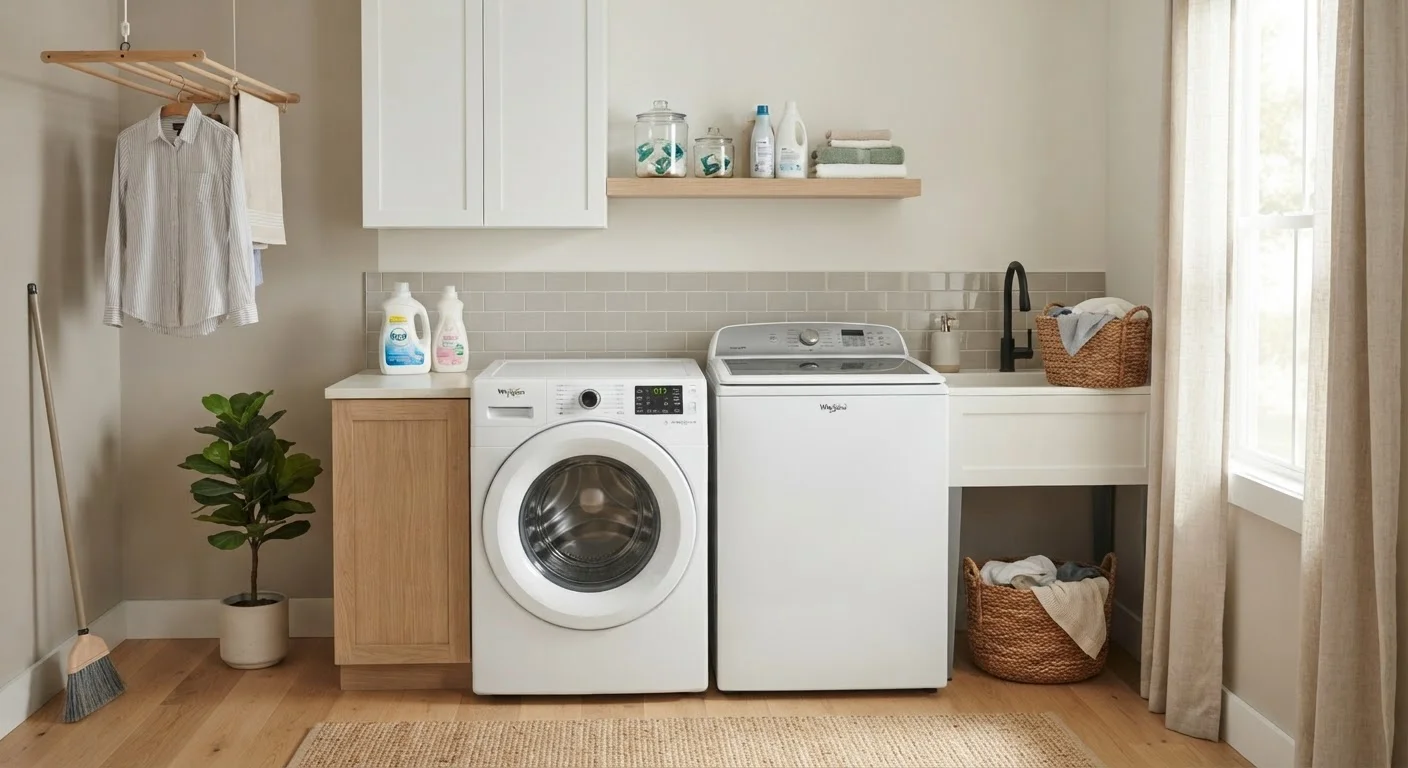
Photo: UltraSearches.com | Search Results You Can Trust editorial
Key Takeaways
- Front-load washers use significantly less water and energy per cycle than most top-load models.
- Top-load agitator models are generally less expensive upfront and easier to maintain.
- Front-loaders clean more gently, which tends to extend the life of fabrics over time.
- Top-loaders allow you to add forgotten items mid-cycle - front-loaders typically do not.
- Front-load drums are more prone to mold and mildew without consistent maintenance routines.
- Your laundry space layout and physical accessibility needs should factor into the decision.
How Each Machine Actually Cleans
The core difference between these two washer types is mechanical: front-load machines use a tumbling drum action, repeatedly lifting and dropping clothes through a small amount of water. Top-load agitator models use a central post that physically moves clothes through a fuller water basin. High-efficiency (HE) top-loaders - which omit the agitator in favor of an impeller plate - fall somewhere in between, using less water but a different motion than either traditional type.
Front-loaders generally produce a more thorough clean with less wear on fabric because the tumbling motion is gentler than agitator scrubbing. Consumer testing data consistently shows front-loaders outperforming standard top-loaders on stain removal, particularly for delicate or heavily soiled loads. That said, HE top-loaders have closed the gap considerably in recent years and may satisfy most everyday cleaning needs.
| Criterion | Front-Load Washer | Top-Load Washer |
|---|---|---|
| Water use per load | ~13-15 gallons | ~20-40 gallons (agitator) |
| Typical spin speed | 1,000-1,400 RPM | 700-900 RPM |
| Cleaning performance | Generally superior | Good; HE models competitive |
| Upfront cost | Higher | Lower to mid-range |
| Mold/odor risk | Higher without maintenance | Lower |
| Stackable | Yes | No |
| Mid-cycle item addition | Not possible on most models | Possible on most models |
| Fabric gentleness | Gentler (tumble action) | More abrasive (agitator) |
Water Use, Energy Efficiency, and Operating Costs
Front-load washers are certified more energy-efficient under the U.S. EPA's ENERGY STAR program at notably higher rates than agitator top-loaders. A front-loader typically uses around 13-15 gallons of water per load, compared to 20-40 gallons for a traditional top-load agitator model. Over years of daily or near-daily use, this difference adds up meaningfully on utility bills.
~40%
Less water used per cycle
Front-load washers use roughly 40% less water per load compared to traditional top-load agitator models, according to ENERGY STAR program data.
Up to 25%
Energy savings potential
ENERGY STAR-certified front-load washers can use up to 25% less energy than standard non-certified top-load machines.
10-14 years
Average washer lifespan
Both front-load and top-load washers generally last between 10 and 14 years with routine maintenance, based on appliance industry estimates.
Front-loaders also have faster spin speeds - often 1,000-1,400 RPM versus 700-900 RPM on most top-loaders - which removes more water before the dryer cycle begins. This can shorten drying time and reduce dryer energy use as a secondary effect. For a deeper look at how washer and dryer choices affect your total household utility spending, see how appliances affect year-round utility bills.
Maintenance Demands and Longevity
This is where front-loaders have a real disadvantage for some households. The rubber door gasket and drum of a front-loader trap moisture after cycles, creating conditions where mold and mildew can develop if the door is left closed and the drum isn't regularly wiped down. Users need to establish a consistent routine: leave the door ajar after each cycle, wipe the gasket, and run a drum-cleaning cycle monthly.
Top-load machines are less prone to this issue because water drains more freely and the lid doesn't create the same sealed environment. They're also generally easier and cheaper to service - front-loader drum bearings and door seals are more complex to replace. According to general appliance industry data, both types average around 10-14 years of useful life when properly maintained. For a reference point on expected longevity, the appliance lifespan reference guide covers washers alongside other major household units. And for practical steps to extend either type's life, see the major appliance maintenance checklist.
HE Detergent Is Not Optional for Front-Loaders
Space, Installation, and Ergonomics
Front-loaders are stackable with a compatible dryer, making them the practical choice for closet laundry setups or apartments with limited square footage. Top-loaders require clear vertical access above the drum and cannot be stacked, so they demand more dedicated floor space. If your laundry area has low overhead clearance or sits in a narrow alcove, a front-loader may be the only viable option - though pedestal risers add height that can complicate clearance in some spaces.
Ergonomics cut differently depending on the user. Front-loaders require bending at knee level to load and unload unless a pedestal is added. Top-loaders require reaching into a deep drum, which can be awkward for shorter individuals or those with shoulder limitations. Neither design is universally comfortable; the right choice depends on your specific physical situation and setup. This kind of practical fit evaluation matters as much as any spec comparison.
The content on this site is for informational purposes only and is not a substitute for professional advice. Always consult a qualified professional for guidance specific to your situation.