
Smart Appliances at Home: Connectivity Features Worth Understanding

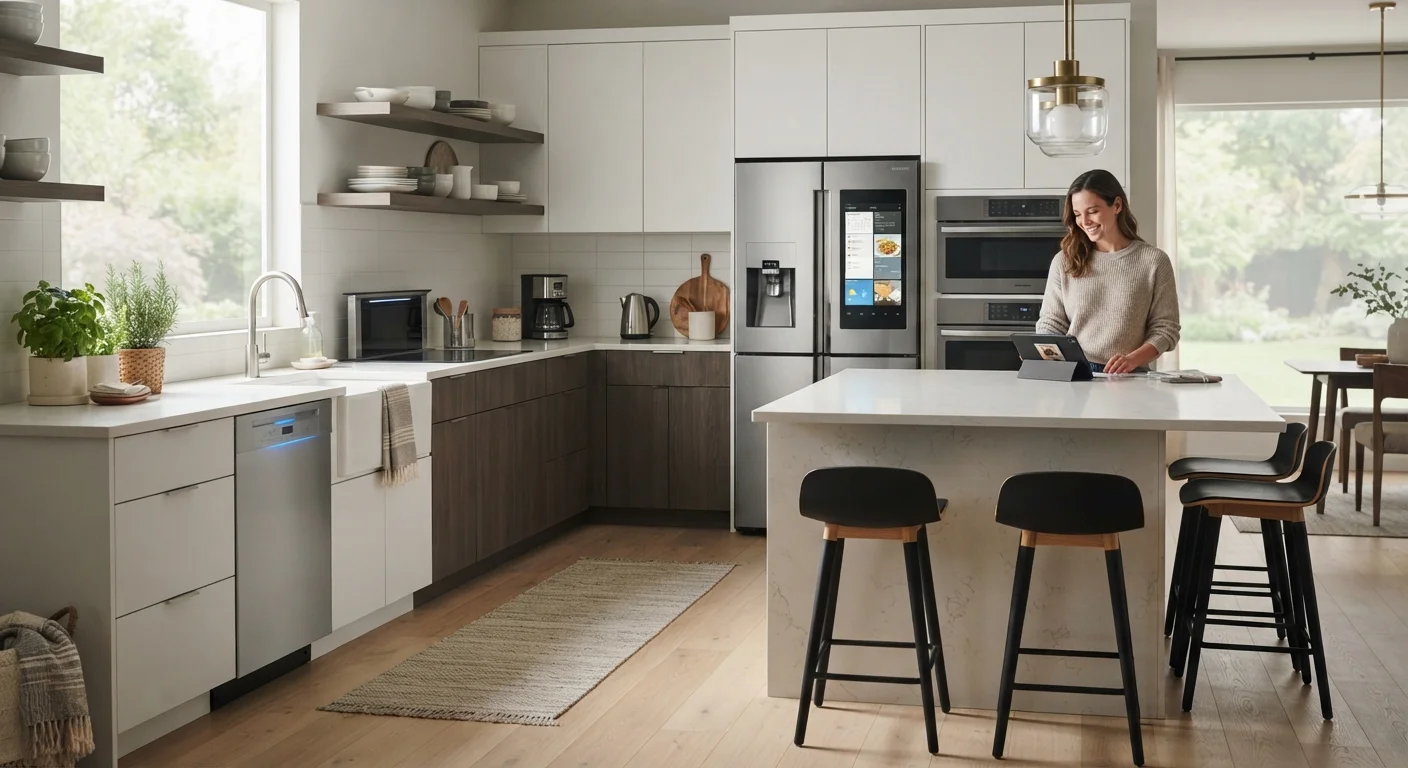
Photo: UltraSearches.com | Search Results You Can Trust editorial
Key Takeaways
- Smart appliances use Wi-Fi or Bluetooth to enable remote monitoring, diagnostics, and voice assistant integration.
- Connectivity features can add real convenience but also introduce privacy, security, and compatibility trade-offs.
- Many smart features depend on stable home Wi-Fi and ongoing software support from the manufacturer.
- Remote diagnostics can reduce unnecessary service calls, though they don't replace professional repairs.
- Not every household will use smart features enough to justify the added cost over standard models.
Remote monitoring reduces unnecessary in-person checks
Receiving a smartphone alert when a wash cycle ends or a freezer door is ajar saves trips to the laundry room or kitchen and can prevent food spoilage.
Diagnostic reporting can streamline service visits
Some manufacturers' apps can transmit error codes directly to service teams, allowing technicians to diagnose problems before arriving - potentially shortening repair time.
Energy usage data supports more informed habits
Apps that display per-cycle energy consumption give homeowners concrete data to act on, such as shifting heavy loads to off-peak hours where time-of-use utility pricing applies.
Voice assistant integration suits smart home setups
For households already using voice assistants or home automation hubs, adding compatible appliances extends existing routines without significant extra learning.
Manufacturers can push software improvements over time
Over-the-air firmware updates can add features or fix bugs without a technician visit - provided the manufacturer continues to support the product.
Functionality depends on stable home Wi-Fi
If your router goes down or signal is weak near the appliance, most smart features become unavailable. Unlike conventional appliances, connectivity issues can disrupt basic app-dependent functions.
Manufacturer app support may not last appliance's lifetime
Appliances typically last 10-15 years; app and cloud infrastructure may be discontinued sooner, stripping away the smart features while the hardware itself still runs.
Privacy implications of data collection
Connected appliances transmit usage data to manufacturer servers. The scope of data collected varies by brand, and users should review privacy terms before connecting devices to their network.
Higher upfront cost over comparable standard models
Smart appliances routinely cost more than non-connected equivalents with similar core specs. That premium only pays off if connectivity features are used regularly.
Increased setup complexity for non-technical users
Initial setup requires network configuration, app account creation, and sometimes hub pairing - steps that can be frustrating if the process doesn't go smoothly.
More components mean additional potential failure points
Wi-Fi modules, embedded sensors, and touchscreen interfaces add hardware complexity. If these components fail, repairs may be more involved than for a standard model.
What 'Smart' Actually Means in an Appliance Context
The term smart appliance refers to any household appliance - refrigerator, washer, dishwasher, oven, or dryer - that connects to a home network, typically via Wi-Fi or Bluetooth, and can communicate with a companion smartphone app, a voice assistant platform, or other connected devices.
At a practical level, connectivity enables three broad capabilities: remote control (starting, pausing, or adjusting settings from your phone), status monitoring (receiving alerts when a cycle finishes or when a door is left open), and diagnostic reporting (the appliance relaying error codes or performance data directly to you or a service center). Some models also support integration with smart home hubs or energy management systems.
Understanding what's actually on offer - rather than what marketing copy suggests - helps separate features that genuinely fit your household from those that sound appealing but rarely get used. If you're weighing a broader kitchen setup, the new homeowner appliance guide covers foundational decisions worth making first.
The Real Advantages of Connected Appliances
When connectivity features are well-implemented, they can translate into measurable convenience and, in some cases, lower operating costs.
Remote monitoring reduces unnecessary in-person checks
Receiving a smartphone alert when a wash cycle ends or a freezer door is ajar saves trips to the laundry room or kitchen and can prevent food spoilage.
Diagnostic reporting can streamline service visits
Some manufacturers' apps can transmit error codes directly to service teams, allowing technicians to diagnose problems before arriving - potentially shortening repair time.
Energy usage data supports more informed habits
Apps that display per-cycle energy consumption give homeowners concrete data to act on, such as shifting heavy loads to off-peak hours where time-of-use utility pricing applies.
Voice assistant integration suits smart home setups
For households already using voice assistants or home automation hubs, adding compatible appliances extends existing routines without significant extra learning.
Manufacturers can push software improvements over time
Over-the-air firmware updates can add features or fix bugs without a technician visit - provided the manufacturer continues to support the product.
10-15 yrs
Typical major appliance lifespan
Industry service-life estimates suggest most large appliances are designed to last a decade or more - meaning software support timelines deserve the same scrutiny as hardware quality.
~30%
Smart home device owners who use all features
Consumer research consistently finds that a significant portion of smart device owners stop using advanced features within months of setup, relying on the appliance in basic mode.
Remote diagnostics are among the more consistently useful features. Many manufacturers allow their service systems to receive automated error data directly from the appliance, which can shorten service call times and help technicians arrive with the right parts. This doesn't eliminate repair costs, but it can reduce the diagnostic portion of a visit.
Energy monitoring is another practical application. Appliances that report consumption data to an app let households see which cycles or settings draw the most power - information that's harder to gather with a standard model. That insight complements the broader picture covered in what affects an appliance's energy consumption.
Connectivity Trade-Offs Worth Knowing About
Smart features introduce a set of dependencies that standard appliances simply don't have. Understanding these before purchasing prevents frustration later.
Functionality depends on stable home Wi-Fi
If your router goes down or signal is weak near the appliance, most smart features become unavailable. Unlike conventional appliances, connectivity issues can disrupt basic app-dependent functions.
Manufacturer app support may not last appliance's lifetime
Appliances typically last 10-15 years; app and cloud infrastructure may be discontinued sooner, stripping away the smart features while the hardware itself still runs.
Privacy implications of data collection
Connected appliances transmit usage data to manufacturer servers. The scope of data collected varies by brand, and users should review privacy terms before connecting devices to their network.
Higher upfront cost over comparable standard models
Smart appliances routinely cost more than non-connected equivalents with similar core specs. That premium only pays off if connectivity features are used regularly.
Increased setup complexity for non-technical users
Initial setup requires network configuration, app account creation, and sometimes hub pairing - steps that can be frustrating if the process doesn't go smoothly.
More components mean additional potential failure points
Wi-Fi modules, embedded sensors, and touchscreen interfaces add hardware complexity. If these components fail, repairs may be more involved than for a standard model.
Software longevity is a real concern. Unlike a conventional washer that will run identically in fifteen years, a smart appliance's app-dependent features may stop working if the manufacturer discontinues support for an older app version or cloud service. Some manufacturers have already sunset companion apps for earlier product lines, effectively removing the 'smart' functionality while the appliance itself remains functional.
Privacy is also a legitimate consideration. Connected appliances collect usage data - cycle frequency, settings preferences, sometimes location context - that is transmitted to manufacturer servers. Reading the privacy policy before setup is advisable, not optional. For homeowners already thinking about home protection more broadly, auto and home insurance basics touches on coverage considerations for technology in the home.
Network Security Is Part of the Picture
When Smart Features Justify the Extra Cost - and When They Don't
The honest answer is that smart connectivity adds cost - typically $100-$300 more than a comparable non-connected model - and that premium is only worthwhile if you'll use the features consistently.
Households that already use a smart home ecosystem (such as a voice assistant or smart thermostat) will likely find appliance integration easier to adopt and more immediately useful. Those who want detailed energy tracking alongside an interest in reducing utility bills may also find the monitoring features genuinely informative. You can see how standby power and runtime costs accumulate in the hidden costs of running home appliances year-round.
On the other hand, households with inconsistent Wi-Fi, residents who prefer simplicity, or anyone who is unlikely to download and regularly use a companion app are better served by a well-built standard appliance. Smart features left unused still add complexity - and in some cases, additional points of potential failure. Reviewing what appliance warranties typically cover is worth doing regardless of which type you choose, since smart-specific software issues often fall outside standard warranty terms.
For broader consumer decision-making principles, the smart buying tips hub provides practical frameworks that apply across appliance categories.
The content on this site is for informational purposes only and is not a substitute for professional advice. Always consult a qualified professional for guidance specific to your situation.