
The Hidden Costs That Inflate What You Actually Pay at Checkout

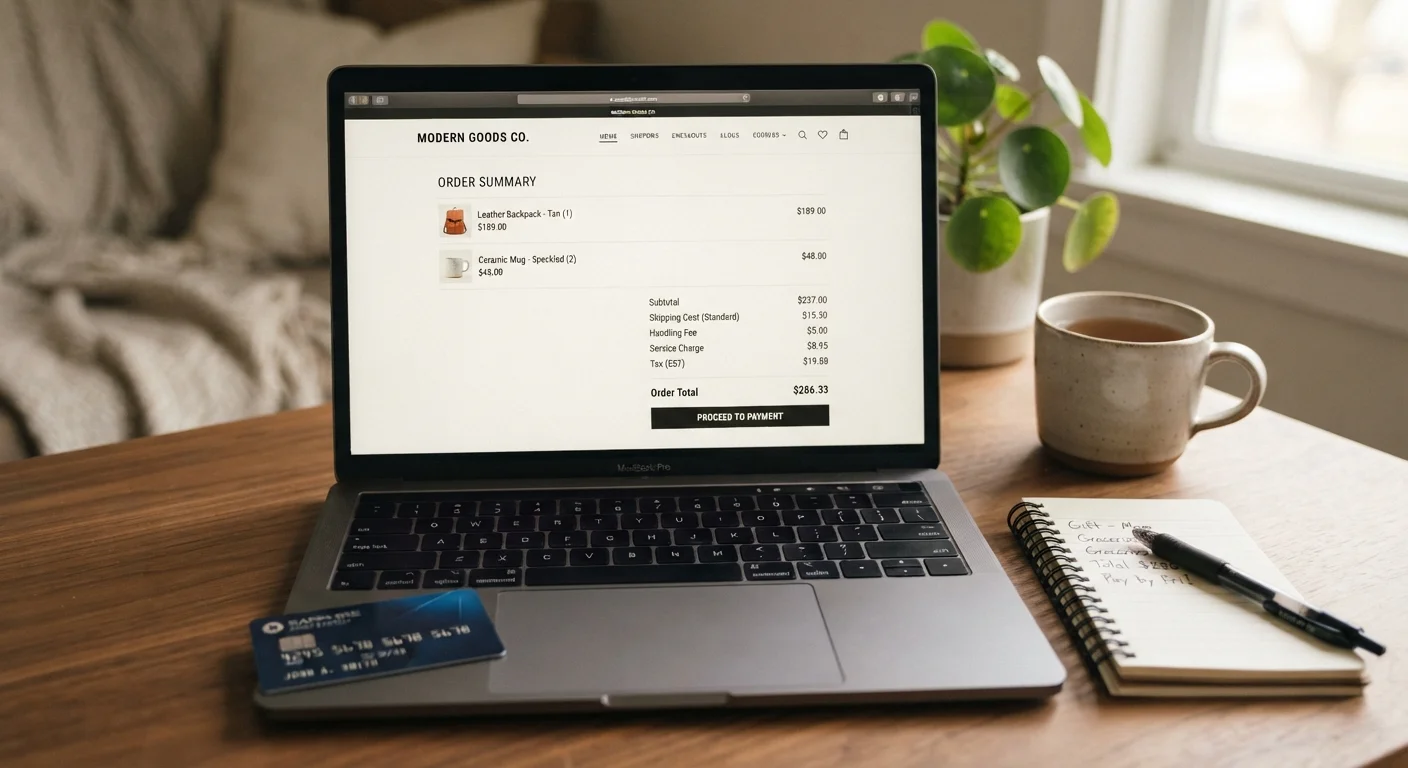
Photo: UltraSearches.com | Search Results You Can Trust editorial
Key Takeaways
- Shipping fees, service charges, and taxes can add 15-30% or more to a product's listed price.
- Subscription minimums and auto-renewing trials are among the most overlooked recurring costs.
- Calculating total cost before purchase - not at checkout - is the most effective protection against fee surprises.
- Some fees are negotiable or waivable; knowing which ones to ask about can reduce what you pay.
- Retailers use pricing structures that make add-on costs easy to miss until the final step.
Why the Listed Price Is Just the Starting Point
A product's advertised price is often a floor, not a ceiling. Between shipping, processing fees, taxes, minimum order thresholds, and auto-renewing subscriptions, the amount you actually hand over can be meaningfully higher than the number that caught your attention. Understanding where these costs hide - and how to account for them before you reach the final screen - is one of the most practical shopping skills available to everyday consumers.
Retailers and platforms are not required to display all-in pricing until checkout in most states, which means comparison shopping based on listed prices alone can be misleading. The good news: most of these costs follow predictable patterns. Once you know what to look for, they become much easier to factor in from the start. For a parallel look at how psychological pricing tactics shape your sense of what's a deal before you even reach fees, see how retailers use price anchoring.
Shipping and Handling Fees
Shipping is the most familiar hidden cost, but it still catches shoppers off guard - particularly when fees vary by item weight, carrier zone, or delivery speed. Handling charges are separate from postage and cover labor and packaging; they're sometimes buried in the fine print rather than displayed as a line item early in checkout.
Watch for minimum order thresholds that unlock free shipping. These can be useful if you genuinely need more product, but they also push consumers to spend more than planned just to avoid a fee. Calculate whether adding items to hit a threshold actually saves money or simply shifts spending.
Handling charges can be a separate line from postage - check fine print early, not at final checkout.
Service and Convenience Fees
Ticketing platforms, food delivery apps, and third-party marketplaces commonly add service fees that range from a few percent to over 20% of the subtotal. These fees are often disclosed only on the final payment screen, making it difficult to include them in upfront price comparisons.
When comparing prices across platforms, search for the fee disclosure section of each service - most are required to publish this information, though it may take some digging. A product that appears cheaper on one platform may cost more after fees than the same item on a platform with a higher listed price but lower or no service charge.
A lower listed price can still be the more expensive option once service fees are applied.
Subscription Requirements and Minimum Commitments
Some products - particularly software, streaming bundles, or subscription boxes - are priced attractively at the item level but require a monthly or annual membership to access that price. The membership cost, spread across actual purchases, may or may not be worth it depending on how frequently you buy.
Free trials are a related concern: many convert automatically to paid plans at the trial's end. If you sign up for a trial to access a one-time discount, set a calendar reminder before the renewal date. For a deeper look at how these structures work, subscription traps and how to avoid them covers the key patterns to recognize.
Membership fees must be factored into per-purchase cost - otherwise savings estimates are overstated.
Pre-Checked Add-Ons and Optional Upsells
Warranties, insurance, accessories, and expedited processing options are frequently pre-selected in checkout flows. A shopper moving quickly through screens may confirm these additions without realizing they've agreed to them. The charges are technically disclosed - they're right there in the cart - but the default-selected status is a design choice that favors the retailer.
Before confirming any order, scroll through the cart and uncheck anything you didn't actively choose. Some add-ons offer genuine value; the point is to make that choice deliberately rather than by inertia.
Default-selected options are a design choice that favors the seller - review every cart line actively.
Taxes, Tariffs, and Import Duties
Sales tax rates vary by state and, in some cases, by county or city. For online purchases, the applicable rate typically depends on where the item ships to. On a $200 item, the difference between a 6% and a 10% sales tax rate is $8 - meaningful when aggregated across multiple purchases.
For goods ordered from international sellers, import duties and customs fees can add significantly to the final cost and are rarely disclosed clearly on the product page. Buyers importing goods above a certain value threshold may owe additional charges upon delivery. Check the seller's terms around duties and taxes - particularly for higher-value or specialized items - before placing an order.
International orders may incur customs fees due at delivery, not disclosed at the time of purchase.
Return Shipping and Restocking Fees
Return policies that require buyers to pay return shipping, or that deduct a restocking fee from refunds, effectively raise the cost of any purchase that doesn't work out. A $50 item with a $10 return shipping charge and a 15% restocking fee can result in a net refund well below what was paid.
Before purchasing - especially for items where fit, quality, or compatibility is uncertain - read the return policy in full. Some retailers offer free returns; others pass the cost entirely to the buyer. Factoring this in is especially important for clothing, electronics, and anything ordered without the ability to inspect it first.
Return policies with restocking fees or paid return shipping raise the effective cost of uncertain purchases.
Building Better Checkout Habits
Spotting hidden costs is a learnable habit, not a superpower. Before finalizing any purchase, take 60 seconds to scan for the categories covered above - shipping thresholds, service fees, required subscriptions, pre-checked add-ons, and tax estimates. A quick search for a retailer's fee structure or return policy terms can also surface costs that aren't visible on the product page.
One Practical Habit: Use a Running Total
For ongoing expenses, the same vigilance applies. If you rely on autopay to manage recurring charges, be aware that automatic payments carry their own risks - our piece on autopay misconceptions to watch for walks through the most common. And if you're evaluating large purchases like appliances or vehicles, total cost of ownership - not just sticker price - should drive the comparison. For a detailed look at how this plays out in one of the biggest consumer purchases, see the true cost of owning a car in America.
This article is for general informational purposes only and does not constitute financial or legal advice. Fee structures, regulations, and retailer practices vary widely. Consult a qualified financial professional for guidance specific to your situation.
The content on this site is for informational purposes only and is not a substitute for professional advice. Always consult a qualified professional for guidance specific to your situation.