
Price Anchoring and Other Retail Tactics That Shape Your Perception of Value

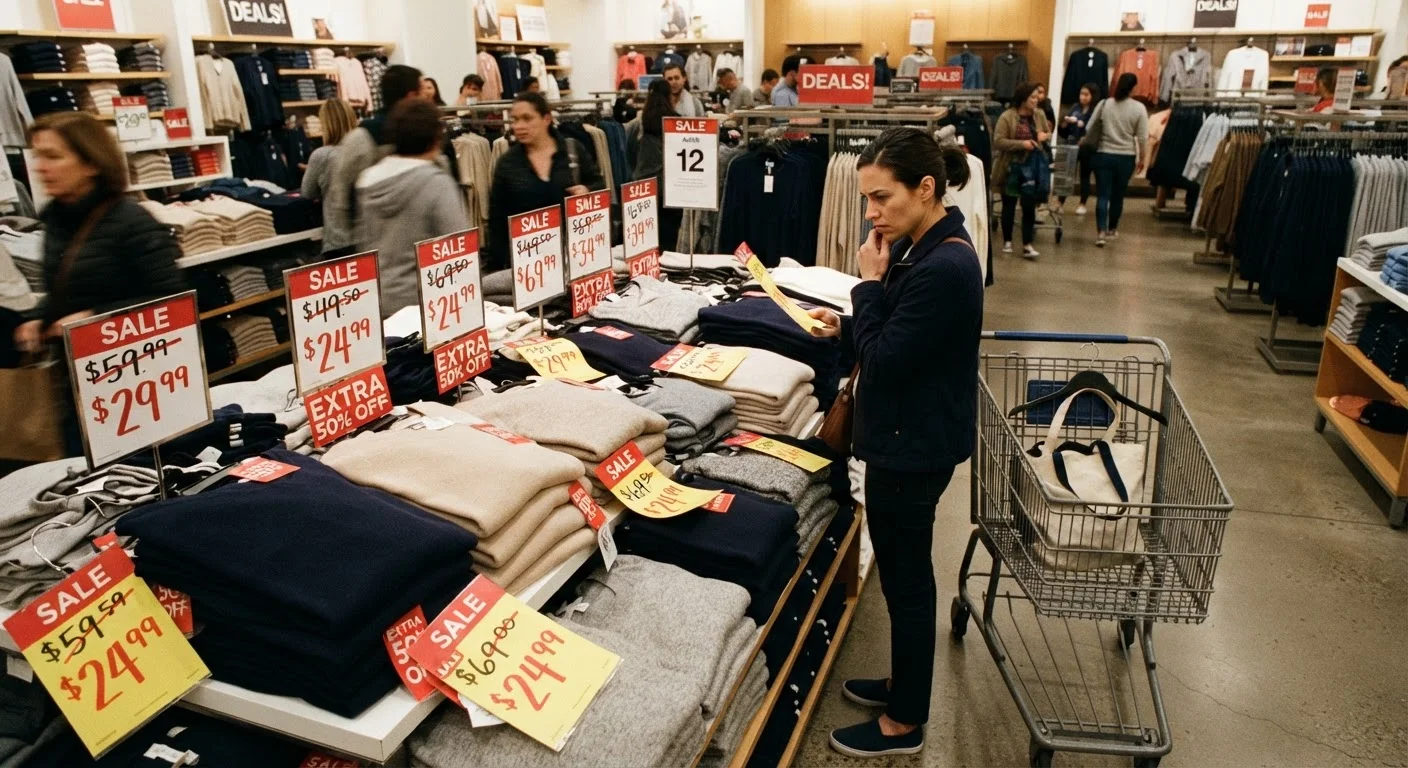
Photo: UltraSearches.com | Search Results You Can Trust editorial
Key Takeaways
- Price anchoring uses an initial high number to make subsequent prices feel like bargains, regardless of actual value.
- Sale framing, charm pricing, and decoy products are all engineered to shift your sense of what's reasonable.
- Awareness of these tactics doesn't make you immune, but it does give you a more objective baseline for decisions.
- Comparing unit prices and setting a personal value benchmark before shopping are practical countermeasures.
How Retailers Engineer Your Sense of Value
Every price tag you see in a store or on a product page is the result of deliberate decisions - not just about what margin a retailer needs, but about how you'll feel about the number. Retail pricing psychology is a well-documented field, and the tactics it has produced are woven into nearly every shopping environment, from grocery aisles to e-commerce checkouts.
The goal of these strategies isn't necessarily to deceive you outright. More often, it's to frame information in ways that make certain choices feel obviously correct. Understanding the mechanics behind that framing is the first step to evaluating prices on your own terms. As part of becoming a more deliberate shopper, recognizing these tactics is foundational.
Myth
A crossed-out 'original price' tells me what the item was genuinely worth before the sale.
Fact
Reference prices are set by the retailer and may not reflect what most customers actually paid - or what the item sells for elsewhere.
This is the core of price anchoring. When you see a price crossed out with a lower number beside it, your brain uses the higher number as a reference point - an anchor - and evaluates the current price relative to it. Research in behavioral economics consistently shows that people rate the same price as more attractive when a higher anchor is shown first, even when they know the anchor may be arbitrary.
Retailers are generally required by consumer protection guidelines to have sold an item at its listed 'original price' for a minimum period, but those rules vary by jurisdiction and are not always rigorously enforced. The anchor may be real but rarely set - meaning the item was technically offered at that price but seldom purchased at it. Evaluating whether a price is good requires an external reference, not the one the store provides.
Myth
Prices ending in .99 are just a quirky tradition with no real effect on purchasing.
Fact
Charm pricing - ending prices in .99 or .95 - measurably influences how buyers perceive value and has been shown in multiple studies to increase purchase rates.
Because people read numbers from left to right, the leftmost digit carries disproportionate weight in price perception. A price of $9.99 registers closer to $9 than $10 in most buyers' rapid mental processing, even though the difference is a single cent. This effect, sometimes called the 'left-digit effect,' has been documented across retail categories from groceries to electronics.
Conversely, round numbers like $10.00 can actually signal premium quality or simplicity in certain contexts - some higher-end retailers use round pricing deliberately to convey that their products don't need psychological tricks. Neither format tells you whether a price is fair; both are tools retailers use intentionally.
Myth
The mid-tier option in a three-item lineup is usually the balanced, reasonable choice.
Fact
A middle option often exists specifically to make it appear balanced - a technique called the decoy effect, designed to steer buyers away from the cheapest option.
When retailers offer three tiers - small, medium, and large, or basic, standard, and premium - the middle option frequently isn't an independent value assessment. It's positioned to make the lower option feel inadequate and the higher option feel like a modest upgrade. In many cases, the large size or premium tier is where the retailer's best margin lies, and the middle tier functions as a stepping stone toward it.
A useful check: evaluate each option against your actual usage needs independently of the others. If the basic option genuinely covers what you need, the fact that it looks sparse next to a mid-tier is a framing artifact, not a product deficiency.
Myth
Sales and limited-time offers reflect genuine inventory or cost pressures on the retailer.
Fact
Many sales events are scheduled marketing cycles, not reactions to actual surplus or cost savings passed on to consumers.
The urgency language around sales - 'limited time,' 'while supplies last,' 'today only' - is designed to compress decision-making and bypass the deliberate evaluation you'd otherwise apply. In reality, most product categories follow predictable promotional calendars tied to retail seasons, inventory cycles, and competitor activity rather than spontaneous generosity.
This doesn't mean sales are never genuine - clearance pricing on end-of-season merchandise often reflects real inventory pressure. But promotional urgency is rarely the neutral signal it presents itself as. Decisions made under artificial time pressure tend to weigh the discount more heavily than the underlying value question.
Myth
Buying a larger size is almost always cheaper per unit, so bigger is usually smarter.
Fact
Bulk and larger sizes are frequently priced at a worse per-unit rate than smaller options, and this isn't always visible without checking the unit price.
The assumption that 'bigger equals cheaper per unit' is so widespread that retailers can exploit it by pricing larger sizes at a premium, knowing most shoppers won't do the math. Shelf unit pricing labels - showing cost per ounce, per count, or per pound - are the most direct tool for checking this, but they require deliberate use. Unit pricing labels on shelves are often inconsistently formatted, making direct comparisons harder than they should be.
Beyond pricing, bulk purchases only represent value if you'll use the quantity before it expires or degrades. A larger size at a worse per-unit cost - and one that results in waste - compounds the miscalculation.
Practical Ways to Counter These Effects
Knowing a tactic exists doesn't automatically neutralize it - cognitive biases operate even when we're aware of them. But deliberate habits can reduce their influence meaningfully.
~1¢
Average price gap in charm pricing
Research on the left-digit effect shows a one-cent difference between $9.99 and $10.00 can meaningfully shift purchase rates, disproportionate to the actual price change.
3 options
Typical decoy effect lineup size
Behavioral economists have documented that adding a third, inferior option to a two-item lineup shifts preference toward the higher-priced option, even when preferences were previously stable.
Establish your own anchor before you shop. Research typical price ranges for a product category before entering a store or browsing a site. Your pre-formed expectation becomes a competing anchor that's harder to displace. Unit pricing labels offer one of the most reliable tools for cutting through packaging-size manipulation and decoy effects.
Separate the discount from the value question. Ask yourself: at this price, would I consider this item worth buying if I'd never seen the original price? If the answer is no, the discount isn't doing the work you think it is. For context on when real markdowns actually occur, understanding retail sale cycles can help you plan purchases without reacting to every promotion.
Account for total cost. Charm pricing and anchor effects focus attention on the sticker number, which can cause shoppers to overlook fees and add-ons that raise the actual price at checkout. Building a realistic total before committing is a more accurate measure of value. These habits also connect naturally to broader budgeting basics - knowing what you can spend before you shop removes much of the emotional leverage these tactics rely on.
Urgency Framing Can Compress Good Judgment
The content on this site is for informational purposes only and is not a substitute for professional advice. Always consult a qualified professional for guidance specific to your situation.