
Why Buying in Bulk Isn't Always the Smarter Move

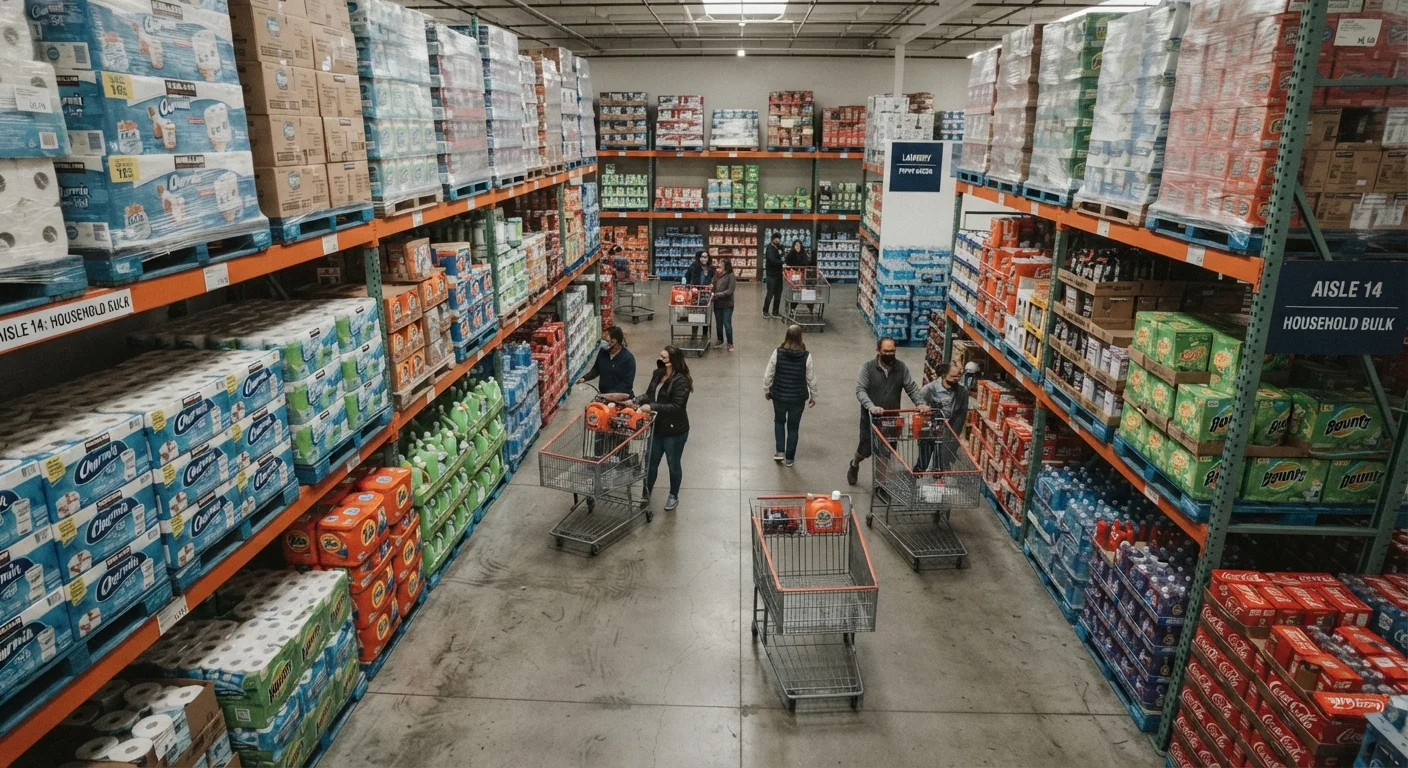
Photo: UltraSearches.com | Search Results You Can Trust editorial
Key Takeaways
- Bulk buying saves money only when you'll use every unit before it expires or degrades.
- Upfront cash outlay can strain a household budget even when the per-unit price is lower.
- Non-perishable, frequently used staples are the strongest candidates for bulk purchases.
- Storage space, household size, and consumption rate should drive the decision - not price tags alone.
- Waste from spoiled or unused bulk items can erase any savings quickly.
Lower cost per unit on high-turnover items
For products a household uses consistently, buying in bulk reduces the effective price paid per use over time - a genuine saving when the item won't go to waste.
Fewer shopping trips needed
Stocking up means less frequent restocking runs, which saves time and can reduce the small impulse purchases that accumulate during frequent store visits.
Protection against price increases
Buying a supply of a staple at today's price insulates you from near-term price increases on that item, which is meaningful for household goods with historically volatile pricing.
Reduces 'out of stock' inconvenience
Maintaining a home supply of essentials means you're less likely to run out at an inconvenient time and need to make an emergency purchase at a less favorable price.
Spoilage erases savings on perishables
Any savings from a lower per-unit price disappear if part of the purchase spoils before use. This is especially common with fresh produce, dairy, and baked goods bought in large quantities.
Large upfront cost strains cash flow
Spending significantly more in a single shopping trip can pressure a household's short-term budget, sometimes leading to reliance on credit that adds interest costs over time.
Storage space requirements are real
Bulk quantities require adequate, appropriate storage - a constraint many households underestimate. Poor storage conditions can also degrade product quality faster than expected.
Encourages over-consumption
Research suggests that larger package sizes can lead people to use more of a product per use than they would with standard packaging, reducing the per-unit savings in practice.
Risk of product dissatisfaction at scale
Buying a large quantity of something you haven't fully evaluated - a new cleaning product, a food item, a personal care product - locks you into it even if you dislike it.
The Appeal - and the Assumption - Behind Bulk Buying
The logic feels airtight: a lower cost per unit must mean you're spending less. Warehouse clubs and big-box retailers have built entire business models on that premise, and for good reason - it's often true in a narrow, mathematical sense. But unit economics only tell part of the story.
What gets left out of that calculation is whether you'll actually consume everything you buy, what it costs to store it, and what spending a large sum upfront does to the rest of your budget. For a deeper look at how purchasing strategies interact with your overall spending plan, see what goes into being a more deliberate shopper.
Lower cost per unit on high-turnover items
For products a household uses consistently, buying in bulk reduces the effective price paid per use over time - a genuine saving when the item won't go to waste.
Fewer shopping trips needed
Stocking up means less frequent restocking runs, which saves time and can reduce the small impulse purchases that accumulate during frequent store visits.
Protection against price increases
Buying a supply of a staple at today's price insulates you from near-term price increases on that item, which is meaningful for household goods with historically volatile pricing.
Reduces 'out of stock' inconvenience
Maintaining a home supply of essentials means you're less likely to run out at an inconvenient time and need to make an emergency purchase at a less favorable price.
Where Bulk Buying Quietly Costs You
The downsides of bulk purchasing aren't always visible at the register - they show up later, in the trash, in your pantry, or on your credit card statement.
Spoilage erases savings on perishables
Any savings from a lower per-unit price disappear if part of the purchase spoils before use. This is especially common with fresh produce, dairy, and baked goods bought in large quantities.
Large upfront cost strains cash flow
Spending significantly more in a single shopping trip can pressure a household's short-term budget, sometimes leading to reliance on credit that adds interest costs over time.
Storage space requirements are real
Bulk quantities require adequate, appropriate storage - a constraint many households underestimate. Poor storage conditions can also degrade product quality faster than expected.
Encourages over-consumption
Research suggests that larger package sizes can lead people to use more of a product per use than they would with standard packaging, reducing the per-unit savings in practice.
Risk of product dissatisfaction at scale
Buying a large quantity of something you haven't fully evaluated - a new cleaning product, a food item, a personal care product - locks you into it even if you dislike it.
~30%
Food wasted by average U.S. household annually
The U.S. Department of Agriculture estimates that American households waste roughly 30-40% of the food supply, a figure that bulk perishable purchases can worsen.
~$1,500
Estimated annual cost of food waste per household
The USDA and various consumer research groups estimate the average American household discards over $1,000 in food annually, with larger-quantity purchases being a contributing factor.
Perishable goods are the most obvious risk. Buying three pounds of berries because the unit price was attractive only saves money if you eat all three pounds before they go bad. The same applies to bulk quantities of bread, dairy, or fresh proteins. Even pantry staples with long shelf lives can be a problem if your household simply doesn't use them fast enough - oils go rancid, flour attracts pests, and spices lose potency.
There's also the budget-pressure angle. A $180 haul at a warehouse club may pencil out well over time, but if that outlay squeezes your grocery or bill-pay budget for the next two weeks, you may end up reaching for credit - which adds interest costs that quickly erode any savings. This is a real consideration for households operating on tighter margins, a subject explored further in budgeting basics.
The Items That Actually Benefit From Bulk Purchasing
Bulk buying isn't inherently flawed - it's just frequently misapplied. Certain product categories consistently make sense in larger quantities:
- Non-perishable household consumables - toilet paper, paper towels, dish soap, laundry detergent. These don't expire, take up manageable space, and are used at a predictable rate.
- Shelf-stable pantry staples with high household turnover - dried pasta, canned goods, rice, oats. If your household eats these regularly, buying more just extends the time before your next purchase.
- Personal care items you've already vetted - if you've been using the same shampoo or toothpaste for years, bulk makes sense. Don't buy a jumbo supply of something you haven't tried.
Membership Fees Change the Math
If nutritious eating on a constrained budget is part of your household strategy, eating well on a budget covers which pantry staples offer the most nutritional value per dollar - many of which do translate well to bulk buying.
How to Decide Before You Buy
A few practical questions can prevent a bulk purchase from becoming a regret:
- Will we use all of this before it expires or degrades? Be honest about your household's actual consumption rate, not your optimistic estimate.
- Do we have a place to store it properly? Improper storage can spoil food or damage products faster than you'd expect.
- Does the upfront cost fit our budget without stress? If it means skipping another bill or dipping into savings, the unit-price math doesn't matter.
- Are we buying this because we need it, or because the price feels compelling? A large quantity of something you rarely use isn't a deal - it's a sunk cost waiting to happen. See thinking through an impulse purchase for a structured framework.
It also helps to understand when retailers actually discount items, so bulk purchases don't compete with upcoming sales. Sale cycles explained outlines how to anticipate those windows. And if you're deciding between shopping channels, in-store vs. online shopping can help you weigh where bulk purchases make the most logistical sense.
The content on this site is for informational purposes only and is not a substitute for professional advice. Always consult a qualified professional for guidance specific to your situation.