
Auto Insurance Myths That Cost Drivers Real Money

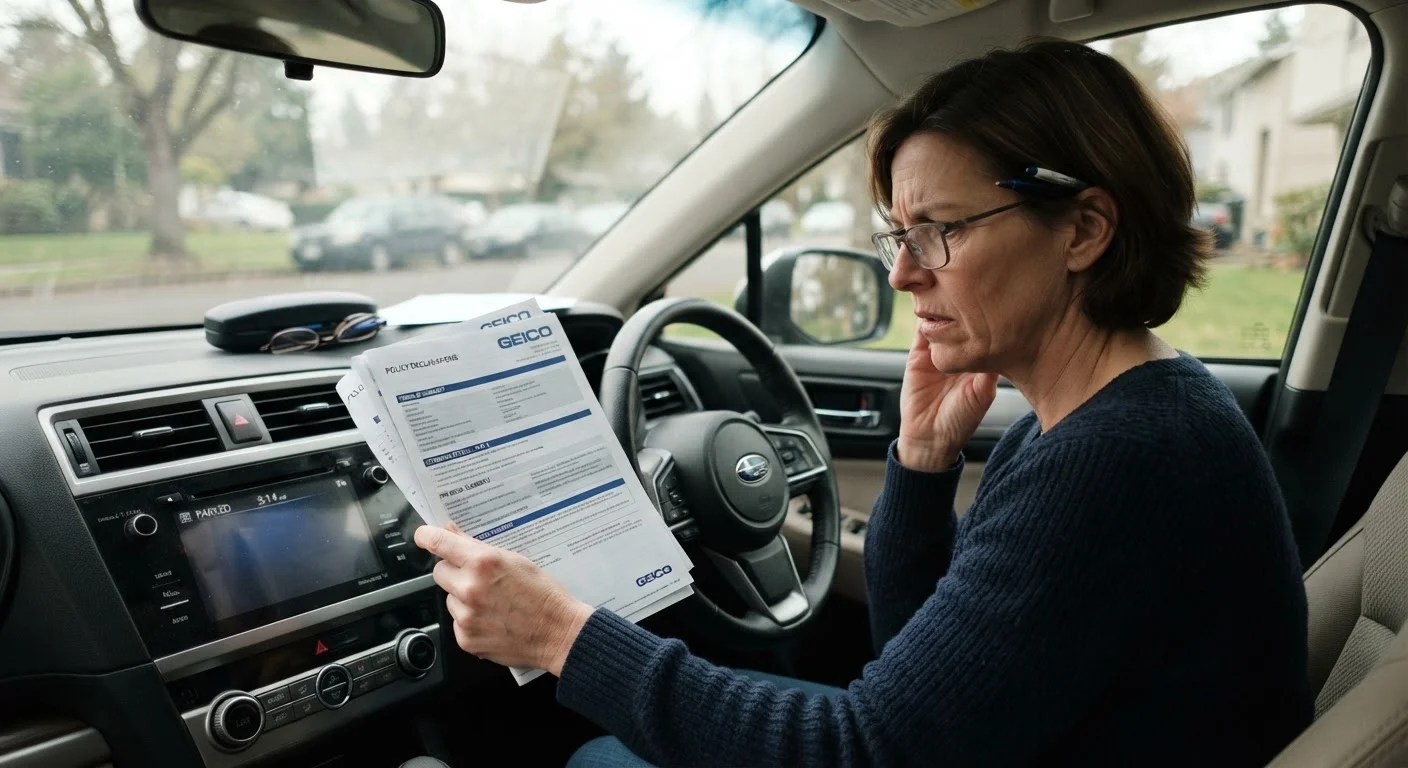
Photo: UltraSearches.com | Search Results You Can Trust editorial
Key Takeaways
- Vehicle color has no effect on your insurance premium - insurers don't rate by paint color.
- Credit history is used as a rating factor in most U.S. states and can meaningfully affect your premium.
- Minimum state-required liability coverage often falls short of protecting your financial assets after a serious accident.
- Comprehensive coverage handles theft and weather damage; collision handles crash damage - they are not interchangeable.
- Your own insurer may still pay a claim even if you were at fault, depending on your selected coverages.
Why Auto Insurance Myths Are Expensive
Misconceptions about auto insurance don't just cause confusion - they lead to real financial consequences. Drivers who believe they're fully covered may discover painful gaps after a claim. Others overpay for coverage they don't need because they've never questioned inherited assumptions.
This article addresses the most common myths directly, using the way insurers actually price and structure policies. For a plain-language overview of coverage types before diving in, see Auto Insurance Basics Every Driver Should Understand.
Myth
Red cars cost more to insure because insurers charge a premium for the color.
Fact
Vehicle color is not a rating factor. Insurers do not know - or ask - what color your car is.
This is probably the most durable auto insurance myth in circulation. The actual factors that determine your premium based on the vehicle itself include the make, model, year, body type, engine size, safety ratings, and the cost to repair or replace it. A red sports car may cost more to insure than a beige sedan, but that's because of the vehicle's performance profile - not the paint. You could repaint your car any color and your premium would not change by a single dollar.
Myth
Your credit score has nothing to do with your car insurance rate.
Fact
In most U.S. states, insurers use a credit-based insurance score as a rating factor, and it can significantly affect your premium.
A credit-based insurance score is a separate calculation from your standard FICO score, but it draws on similar underlying data - payment history, debt levels, and length of credit history. Insurers use it because actuarial data shows a statistical correlation between certain credit patterns and claim frequency. California, Hawaii, Massachusetts, and Michigan are among the states that prohibit or restrict its use. If you live in a state where it applies, improving your credit profile over time may have a meaningful effect on what you pay. This is one of the non-obvious factors covered in more depth at Things That Quietly Raise Your Car Insurance Premium.
Myth
State minimum liability coverage is enough to protect you after an accident.
Fact
State minimums set the legal floor, not an adequate financial safety net - serious accidents routinely exceed those limits.
Every state sets a minimum amount of liability coverage drivers must carry, often expressed as a three-number formula (e.g., 25/50/25 - meaning $25,000 per person for bodily injury, $50,000 per accident, and $25,000 for property damage). These thresholds were established years ago and have not kept pace with medical costs or vehicle values. A single hospitalization can exceed a low bodily injury limit. If a court judgment against you surpasses your coverage, you may be personally responsible for the remainder - meaning your savings, wages, or assets could be at risk. Carrying higher liability limits is generally considered sound financial planning, not a luxury.
Myth
Comprehensive coverage protects you in any situation - it covers everything.
Fact
Comprehensive and collision are two distinct coverages that protect against different types of damage; neither covers everything.
Comprehensive coverage pays for damage to your vehicle caused by events outside a collision - theft, vandalism, fire, hail, flooding, or striking an animal. Collision coverage pays for damage resulting from your vehicle striking another object or vehicle, regardless of fault. If a tree falls on your parked car, that's comprehensive. If you back into a pole, that's collision. If you have one but not the other, certain scenarios will leave you paying out of pocket. Many drivers assume "full coverage" means every possible loss is covered - but even policies with both collision and comprehensive include deductibles, exclusions, and limits that apply.
Myth
If the accident wasn't your fault, your own insurance won't get involved.
Fact
Your own insurer may pay your claim first - especially if the at-fault driver is uninsured or underinsured - then seek reimbursement.
In an ideal scenario, the at-fault driver's liability insurance covers your damages. In practice, roughly one in eight drivers on U.S. roads is uninsured, according to data from the Insurance Research Council. If the at-fault driver has no insurance or insufficient coverage, your own uninsured/underinsured motorist (UM/UIM) coverage steps in - if you have it. Additionally, if you file under your collision coverage to get your vehicle repaired quickly, your insurer may pursue subrogation (recovering costs from the at-fault party's insurer). Your insurer's involvement doesn't automatically mean your rates will increase, but it's worth asking your agent how a specific claim could affect your policy.
What Actually Drives Your Premium
Insurers use a specific set of rating factors - not guesswork - to calculate your premium. Understanding these factors helps you see why some myths persist and why they're wrong. Factors typically include your driving record, annual mileage, ZIP code, vehicle make and model, age, and in most states, your credit-based insurance score.
~1 in 8
Drivers on U.S. roads without insurance
According to the Insurance Research Council, an estimated one in eight motorists in the United States is uninsured, underscoring the value of UM/UIM coverage.
Varies by state
States where credit scoring is restricted
A small number of states - including California, Hawaii, and Massachusetts - prohibit or limit the use of credit-based insurance scores in auto insurance rating.
Color, loyalty, and personal assumptions about fault are absent from that list entirely. For a detailed breakdown of how these factors interact, How Insurers Determine Your Auto and Home Premiums covers the full picture. Separately, several less-obvious factors - like how often you use rideshare apps or your annual mileage changes - are explored in Things That Quietly Raise Your Car Insurance Premium.
Minimum Coverage Is a Legal Floor, Not a Shield
Drivers who understand rating factors can make smarter decisions - like whether to file a small claim or pay out of pocket - rather than acting on outdated assumptions. Just as Car Maintenance Myths That Cost Drivers Real Money shows for vehicle upkeep, the cost of acting on bad information compounds over time.
This article provides general insurance information for educational purposes only and does not constitute personalized insurance or financial advice. Coverage terms, exclusions, and rating practices vary by insurer and by state. Always read your actual policy documents and consult a licensed insurance agent for guidance specific to your situation.
The content on this site is for informational purposes only and is not a substitute for professional advice. Always consult a qualified professional for guidance specific to your situation.