
Debit Card vs. Credit Card for Everyday Spending

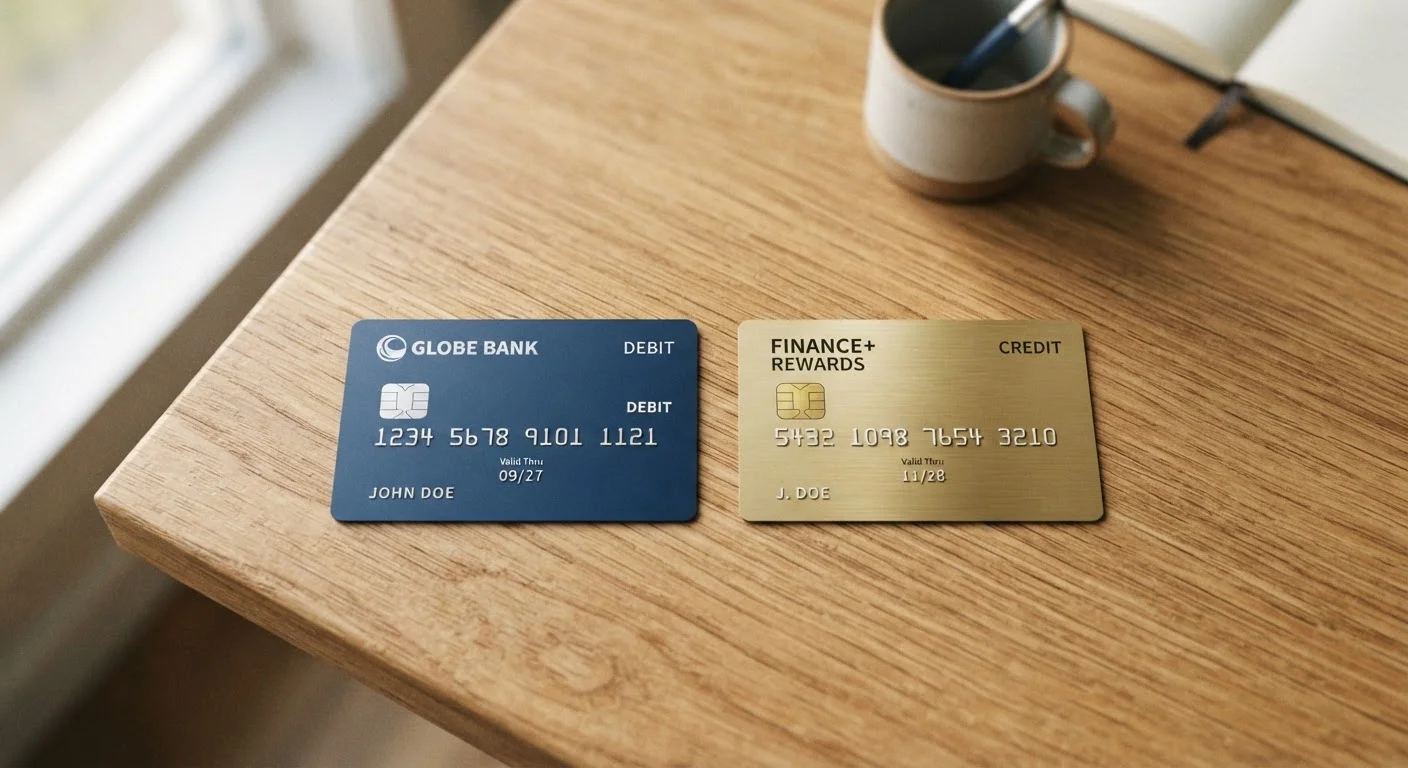
Photo: UltraSearches.com | Search Results You Can Trust editorial
Key Takeaways
- Debit cards pull money directly from your checking account; credit cards let you borrow up to a set limit.
- Credit cards typically offer stronger fraud liability protections than debit cards under federal law.
- Carrying a credit card balance month-to-month means paying interest, which can make purchases significantly more expensive.
- Debit cards eliminate the risk of debt but offer limited recourse if a transaction goes wrong.
- Your spending habits and financial discipline largely determine which card works better for everyday use.
How Each Card Actually Works
Both cards look identical at the register, but the mechanics are completely different. A debit card is a direct line to your checking account. When you swipe or tap, the funds are pulled - usually within one business day. There's no bill coming at the end of the month; the money is simply gone.
A credit card works more like a short-term loan. You're borrowing from a credit line each time you make a purchase. The card issuer sends you a monthly statement, and you choose how much to repay. Pay the full balance by the due date and you owe no interest. Carry a balance forward, and interest charges accumulate - often at a high annual percentage rate (APR).
Understanding this distinction is the starting point for any honest comparison. As you think about how your expenses break down, recognizing where each card fits your spending patterns matters more than picking a winner outright.
| Criterion | Debit Card | Credit Card |
|---|---|---|
| Funding source | Your checking account balance | Borrowed credit line |
| Debt risk | None (spend only what you have) | Yes, if balance is carried |
| Fraud liability (federal) | Up to $500 if reported late | Capped at $50; often $0 |
| Dispute resolution | Funds already withdrawn during review | Charge held pending investigation |
| Builds credit history | No | Yes, with on-time payments |
| Risk of interest charges | None | Yes, if balance not paid in full |
| Best for budget control | Strong - hard limit on spending | Requires self-discipline |
Fraud Protection: A Real Difference Worth Knowing
This is where credit cards hold a meaningful edge. Under the Fair Credit Billing Act, your maximum liability for unauthorized credit card charges is $50 - and most major issuers offer $0 liability policies. Critically, disputed charges are placed on hold while the issuer investigates, so your available credit isn't immediately depleted.
Debit cards fall under the Electronic Fund Transfer Act, which ties your liability to how quickly you report the problem. Report within two business days and your liability is capped at $50. Wait longer, and the cap rises significantly - up to $500 or more depending on timing. Equally important: the money has already left your account while a dispute is being resolved, which can cause real-world cash flow problems.
$50
Maximum credit card fraud liability (federal law)
The Fair Credit Billing Act caps unauthorized credit card charge liability at $50; many issuers voluntarily offer $0 liability.
$500+
Potential debit card fraud liability if reported late
Under the Electronic Fund Transfer Act, waiting more than two business days to report unauthorized debit transactions can raise your liability substantially.
~35%
Share of credit score tied to payment history
According to FICO, payment history is the single largest factor in credit score calculation, making on-time credit card payments especially impactful.
For online purchases in particular, this asymmetry matters. If a transaction goes wrong, you'll feel it differently depending on which card you used.
The Debt Risk - and Who It Affects Most
The central downside of credit cards is straightforward: they make it easy to spend money you don't yet have. If you routinely carry a balance, interest charges stack up fast. A card with a 24% APR can turn a $300 purchase into a significantly more expensive one over several months of minimum payments.
Debit cards eliminate this risk entirely. You can't spend beyond your balance (unless overdraft protection is enabled, which can carry its own fees). For anyone managing a tight monthly budget or working through a period of financial rebuilding, that constraint can be genuinely useful - not just as a rule, but as a structure that supports better habits. Pairing a debit card with a clear sense of your monthly budget can make day-to-day decisions much simpler.
It's also worth noting that debit cards don't build credit history. If establishing or improving your credit score is a goal, a responsibly used credit card - or a secured credit card - is the more direct path.
Overdraft Protection: A Hidden Complication
Making the Right Call for Your Situation
There's no universal answer here - the right card depends on your financial habits and goals. Some households use both: a debit card for everyday groceries and gas, and a credit card for larger purchases where fraud protection and dispute rights matter more.
If you pay in full each month, a credit card adds a layer of security without adding cost. If carrying a balance is a real possibility, the interest charges often outweigh any benefits. And if you're working on keeping spending predictable - especially if you're paid on an irregular schedule, like biweekly rather than twice a month - the built-in limits of a debit card can serve as a practical guardrail.
The best approach is the one you can sustain without creating new financial stress. Consider your patterns honestly, and let that guide the choice - not the rewards brochure.
This article is for general informational purposes only and does not constitute personalized financial or legal advice. Consult a licensed financial professional for guidance specific to your situation.
The content on this site is for informational purposes only and is not a substitute for professional advice. Always consult a qualified professional for guidance specific to your situation.