
Reading a Utility Bill: What Those Charges Actually Mean

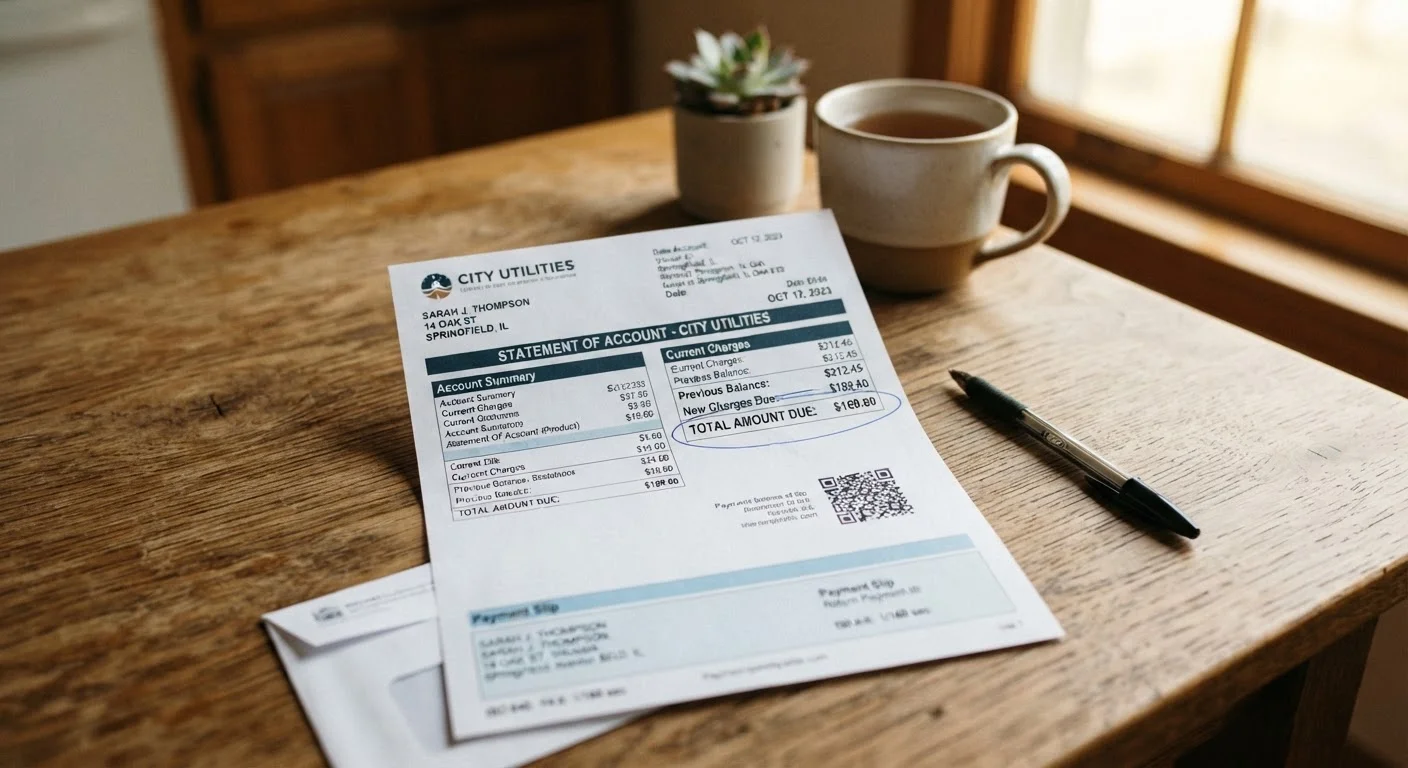
Photo: UltraSearches.com | Search Results You Can Trust editorial
Why Your Utility Bill Has So Many Line Items
Open a typical electric, gas, or water bill and you won't find a single number - you'll find a column of them. That's because utilities are required to separate out distinct costs rather than roll everything into one opaque total. It looks complicated, but most bills follow a predictable structure once you know what each category does.
Think of it in three layers: fixed charges you pay no matter what, usage charges tied directly to what you consume, and regulatory or program charges that fund grid maintenance and public programs. Understanding those three layers is the fastest way to make sense of any utility statement.
If you've ever been surprised by similar complexity in other financial documents, the same decoding approach applies - just as reading a pay stub requires separating gross pay from deductions, a utility bill requires separating base costs from variable ones.
| Typical line items on an electric bill | 5-10 separate charges (U.S. Energy Information Administration) |
| Share of bill that is typically fixed (base charge) | 10-30% (varies by utility and state) |
| Average U.S. monthly residential electricity bill | ~$138 (U.S. EIA, 2023 data) |
| States with tiered residential electric rates | Majority, including CA, NY, TX (varies by utility) |
| Fuel adjustment charge volatility | Can swing 20-40% seasonally (based on wholesale energy market patterns) |
Fixed Charges: What You Pay Before Using Anything
The base charge (also called a customer charge or service charge) appears at the top of most bills. It's a flat monthly fee - often between $5 and $25 - that covers the utility's cost of keeping your account active: maintaining the meter, the connecting lines, and billing infrastructure. You pay it even if your usage is zero.
This matters for budgeting: a portion of your bill is essentially non-negotiable. Cutting your electricity use in half won't eliminate this fee. That's worth knowing before assuming conservation alone will dramatically reduce your total.
Your Bill Is Regulated - But Not Simple
Usage Charges: Tiered Rates and How They Work
The bulk of most bills is usage-based - priced per kilowatt-hour (kWh) for electricity, per therm or CCF for gas, and per hundred cubic feet or gallon for water. The key is whether your utility uses flat rates (same price per unit regardless of volume) or tiered rates (price per unit rises with consumption).
Under a tiered structure, your first 500 kWh might cost $0.10 per kWh, while anything above that is billed at $0.15. This rewards lower users and penalizes high consumption. It's worth finding your utility's specific tier thresholds - using just below a tier boundary can meaningfully reduce your bill.
Understanding usage costs connects directly to appliance efficiency. See what major appliances actually add to utility bills for a breakdown of where consumption typically concentrates.
Fuel Adjustments, Riders, and Other Add-Ons
Below the usage charges, you'll often find a cluster of smaller line items. The fuel adjustment charge (or purchased power adjustment) is one of the most variable. It reflects what the utility actually paid for energy on wholesale markets that month and is passed directly to customers. When natural gas prices spike, this charge rises - even if your usage didn't change.
Riders and surcharges fund specific programs. Common examples include renewable energy mandates, low-income assistance programs (such as LIHEAP), and infrastructure rebuilding after storms. They're typically small individually - a few cents to a few dollars - but they add up across a year.
Taxes and municipal franchise fees also appear on most bills. These are set by local governments and utilities have no discretion over them.
~$138
Average monthly U.S. electric bill
According to U.S. Energy Information Administration 2023 residential data.
Up to 30%
Portion of bill that may be fixed charges
Base and service fees vary widely by utility, meaning conservation efforts alone may not reduce bills as much as expected.
If a line item is unfamiliar, your utility is required to explain it. Most utilities publish a rate schedule on their website that defines every charge. Energy Star ratings can also help you evaluate which appliances contribute most to your consumption charges.
This article is for general informational purposes only and does not constitute financial or legal advice. Utility rates, charges, and regulations vary by state and provider. Contact your utility company or state public utility commission for information specific to your account.
The content on this site is for informational purposes only and is not a substitute for professional advice. Always consult a qualified professional for guidance specific to your situation.