
Energy Star Ratings Explained: What the Labels on Your Appliances Actually Mean

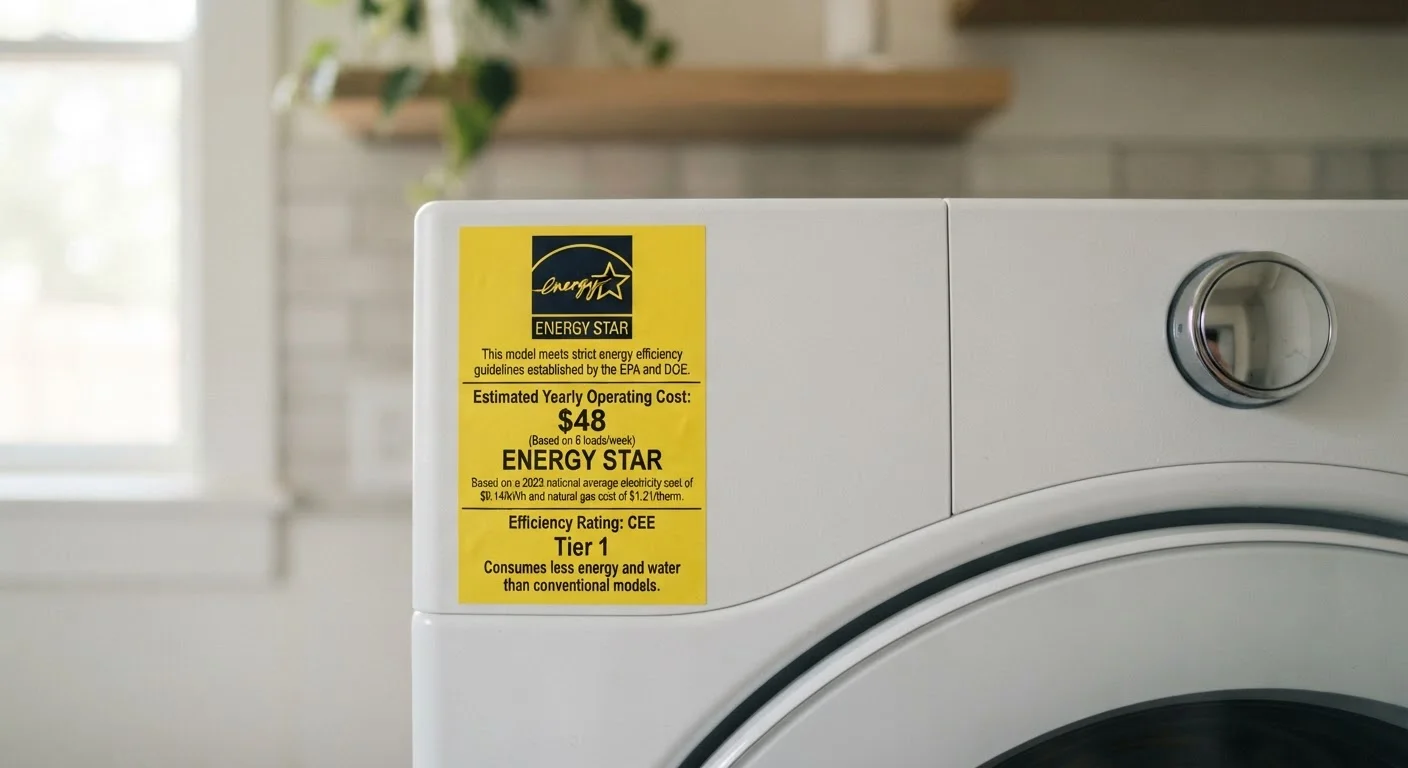
Photo: UltraSearches.com | Search Results You Can Trust editorial
Key Takeaways
- Energy Star is a government-backed certification, not a manufacturer marketing claim.
- The blue Energy Star badge and the yellow EnergyGuide label are two separate things that work together.
- Efficiency thresholds differ by appliance category - a certified refrigerator and a certified dishwasher meet entirely different benchmarks.
- The estimated annual energy cost on the EnergyGuide label is calculated at a national average electricity rate, not your local rate.
- Certification standards are updated periodically, so older certified products may no longer meet current program requirements.
- Running costs over an appliance's lifetime can significantly outweigh the upfront purchase price difference.
Two Labels, Two Different Jobs
Walk through any appliance aisle and you'll encounter two distinct labels on most major units: a small blue star and a large yellow tag. Consumers often assume they're the same thing or that one is simply a subset of the other. They're not.
The Energy Star badge (blue logo, administered by the EPA) is a binary certification - a product either qualifies or it doesn't. It tells you an appliance has been tested and meets the agency's minimum efficiency threshold for its category.
The EnergyGuide label (yellow tag, required by the Federal Trade Commission on most major appliances) is a disclosure tool. It shows estimated annual energy consumption in kilowatt-hours (kWh), a projected annual operating cost based on a national average electricity rate, and a scale showing how this model compares to similar models on the market. A product can carry an EnergyGuide label without earning the Energy Star badge - and vice versa for some product types.
Understanding what each label is actually measuring is the foundation for making sense of efficiency claims. For a broader look at how running costs accumulate over time, see The Hidden Costs of Running Home Appliances Year-Round.
~90%
Of U.S. households recognize the Energy Star label
According to EPA consumer awareness surveys, Energy Star is one of the most recognized government program labels in the country.
30%+
Average energy savings vs. non-certified models (by category)
The EPA estimates that Energy Star-certified products in many appliance categories use at least 10-30% less energy than standard models, with some categories achieving greater savings.
75+
Product categories covered by Energy Star
The program spans appliances, electronics, heating and cooling systems, lighting, and commercial equipment - each with its own category-specific threshold.
How Energy Star Thresholds Actually Work
There is no single efficiency bar that all products must clear. The EPA sets category-specific thresholds - the standard for a clothes washer is entirely different from the standard for a dehumidifier or a laptop. Each threshold is typically set so that only a meaningful minority of products on the market can qualify at the time of adoption, with the goal of rewarding genuinely above-average efficiency.
Those thresholds are revised upward over time as technology improves and average market efficiency rises. This means a refrigerator certified under an older version of the standard may no longer meet the current program requirements - the badge on the floor model or in a product listing reflects the standard at the time of certification, not necessarily today's bar.
For appliance categories that draw the most power in a typical home - refrigerators, HVAC systems, water heaters, and washing machines - the EPA publishes detailed specification documents outlining exactly which test procedures and metrics qualify a product. These are publicly available on the Energy Star website for anyone who wants to dig into the methodology.
Check the Certification Date When Buying Used
Reading the EnergyGuide Numbers Honestly
The estimated annual energy cost printed on the yellow EnergyGuide label is calculated using a standardized national average electricity rate set by the U.S. Energy Information Administration. That rate is updated periodically, but it may differ substantially from what you actually pay. If your local rate is higher than the national average - as it is in many northeastern and Pacific states - your real operating cost will exceed the label estimate.
To get a more grounded estimate, find your actual electricity rate on your utility bill (it's usually expressed in cents per kWh), then multiply it by the kWh figure on the EnergyGuide label. That gives you a personalized annual cost number that's far more useful than the label's default figure. Reading a Utility Bill: What Those Charges Actually Mean can help you locate the right rate on your statement.
The comparison scale on the label - showing a range from least to most efficient among similar models - is arguably more useful than the dollar figure for comparing appliances in-store. A model sitting at the low-cost end of that range will consume meaningfully less energy over its lifetime than one at the high-cost end, regardless of the exact dollar figure printed.
Also keep in mind: the label assumes standardized usage patterns. A household that runs a dishwasher twice daily rather than once will see proportionally higher costs than the label suggests. Everything That Affects an Appliance's Energy Consumption explains how usage habits, load size, and settings all factor in.
Lifetime Cost vs. Upfront Price
Efficiency ratings matter most over time. An appliance that costs more upfront but uses significantly less energy each year can easily be the lower-cost option across a 10-15 year lifespan. This total-cost-of-ownership framing is often missing from point-of-sale decisions.
Consider that a refrigerator runs continuously - 24 hours a day, every day of the year. Even a modest difference in annual energy use compounds considerably over a decade. The same logic applies to HVAC equipment, water heaters, and clothes dryers. Appliances used intermittently, like dishwashers or microwaves, show smaller lifetime cost differences.
For appliances that also use water - clothes washers and dishwashers in particular - some Energy Star certifications factor in water efficiency alongside electricity. The label may show estimated annual water use in gallons, adding another dimension to the long-term cost picture beyond the electricity bill alone.
If a refrigerator you already own is working harder than it should, the energy waste compounds further. Why Your Refrigerator Works Harder Than It Should outlines common culprits like coil buildup and poor door seals that inflate energy draw regardless of the unit's certification status.
Energy Star Applies to More Than Appliances
Frequently Asked Questions
The content on this site is for informational purposes only and is not a substitute for professional advice. Always consult a qualified professional for guidance specific to your situation.