
Snowball vs. Avalanche: Two Approaches to Paying Down Debt

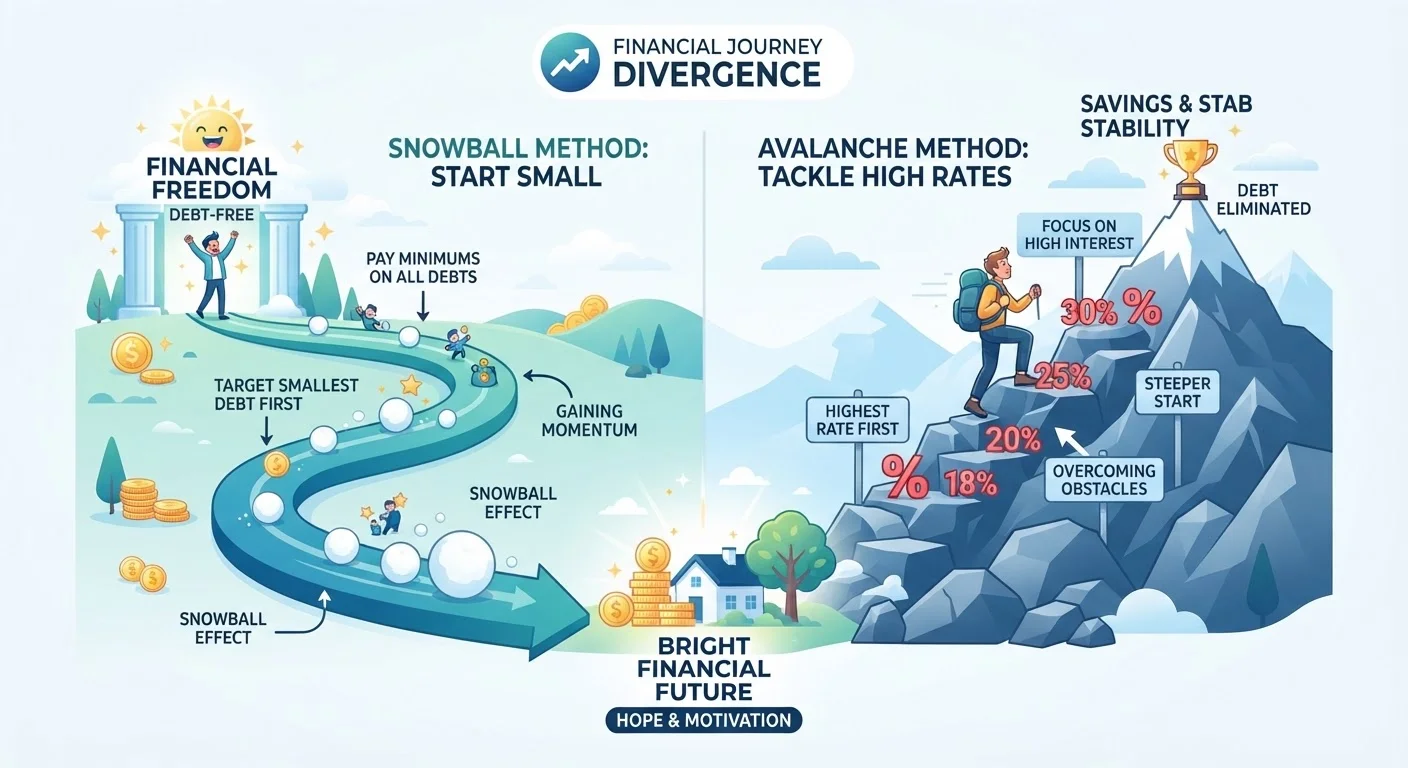
Photo: UltraSearches.com | Search Results You Can Trust editorial
Key Takeaways
- The snowball method pays off the smallest balances first to build momentum and motivation.
- The avalanche method targets highest-interest debt first, saving more money over time.
- Research suggests the snowball method may help some people stay on track longer.
- Neither method requires extra income - just a deliberate repayment order.
- Both strategies require paying minimums on all debts while focusing extra payments on one target.
How Each Method Actually Works
Both methods share the same mechanical foundation: pay minimums on every debt each month, then direct any extra money toward one target account. The difference lies entirely in which debt gets that extra payment.
Debt Snowball: List your debts from smallest balance to largest, regardless of interest rate. Pour extra funds into the smallest balance until it's gone, then roll that freed-up payment into the next smallest - like a snowball picking up mass as it rolls. Popularized by personal finance educator Dave Ramsey, the method leans on behavioral psychology: early payoffs feel rewarding, and that reward keeps people going.
Debt Avalanche: List your debts from highest annual percentage rate (APR) to lowest. Attack the highest-rate balance first, then move down the list. No debt is eliminated as quickly at the start, but every dollar of extra payment reduces the most expensive interest first. Over a multi-year repayment timeline, the savings can be substantial.
If you're not sure how either strategy fits your overall budget, it helps to have a solid spending plan in place first. Our Budgeting Basics hub covers the fundamentals of tracking income and expenses before adding a debt strategy on top.
| Criterion | Debt Snowball | Debt Avalanche |
|---|---|---|
| Repayment order | Smallest balance first | Highest interest rate first |
| Total interest paid | Typically higher | Typically lower |
| Time to first payoff | Faster (smallest balance) | Slower (largest rate may be large) |
| Psychological boost | High - quick wins | Lower - longer wait for first win |
| Best for | Motivation-driven repayers | Disciplined, math-focused repayers |
| Complexity | Low - easy to rank | Low - easy to rank |
What the Math and Research Say
From a purely mathematical standpoint, the avalanche method wins. By reducing the principal on your highest-rate debt first, you slow the compounding interest that makes repayment feel like a treadmill. The difference in total interest paid can range from modest to significant depending on your balances and rates - but the direction is consistent: avalanche costs less.
~$1,000+
Potential interest saved with avalanche vs. snowball
The exact figure varies by balance, rate, and timeline, but analyses on typical American credit card debt consistently show the avalanche saves hundreds to over a thousand dollars.
3 in 10
U.S. adults carrying credit card debt month to month
According to Federal Reserve survey data, roughly 30% of American adults carry a balance on at least one credit card from month to month.
However, math isn't the only factor in debt payoff. A 2012 study published in the Journal of Marketing Research found that consumers who focused on eliminating individual accounts - rather than minimizing interest - were more motivated to keep repaying debt. The psychological lift of a zero balance appears to be a genuine behavioral driver for many people.
It's also worth remembering that the avalanche's savings only materialize if you stay with the plan. A slightly costlier strategy that you actually follow through on beats a mathematically perfect plan abandoned three months in. As noted in our breakdown of minimum payments, stalling on repayment compounds costs rapidly - so consistency matters enormously.
Choosing the Right Fit for Your Situation
There's no universally correct answer. The right method depends on your debt profile, your financial habits, and how you respond to incremental progress.
- Audit your debts: List every balance, its interest rate, and its minimum payment. Two debts with nearly identical balances but very different APRs tilt heavily toward the avalanche. Multiple small debts clustered together tilt toward the snowball.
- Assess your track record: Have you started debt payoff plans before and lost steam? The snowball's early victories may matter more than the interest math in your case.
- Check for overlap: Sometimes the highest-interest debt is also the smallest balance. In that case both methods point to the same account - start there with confidence.
If your debts are numerous or tangled together, a different approach entirely may be worth exploring. Debt consolidation can simplify repayment by combining multiple debts into one, though it comes with its own trade-offs to weigh carefully.
Once you have a method chosen, the budget framework you use to fund extra payments matters too. See how zero-based budgeting compares to the 50/30/20 rule to find a structure that makes room for consistent debt payments.
Both Methods Require One Thing First
This article is for general informational and educational purposes only and does not constitute personalized financial or legal advice. Consult a qualified financial professional regarding your specific situation.
The content on this site is for informational purposes only and is not a substitute for professional advice. Always consult a qualified professional for guidance specific to your situation.