
Why Minimum Payments on Credit Cards Feel Like Quicksand

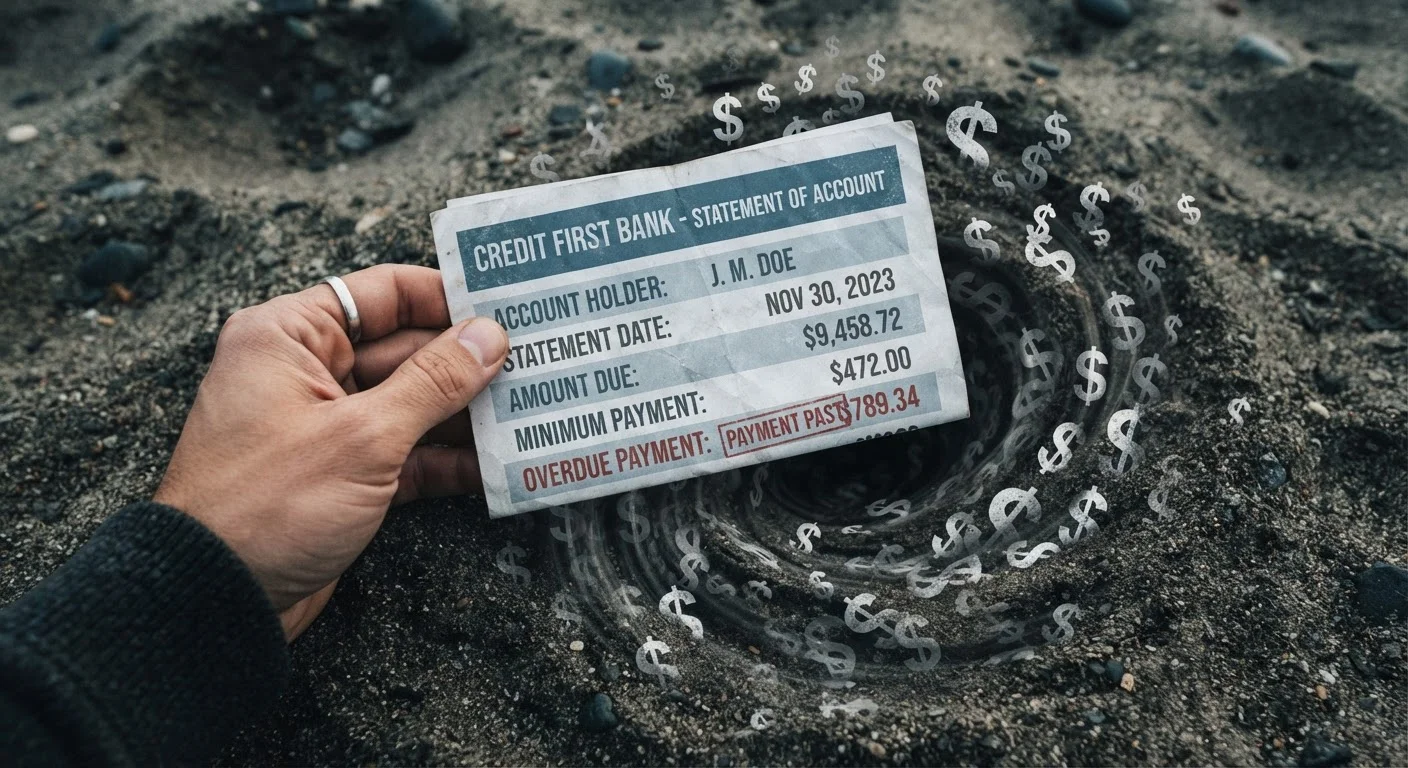
Photo: UltraSearches.com | Search Results You Can Trust editorial
Key Takeaways
- Minimum payments are designed by issuers to maximize interest revenue, not to help you pay off debt quickly.
- On a typical balance, paying only the minimum can extend repayment by years and more than double the total cost.
- Interest charges are calculated daily on most cards, so even small extra payments reduce what you owe faster.
- Carrying a balance does not help your credit score - a common myth worth dispelling.
- A structured repayment strategy - like the avalanche or snowball method - is far more effective than minimum payments.
The Math That Makes Minimum Payments So Costly
Imagine you carry a $3,000 balance on a credit card charging 22% annual interest. Your minimum payment might be roughly $60 per month - which sounds manageable. But run the numbers and the picture gets grim: paying only that minimum, it could take well over six years to pay off the balance, and you'd pay close to $2,500 in interest alone - nearly doubling the original debt.
The reason is straightforward. The majority of your minimum payment in the early months goes toward interest, not principal. If your monthly interest charge is $55 and your minimum is $60, only $5 chips away at the actual balance. The next month's interest is calculated on a balance barely lower than before. This is the quicksand effect - you keep moving, but you're barely getting anywhere.
22%
Average credit card APR in the U.S.
According to Federal Reserve data, average credit card interest rates have reached historically high levels in recent years, making the cost of carrying balances more significant than ever.
~1-2%
Typical minimum payment as a share of balance
Most major card issuers set the minimum at 1-2% of the outstanding balance plus fees and interest, according to consumer finance disclosures.
2x+
Potential total cost vs. original balance
Carrying a typical balance at high APR while paying only minimums can result in paying more in interest than the original amount borrowed, based on standard amortization calculations.
Credit card statements are now required by federal law to show you a minimum payment warning - specifically, how long it takes to pay off the balance paying only the minimum versus a fixed amount. If you've never read that section of your statement, it's worth a look.
How Interest Accrues Day by Day
Most credit cards calculate interest using a daily periodic rate - your annual percentage rate (APR) divided by 365. That rate is applied to your average daily balance throughout the billing cycle. So if you make a purchase mid-cycle and don't pay it off, interest starts building almost immediately once your grace period ends.
The grace period - typically 21 to 25 days after your statement closes - only applies when you carry no balance from the previous month. Once you're carrying a balance, purchases often start accruing interest right away. This is why minimum-payment payers can feel like they're running on a treadmill: new interest is added constantly, undoing even modest payments.
Pay More Than the Minimum - Even a Little
It also explains why paying even $20 or $30 more than the minimum each month can shave months off repayment time. Every dollar above the minimum directly attacks the principal balance - which lowers next month's interest charge in a compounding effect working in your favor for once.
Common Myths That Keep People Stuck
One of the most persistent myths in personal finance is that carrying a small credit card balance helps build your credit score. It doesn't. Payment history and credit utilization are what move the needle - not whether you revolve a balance. Paying your bill in full each month and keeping your utilization low is far better for your score. For a deeper look, see why carrying a balance won't help your credit score.
Another misconception is that setting up autopay solves the problem. Autopay is a useful tool for avoiding missed payments - but if it's set to the minimum, it locks you into the slowest, most expensive repayment path possible. Autopay myths worth knowing covers this in detail.
And don't overlook the credit score damage that comes with prolonged high utilization. Carrying a high balance relative to your credit limit - even if you're making minimums on time - can silently drag your score down. See habits that silently erode a good credit score for a fuller picture.
A Better Path Forward
Getting out of the minimum-payment trap doesn't require a windfall. It requires a plan. Two well-known strategies - the debt avalanche and the debt snowball - offer structured ways to attack balances systematically. The avalanche method targets the highest-interest debt first, minimizing total interest paid. The snowball method targets the smallest balance first for psychological momentum. Compare both approaches to find which fits your situation.
If your budget feels too tight to pay more than the minimum, that's worth examining in its own right. A clear picture of monthly income and expenses is the foundation. Budgeting basics can help you find room you didn't know you had.
The bottom line: minimum payments are a floor, not a strategy. Paying just enough to avoid a late fee keeps your account current, but it keeps you in debt far longer than necessary - and costs significantly more in the long run.
This article is for general informational and educational purposes only and does not constitute personalized financial or legal advice. For guidance specific to your situation, consult a qualified financial professional.
Frequently Asked Questions
The content on this site is for informational purposes only and is not a substitute for professional advice. Always consult a qualified professional for guidance specific to your situation.