
Wet Food vs. Dry Food: Weighing the Tradeoffs for Dogs and Cats

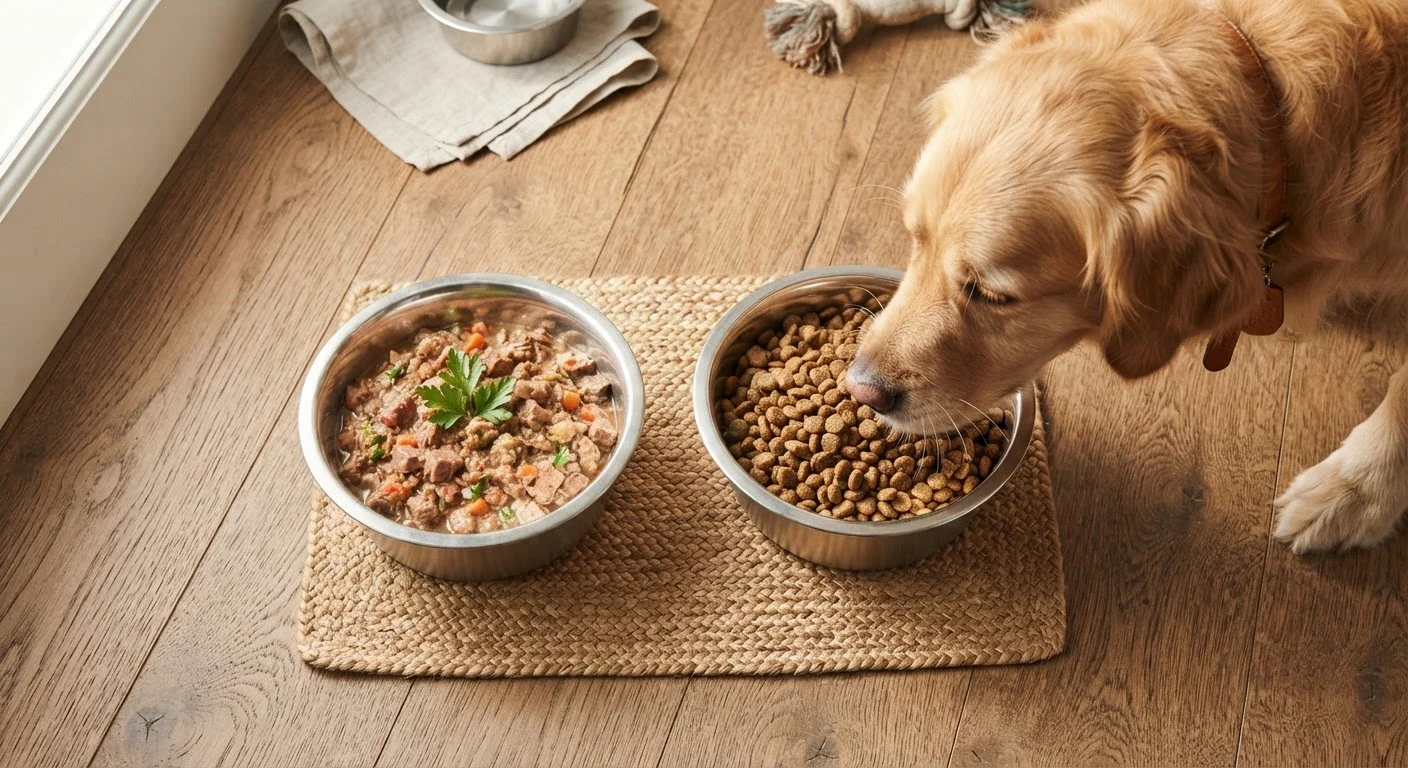
Photo: UltraSearches.com | Search Results You Can Trust editorial
Key Takeaways
- Wet food provides significantly more moisture, which supports hydration - especially important for cats.
- Dry food is more calorie-dense per ounce and generally more affordable for long-term daily feeding.
- Neither format is universally superior; a pet's health needs, life stage, and preferences should guide the choice.
- Many veterinarians recommend mixing both formats to balance palatability, hydration, and convenience.
- Always look for an AAFCO nutritional adequacy statement on any pet food, wet or dry.
What Actually Separates These Two Formats
At the most basic level, wet and dry pet food differ in water content. Canned wet food typically contains 70-80% moisture, while dry kibble contains roughly 10% or less. Everything else - protein levels, fat, carbohydrates, fiber - flows from that difference in formulation.
Both formats can be nutritionally complete. The key marker to look for on any pet food package is an AAFCO nutritional adequacy statement, which confirms the product meets established nutrient profiles for a specific life stage. That statement matters far more than the format itself. You can learn more about decoding those labels in our guide on reading pet food labels.
What differs is how each format delivers nutrition - and the practical realities of using them day to day.
| Criterion | Wet Food (Canned) | Dry Food (Kibble) |
|---|---|---|
| Moisture Content | 70-80% | ~10% |
| Cost per Serving | Higher | Lower |
| Caloric Density | Lower per volume | Higher per volume |
| Storage & Shelf Life | Refrigerate after opening; use within 2-3 days | Shelf-stable; lasts weeks to months |
| Palatability | Generally higher | Varies by pet |
| Texture Suitability | Ideal for seniors or dental issues | Requires normal chewing ability |
| Feeding Method Compatibility | Timed meals only | Free-feeding or timed meals |
| Dental Claims | No abrasive benefit | Modest benefit; not a substitute for brushing |
Where Wet Food Has a Real Edge
Hydration is the clearest advantage of wet food, and it matters most for cats. Unlike dogs, cats have a relatively low instinctive thirst drive - an evolutionary trait from desert-dwelling ancestors. When cats eat primarily dry food, they may chronically consume less water than they need, which veterinary researchers have linked to a higher risk of urinary tract problems and chronic kidney disease over time.
Wet food also tends to be more palatable. The aroma, texture, and higher fat content make it appealing even to finicky eaters, which makes it especially useful for senior pets with reduced appetite or animals recovering from illness.
70-80%
Moisture in typical canned pet food
Compared to roughly 10% in dry kibble, this difference is significant for daily hydration, particularly in cats prone to urinary tract issues.
3-4x
Higher cost of wet vs. dry food per serving
On a per-calorie basis, wet food typically costs considerably more than dry food, which is a key factor for multi-pet households managing food budgets.
For pets managing weight, wet food offers lower caloric density per cup compared to kibble - meaning a pet can eat a larger volume and feel more satisfied while consuming fewer calories. This doesn't make wet food a guaranteed solution for obesity, but it's a meaningful factor worth discussing with your veterinarian.
Where Dry Food Holds Its Own
Kibble's biggest practical advantages are cost and convenience. Per serving, dry food is consistently less expensive than wet, and a large bag stores easily without refrigeration. This matters in multi-pet households or for owners on a fixed budget.
Dry food is also compatible with a wider range of feeding approaches. If you use a timed automatic feeder or practice free-feeding, kibble won't spoil in the bowl the way wet food does. Our guide on dog feeding schedules covers how these setups work in practice.
One persistent claim is that kibble cleans teeth by its abrasive texture. The evidence for this is modest at best - most dry food isn't hard enough to significantly reduce plaque - but some veterinary dental diets specifically formulated for this purpose do show measurable benefit. Regular brushing and professional cleanings remain the gold standard for dental health regardless of food format.
Dental Diets Are Not the Same as Regular Dry Food
Building a Routine That Works for Your Pet
Many pet owners find that combining both formats - sometimes called mixed feeding or rotational feeding - offers a practical middle ground. A base of dry food for convenience, supplemented with wet food for palatability and hydration, can work well for healthy adult dogs and cats. That said, switching foods should be done gradually to avoid digestive upset.
The more important foundation is consistency and quality. A pet fed the same balanced, AAFCO-compliant diet in a predictable routine will generally thrive regardless of whether that food comes from a can or a bag. A few popular beliefs about pet nutrition - such as the idea that grain-free diets are inherently healthier - don't hold up well to scrutiny. Our article on common pet nutrition myths examines the evidence behind some of these widely held assumptions.
When in doubt, your veterinarian is the most reliable guide. They can factor in your pet's specific health history, weight, breed, and life stage - details that no general comparison can account for.
This article is for general informational purposes only and does not constitute veterinary advice. Always consult a licensed veterinarian for guidance specific to your pet's health and nutritional needs.
The content on this site is for informational purposes only and is not a substitute for professional advice. Always consult a qualified professional for guidance specific to your situation.