
Wet Food vs. Dry Food: What Nutrition Science Says About the Difference

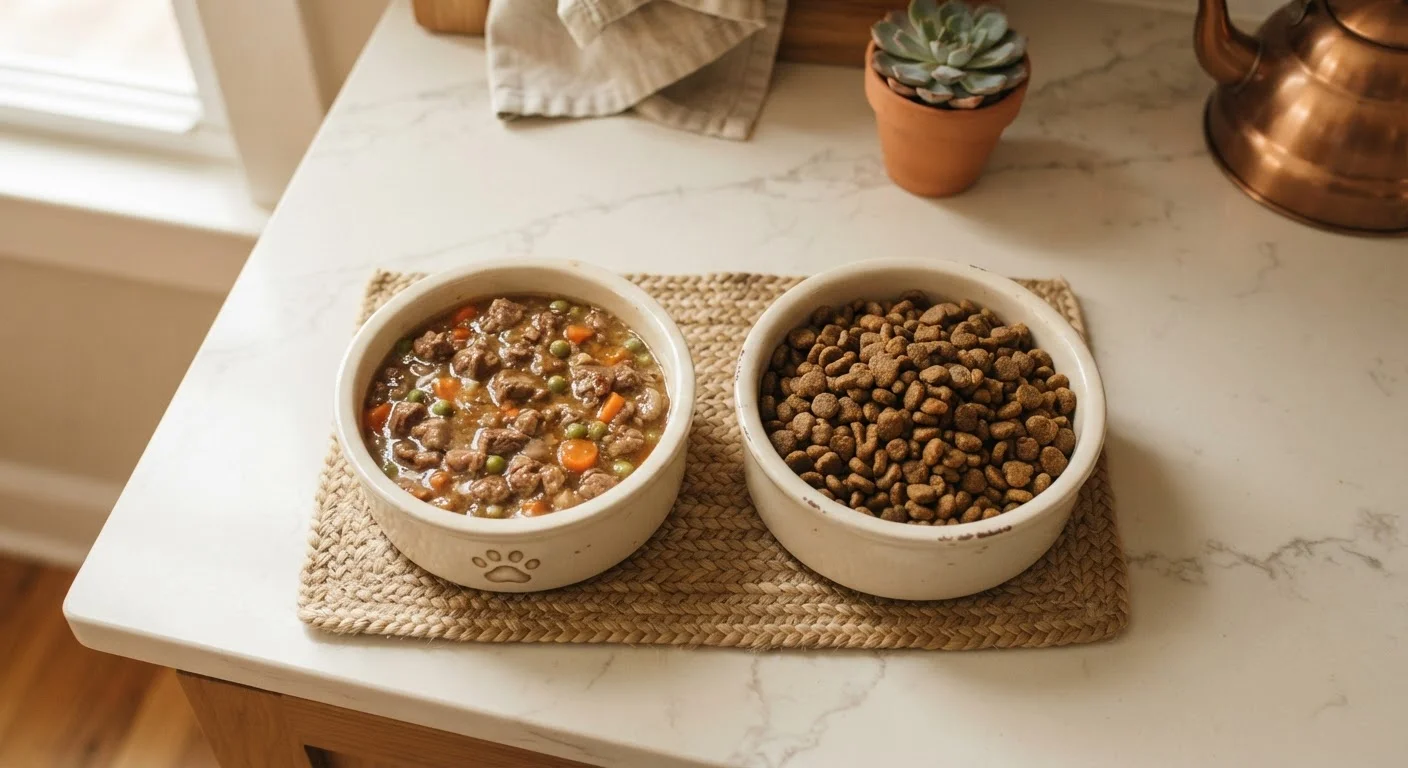
Photo: UltraSearches.com | Search Results You Can Trust editorial
Key Takeaways
- Wet food contains 70-85% moisture, making it a meaningful source of hydration for cats and dogs.
- Dry kibble is more calorie-dense by volume and generally costs less per serving than wet food.
- Neither format is universally superior - the best choice depends on the individual pet's health needs.
- Dental health claims about dry kibble are nuanced; most kibble provides only modest mechanical cleaning.
- Many veterinarians recommend consulting pet food labels and AAFCO nutritional adequacy statements when choosing a format.
The Core Nutritional Difference: It Starts With Water
The most fundamental difference between wet and dry pet food is moisture content. Wet food typically contains 70-85% water, while dry kibble usually falls between 6-10%. This single variable has a cascade of nutritional and health implications that go far beyond simple hydration.
Because wet food is mostly water, it delivers fewer calories per gram than dry food. That means a cat or dog eating wet food consumes a larger physical volume of food to meet the same caloric needs - which can be genuinely helpful for weight management. Conversely, kibble's calorie density makes it easier to accidentally overfeed if portions aren't carefully measured.
On a dry matter basis (that is, with the water removed from the calculation), many wet and dry foods contain comparable levels of protein, fat, and carbohydrates. This distinction matters when you're comparing labels. A wet food listing 10% protein by as-fed analysis may actually deliver protein levels similar to a dry food listing 30%, once moisture is factored out. For guidance on decoding those numbers, see how to read pet food labels.
| Criterion | Wet Pet Food | Dry Pet Food (Kibble) |
|---|---|---|
| Moisture Content | 70-85% | 6-10% |
| Caloric Density (per gram) | Lower | Higher |
| Hydration Support | Significant | Minimal |
| Palatability | Generally higher | Variable |
| Cost Per Serving | Higher | Lower |
| Shelf Life After Opening | 24-48 hours (refrigerated) | Weeks (sealed container) |
| Dental Cleaning Effect | Negligible | Minimal (most kibble) |
| Best For | Hydration, picky eaters, seniors | Convenience, portion control, cost |
Hydration, Dental Health, and Common Misconceptions
Cats evolved as desert-adapted animals with a low instinctive thirst drive. Research in veterinary nutrition consistently shows that cats consuming wet food have a significantly higher total daily water intake than those fed dry food exclusively. This matters because inadequate hydration is a known risk factor for feline lower urinary tract disease (FLUTD) and chronic kidney disease - two of the most common conditions in adult cats.
Dogs are less dependent on food for hydration than cats, but pets with certain conditions - kidney disease, bladder stones, or constipation - often benefit from increased moisture in their diet. Always discuss dietary changes with your veterinarian if your pet has an existing condition.
What AAFCO Nutritional Adequacy Means
The claim that dry kibble cleans teeth is widely repeated but scientifically overstated. Most kibble simply shatters on contact without providing meaningful plaque reduction. Purpose-formulated dental kibble with specific texture and size claims (look for the Veterinary Oral Health Council seal) may offer modest benefit, but regular tooth brushing and professional dental cleanings remain the gold standard for pet oral health.
To separate other persistent nutrition myths from the evidence, explore common pet nutrition myths vets frequently address.
70-85%
Moisture in typical wet pet food
Compared to just 6-10% in dry kibble, this difference substantially affects daily water intake, especially in cats.
~3x
Higher water intake in cats fed wet food
Veterinary nutrition research suggests cats eating wet food consume roughly three times more total daily water than those eating dry food exclusively.
1 in 3
Cats affected by kidney disease over a lifetime
Chronic kidney disease is one of the leading causes of illness in older cats, making hydration through diet a relevant preventive consideration according to veterinary sources.
Practical Tradeoffs: Cost, Storage, and Palatability
Beyond pure nutrition, everyday practicality shapes which format works best for a given household. Dry food generally costs less per calorie, stores easily at room temperature, and stays fresh in a sealed container for weeks. These attributes make kibble the default choice for many multi-pet households and owners managing tight budgets.
Wet food, by contrast, is more expensive per serving, must be refrigerated after opening, and typically used within 24-48 hours to avoid spoilage. However, it scores consistently higher in palatability - particularly among cats and small-breed dogs - and its texture may be essential for pets with dental pain, missing teeth, or difficulty chewing.
Some owners choose a mixed feeding approach, combining wet and dry food to balance palatability, hydration, cost, and portion control. There's no universal rule against this, but caloric balance matters: adding wet food on top of a full dry-food ration can lead to unintended weight gain. Portion guidance from a veterinarian is especially useful here.
For a deeper look at how these tradeoffs play out across different dog and cat scenarios, see weighing wet vs. dry food tradeoffs for dogs and cats.
This article is for general informational and educational purposes only. It is not a substitute for personalized veterinary advice. Always consult a licensed veterinarian before making changes to your pet's diet, particularly if your pet has an existing health condition.
The content on this site is for informational purposes only and is not a substitute for professional advice. Always consult a qualified professional for guidance specific to your situation.