
Reading Pet Food Labels: What the Ingredients List Actually Tells You

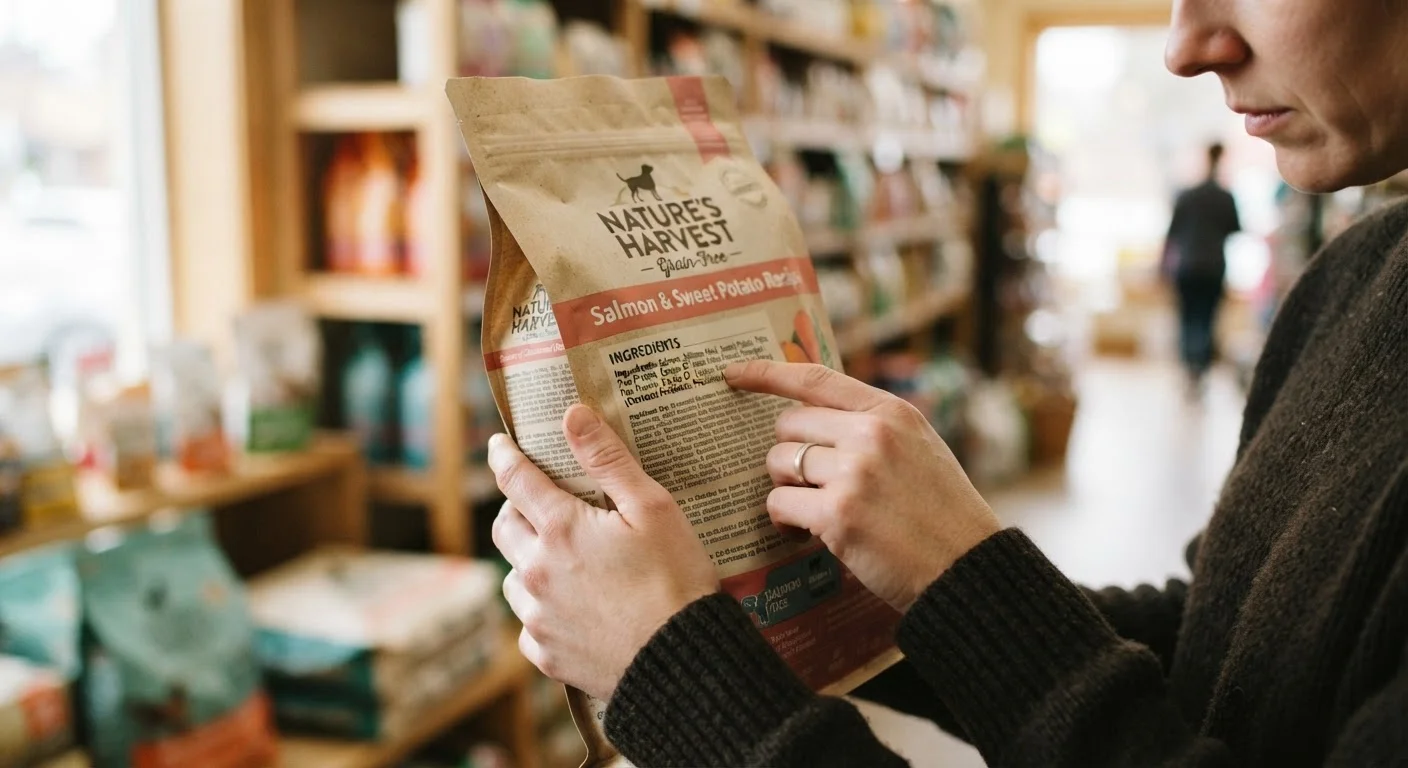
Photo: UltraSearches.com | Search Results You Can Trust editorial
Key Takeaways
- Ingredients are listed by weight before cooking, so moisture-heavy items like chicken may appear first even if they contribute less protein than they seem.
- The guaranteed analysis shows minimum or maximum percentages for key nutrients, not exact amounts.
- An AAFCO nutritional adequacy statement tells you whether a food is complete and balanced for a specific life stage.
- Ingredient splitting - listing similar ingredients separately - can make a lower-quality ingredient appear further down the list.
- No single ingredient guarantees a high-quality diet; the overall nutrient profile matters most.
- A veterinarian or veterinary nutritionist is the right resource for guidance tailored to your specific pet.
How the Ingredient List Is Structured
Every commercial pet food sold in the U.S. must list its ingredients in descending order by pre-cooking weight - the heaviest ingredient comes first. This sounds straightforward, but a key detail changes how you interpret it: ingredients are weighed before processing, and many raw ingredients contain significant amounts of water.
Fresh chicken, for example, is roughly 70% water. Once cooked, its actual contribution to the food shrinks considerably. That's why a food listing chicken first might derive more of its final protein from a dry ingredient lower on the list, like chicken meal or a legume. Understanding this helps you look past the top line and evaluate the first five to seven ingredients as a whole.
For a broader look at how ingredient lists compare to human food labeling, see what a nutrition label is actually telling you.
~4,000
Pet food products registered in the U.S.
The American Pet Products Association estimates thousands of pet food SKUs are available to U.S. consumers, making label literacy an increasingly important skill for owners.
70%
Approximate water content in raw chicken
Because raw ingredients are weighed before cooking, high-moisture proteins like fresh chicken appear larger on the ingredient list than their post-processing contribution would suggest.
The Guaranteed Analysis Panel
Directly on the label - usually near the ingredient list - you'll find the guaranteed analysis. This panel lists minimum percentages for crude protein and crude fat, and maximum percentages for crude fiber and moisture. These are regulatory minimums and maximums, not precise measurements of what's actually in the bag.
'Crude' in this context refers to the measurement method, not the quality of the nutrient. A food guaranteeing 26% crude protein tells you the food meets at least that threshold, but doesn't tell you the protein's digestibility or biological value. Digestibility is rarely listed on consumer packaging and is generally available only through manufacturer transparency reports or published research.
One important application of the guaranteed analysis: comparing wet and dry foods. Because wet food contains much more moisture, its percentages look dramatically lower. Converting to a dry-matter basis - which strips out moisture mathematically - is the only accurate way to compare. The science behind wet versus dry food formats covers this in more depth.
The AAFCO Nutritional Adequacy Statement
Often overlooked, the nutritional adequacy statement is one of the most informative parts of any pet food label. It indicates whether a food is intended to be a complete diet or a supplement, and which life stage it's designed for.
A statement might read: " is formulated to meet the nutritional levels established by the AAFCO Dog Food Nutrient Profiles for all life stages." This tells you the food has been formulated to meet established nutrient profiles. Alternatively, a food may carry a statement that it was tested through feeding trials, which is a different - and arguably more real-world - form of validation.
Foods without an adequacy statement should not serve as a pet's primary diet. These include treats, toppers, and supplemental foods, which are not required to meet complete nutrition standards.
Check the Life Stage Claim Before Buying
Common Label Terms Decoded
Pet food marketing language can be genuinely confusing. Here are a few terms worth knowing:
- Meal: A rendered, dried protein concentrate (e.g., salmon meal). Named meals are more transparent than generic ones like 'poultry meal.'
- By-products: Parts other than skeletal muscle - organs, bone, and other components. Named by-products (specifying the species) are more informative than unnamed ones.
- Natural: An AAFCO-defined term meaning no artificial colors, flavors, or preservatives were added - though it doesn't address sourcing or processing methods.
- Ingredient splitting: Listing multiple forms of one ingredient separately to push each one lower on the list. Common with grains and starches.
For context on how popular nutrition beliefs sometimes diverge from the evidence, see common pet nutrition myths vets hear often.
Putting It All Together
No single label section gives you the full picture on its own. A food with a premium protein in position one might still be nutritionally unbalanced if it lacks an AAFCO adequacy statement. A food with grains listed mid-way through might still deliver excellent, science-backed nutrition for your pet's life stage.
The ingredient list, guaranteed analysis, and adequacy statement work best when read together. And because your pet's specific needs - their age, size, health status, and activity level - matter enormously, consulting a veterinarian or veterinary nutritionist remains the most reliable path to confident feeding decisions.
If you're also weighing format choices, the tradeoffs between wet and dry food offers a balanced look at both options.
This article is for general informational purposes only and is not a substitute for professional veterinary or nutritional advice. Always consult a licensed veterinarian for guidance specific to your pet's health and dietary needs.
Frequently Asked Questions
The content on this site is for informational purposes only and is not a substitute for professional advice. Always consult a qualified professional for guidance specific to your situation.