
Fast Fashion vs. Slow Fashion: Understanding the Trade-Offs

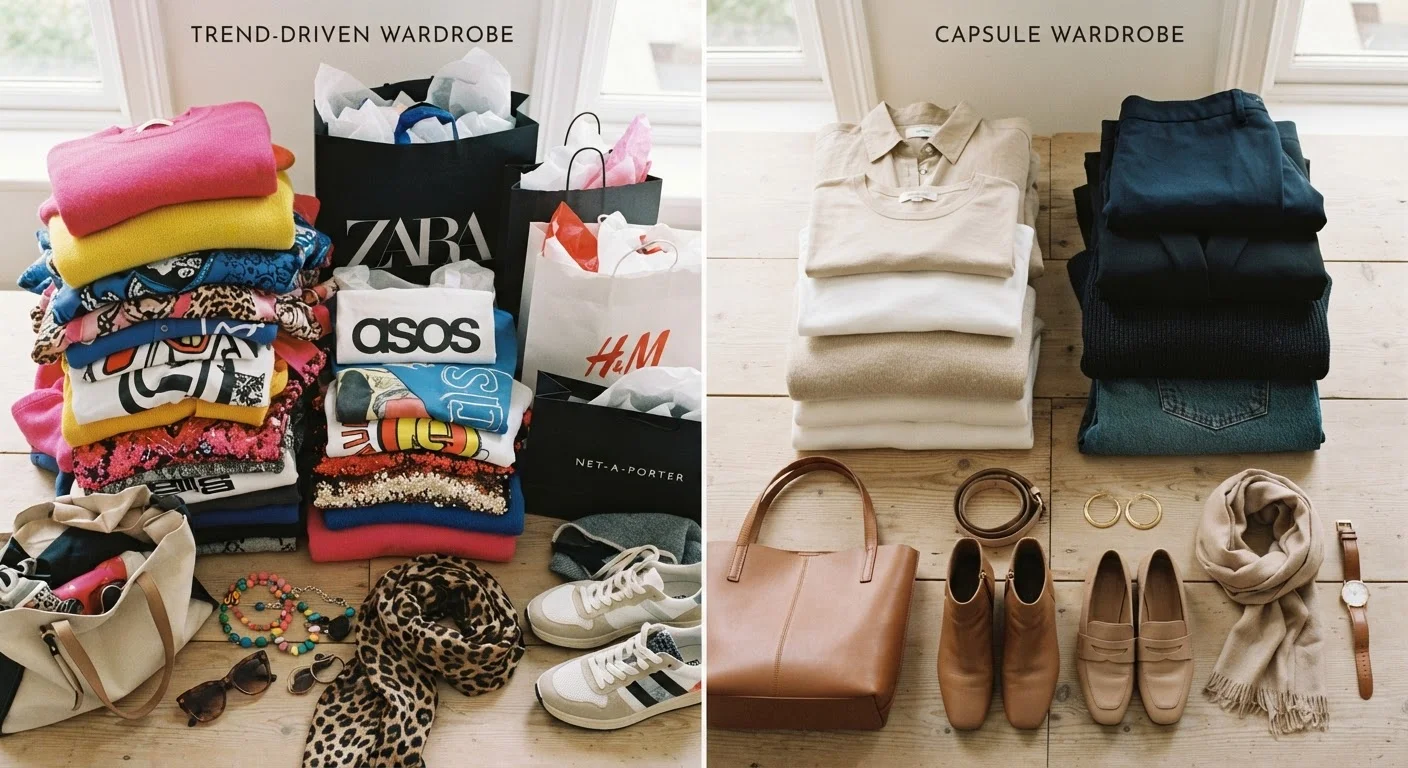
Photo: UltraSearches.com | Search Results You Can Trust editorial
Key Takeaways
- Fast fashion offers low prices and trend access but often sacrifices garment longevity and environmental sustainability.
- Slow fashion prioritizes quality and ethics but typically requires a higher upfront investment.
- Neither approach is universally right - your budget, lifestyle, and values all shape the best fit.
- A blended strategy lets most people enjoy both affordability and intentional buying.
- Understanding garment lifespan and cost-per-wear can help you shop more confidently in either lane.
Low upfront cost makes clothing accessible to more people
Affordable price points let shoppers stretch limited budgets across multiple categories, which is a genuine advantage for households managing tight finances.
Broad trend access without major financial commitment
Fast fashion makes it easier to experiment with styles before committing to a look, which is especially useful when personal style is still evolving.
Practical for rapidly changing wardrobe needs
Life transitions - new jobs, pregnancy, significant weight change - can make expensive long-term purchases impractical; affordable options provide flexibility.
Wide availability and variety across sizes and styles
Fast fashion retailers often stock extensive size ranges and a broad mix of styles, giving more shoppers a realistic chance of finding what they need.
Higher upfront cost per item can be a barrier
Slow fashion pieces often carry price tags that put them out of reach for budget-constrained shoppers, even when the long-term value is better.
Requires more deliberate, time-consuming decisions
Choosing fewer, higher-quality pieces means researching materials, construction, and fit more carefully - which takes time and confidence many shoppers don't always have.
"Ethical" and "sustainable" labels are largely unregulated
Without consistent standards, slow fashion marketing claims can be difficult to verify, making it harder to know whether a higher price reflects genuine quality or simply positioning.
Investment pieces can underperform if lifestyle changes
Buying expensive staples that don't align with your actual daily life - or that fit differently after a year - can result in costly wardrobe mistakes.
What Do These Terms Actually Mean?
Fast fashion refers to a retail model built around high volume, frequent trend cycles, and low price points. Garments are produced quickly and cheaply, often in response to runway trends or social media moments, and are designed to sell fast rather than last long.
Slow fashion is the counter-philosophy: fewer pieces, made with greater attention to material quality, labor conditions, and longevity. It prioritizes buying less but buying better - though what "better" looks like varies widely by brand and context.
Neither term describes a single, unified standard. Fast fashion spans everything from dollar-store impulse buys to affordable mall staples. Slow fashion ranges from small ethical makers to high-end investment pieces. The labels are starting points, not guarantees.
For a related lens on how consumer trade-offs play out across categories, see how natural vs. synthetic beauty labels work in practice - the gap between marketing language and reality is surprisingly similar.
The Case for Fast Fashion
Fast fashion gets a lot of criticism, but it serves real needs for real people - and ignoring that misses the full picture.
Low upfront cost makes clothing accessible to more people
Affordable price points let shoppers stretch limited budgets across multiple categories, which is a genuine advantage for households managing tight finances.
Broad trend access without major financial commitment
Fast fashion makes it easier to experiment with styles before committing to a look, which is especially useful when personal style is still evolving.
Practical for rapidly changing wardrobe needs
Life transitions - new jobs, pregnancy, significant weight change - can make expensive long-term purchases impractical; affordable options provide flexibility.
Wide availability and variety across sizes and styles
Fast fashion retailers often stock extensive size ranges and a broad mix of styles, giving more shoppers a realistic chance of finding what they need.
For shoppers on genuinely tight budgets, affordable clothing isn't a luxury indulgence - it's a practical necessity. Fast fashion also gives people access to current styles during life stages when their size, lifestyle, or taste is changing rapidly. A teenager, a new parent, or someone rebuilding a wardrobe after a major life shift may have good reasons to prioritize low cost over longevity right now.
If you're navigating a limited budget, practical strategies for dressing well on a tight budget can help you make the most of every dollar, wherever you're shopping.
The Case for Slow Fashion
Slow fashion asks you to slow down the decision - and in many cases, that pause pays off.
Higher upfront cost per item can be a barrier
Slow fashion pieces often carry price tags that put them out of reach for budget-constrained shoppers, even when the long-term value is better.
Requires more deliberate, time-consuming decisions
Choosing fewer, higher-quality pieces means researching materials, construction, and fit more carefully - which takes time and confidence many shoppers don't always have.
"Ethical" and "sustainable" labels are largely unregulated
Without consistent standards, slow fashion marketing claims can be difficult to verify, making it harder to know whether a higher price reflects genuine quality or simply positioning.
Investment pieces can underperform if lifestyle changes
Buying expensive staples that don't align with your actual daily life - or that fit differently after a year - can result in costly wardrobe mistakes.
The concept of cost-per-wear is worth understanding here: divide what you paid for a garment by how many times you actually wear it. A $30 shirt worn twice costs $15 per wear; a $90 shirt worn 60 times costs $1.50. Slow fashion tends to perform better by this measure - but only if the pieces genuinely fit your life and you actually wear them.
It's also worth noting that slow fashion isn't automatically ethical or sustainable. Those terms aren't regulated, so it's worth looking beyond labels. Some wardrobe decisions are harder to undo than they look - including investing heavily in a wardrobe philosophy that doesn't match how you actually live.
Finding a Realistic Middle Ground
Most people don't live at either extreme - and that's perfectly fine. A practical wardrobe often blends both approaches based on category and need.
A Useful Framing: Category-Based Buying
Consider reserving slow-fashion investment for the pieces you wear most often and that need to hold up to repeated use: everyday shoes, a reliable coat, well-fitting trousers. For occasion-specific items, trend-driven pieces you're less sure about, or categories where fit matters more than durability, more affordable options are often the sensible call.
~10%
Global carbon emissions attributed to apparel industry
The United Nations Environment Programme has cited the fashion industry as a significant contributor to global greenhouse gas emissions, though exact figures vary by methodology.
3×
Faster fashion trend cycles than two decades ago
Industry analysts have noted that the average number of clothing collections produced annually by major retailers has grown substantially since the early 2000s.
The goal isn't ideological purity - it's a wardrobe that actually works. For a deeper look at intentional wardrobe building, the honest trade-offs of minimalist dressing explores what you gain and give up when you commit to fewer, curated pieces. And for broader smart-shopping principles that apply well beyond fashion, the Smart Buying Tips hub is worth a browse.
The content on this site is for informational purposes only and is not a substitute for professional advice. Always consult a qualified professional for guidance specific to your situation.