
The Honest Trade-Offs of Minimalist Dressing

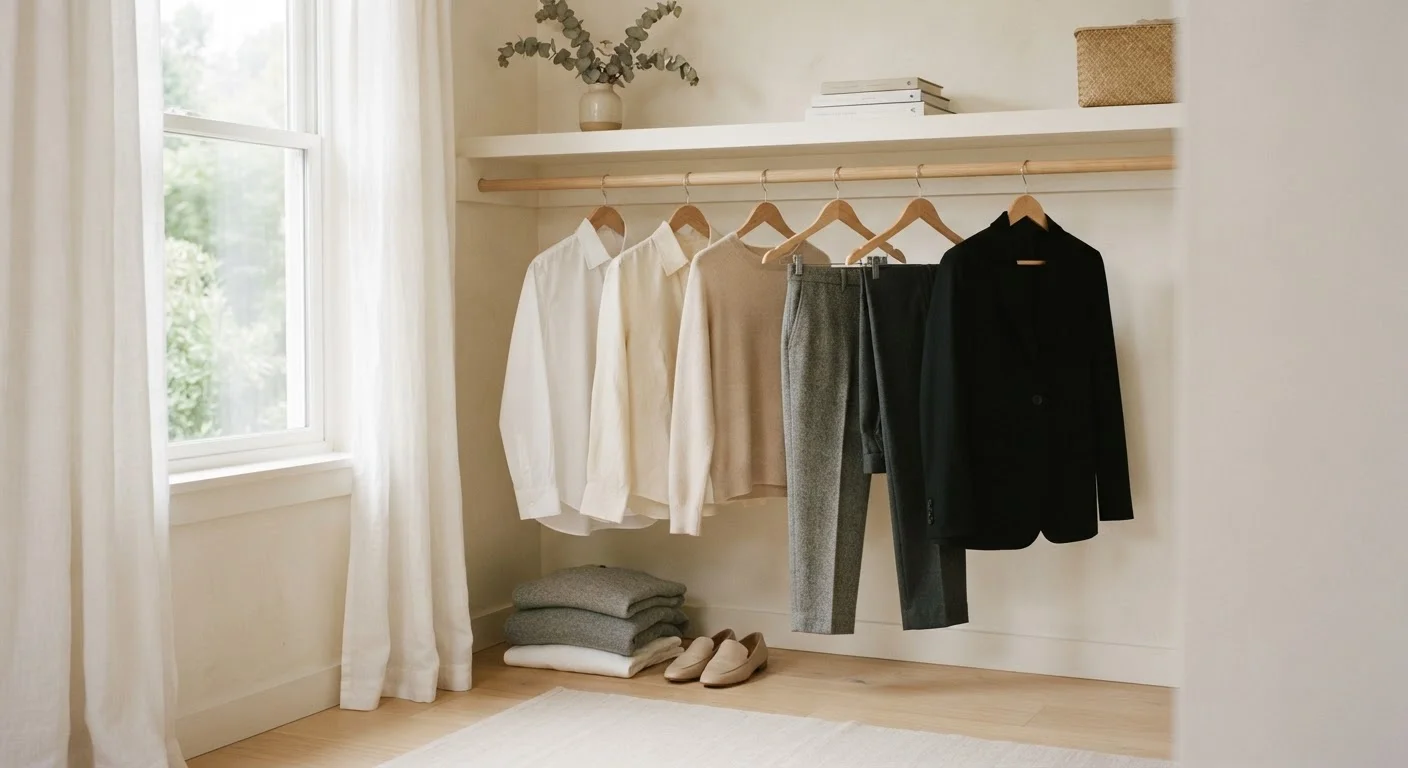
Photo: UltraSearches.com | Search Results You Can Trust editorial
Key Takeaways
- Minimalist dressing reduces decision fatigue and simplifies daily routines significantly.
- A smaller wardrobe requires higher upfront investment in versatile, quality pieces.
- Minimalism may limit self-expression for those who enjoy variety and bold styling.
- The approach works best when built around your actual lifestyle, not an idealized one.
- Seasonal and occasion-specific needs can make strict minimalism harder to maintain.
Reduces daily decision fatigue significantly
When your wardrobe is built around pieces that all work together, getting dressed requires far less mental energy - a small but meaningful quality-of-life improvement on busy mornings.
Easier to maintain a tidy, organized space
Fewer items means less visual clutter and quicker tidying. A well-curated closet is easier to navigate and less likely to feel overwhelming or chaotic.
Encourages more intentional purchasing habits
When you know exactly what's in your wardrobe and what it needs, impulse buying tends to decrease naturally. Each new piece is evaluated against what you already own.
Outfits coordinate reliably with minimal effort
A wardrobe built on a consistent palette or aesthetic means almost any combination works, reducing the anxiety of not knowing if pieces "go together."
Can extend the lifespan of individual garments
Wearing fewer items more deliberately - and caring for them properly - tends to keep them in better condition longer than a large, frequently rotated wardrobe.
High upfront cost for quality versatile pieces
Building a genuinely functional minimal wardrobe often requires investing in durable, well-made items. This can be a real barrier for readers working with tight clothing budgets.
Limited room for self-expression through variety
For those who use clothing to communicate personality, mood, or creativity, a restricted wardrobe can feel stifling rather than freeing - minimalism isn't emotionally neutral for everyone.
Seasonality creates practical gaps
A small, consistent wardrobe struggles to cover genuinely different seasonal needs. Cold-weather layering, summer heat, and transitional weather often demand more flexibility than minimalism allows.
Occasion diversity strains a small wardrobe
Life rarely stays in one lane. Formal events, outdoor weekends, and casual outings all pull in different directions - and a highly edited wardrobe may not stretch to cover them all comfortably.
Risk of boredom with limited rotation
Wearing a small set of pieces repeatedly can feel monotonous over time, particularly for readers who find novelty and variety genuinely energizing rather than stressful.
What Minimalist Dressing Actually Means
Minimalist dressing isn't a strict set of rules - it's a philosophy. At its core, it means owning fewer pieces, chosen deliberately, that work together with minimal effort. Think a wardrobe where almost everything coordinates, where getting dressed takes minutes, and where you rarely feel like you have "nothing to wear."
It doesn't require a specific color palette, a capsule of exactly 33 items, or expensive wardrobe overhauls. What it does require is some honest thinking about what you actually wear, what your days actually look like, and what you're willing to give up in exchange for simplicity. That last part is what most minimalism content quietly skips over - and it's worth discussing openly.
For a deeper look at how your real routine should shape your clothing choices, see how dressing for your real life pays off.
The Real Advantages
There are genuine, practical benefits to paring down - and they go beyond just a tidier closet.
Reduces daily decision fatigue significantly
When your wardrobe is built around pieces that all work together, getting dressed requires far less mental energy - a small but meaningful quality-of-life improvement on busy mornings.
Easier to maintain a tidy, organized space
Fewer items means less visual clutter and quicker tidying. A well-curated closet is easier to navigate and less likely to feel overwhelming or chaotic.
Encourages more intentional purchasing habits
When you know exactly what's in your wardrobe and what it needs, impulse buying tends to decrease naturally. Each new piece is evaluated against what you already own.
Outfits coordinate reliably with minimal effort
A wardrobe built on a consistent palette or aesthetic means almost any combination works, reducing the anxiety of not knowing if pieces "go together."
Can extend the lifespan of individual garments
Wearing fewer items more deliberately - and caring for them properly - tends to keep them in better condition longer than a large, frequently rotated wardrobe.
80%
Of wardrobe items rarely worn
Research on consumer clothing habits consistently finds that most people wear a small fraction of what they own on a regular basis, suggesting large wardrobes often go underutilized.
~35,000
Decisions made by adults daily
Cognitive researchers estimate adults make tens of thousands of micro-decisions each day; reducing low-stakes choices like outfit selection is one commonly cited way to conserve mental energy.
Decision fatigue is a real phenomenon: the more choices you face each morning, the more mental energy you spend before your day even starts. A minimal wardrobe eliminates that low-grade daily friction. When every item coordinates, getting dressed becomes almost automatic - and that's not laziness, it's efficiency.
There's also a financial angle worth acknowledging. Buying fewer, more considered pieces tends to reduce impulse purchases over time, which can align well with broader budgeting basics goals. That said, minimalism done well often means spending more per item upfront - so it's not automatically cheaper in the short term.
The Honest Limitations
Minimalism comes with real trade-offs that don't always get acknowledged in the lifestyle content space.
High upfront cost for quality versatile pieces
Building a genuinely functional minimal wardrobe often requires investing in durable, well-made items. This can be a real barrier for readers working with tight clothing budgets.
Limited room for self-expression through variety
For those who use clothing to communicate personality, mood, or creativity, a restricted wardrobe can feel stifling rather than freeing - minimalism isn't emotionally neutral for everyone.
Seasonality creates practical gaps
A small, consistent wardrobe struggles to cover genuinely different seasonal needs. Cold-weather layering, summer heat, and transitional weather often demand more flexibility than minimalism allows.
Occasion diversity strains a small wardrobe
Life rarely stays in one lane. Formal events, outdoor weekends, and casual outings all pull in different directions - and a highly edited wardrobe may not stretch to cover them all comfortably.
Risk of boredom with limited rotation
Wearing a small set of pieces repeatedly can feel monotonous over time, particularly for readers who find novelty and variety genuinely energizing rather than stressful.
One of the biggest practical challenges is seasonality. If you live somewhere with distinct winters and summers, a single small wardrobe has to work harder - and often can't. You may find yourself needing more pieces than a strict minimalist framework suggests. Seasonal wardrobe transitions become a real consideration rather than a minor footnote.
There's also the question of self-expression. For many people, clothing is genuinely joyful - a rotating way to communicate personality, mood, and creativity. Minimalism can feel restrictive if bold colors, patterns, and variety are part of how you connect with your own identity. That's not a flaw in you; it's just a mismatch between the approach and your needs.
If you're weighing how neutrals and statement pieces fit into your existing wardrobe, finding the right balance between neutral and statement pieces is a useful companion read.
Who It Works Best For - and Who Should Think Twice
Minimalism tends to thrive for people with consistent daily routines - those who dress for similar contexts most days, whether that's an office, a casual work-from-home setup, or a physically active schedule. When your life is predictable, a small, coordinated wardrobe genuinely covers your needs.
Minimalism Isn't One-Size-Fits-All
It's a harder fit for people whose lives require genuine variety: someone who shifts between formal client meetings, weekend outdoor activities, and social events needs more range than a strict 20-piece wardrobe typically allows. The same applies to anyone in a field where dressing expressively is part of the job or culture.
Budget also shapes whether minimalism is accessible. Building a minimal wardrobe of durable, versatile pieces often means spending more per item. If that's not feasible right now, dressing well on a tight budget offers practical strategies that don't require an expensive reset. And if you're curious how minimalism intersects with broader fashion consumption habits, the fast fashion vs. slow fashion trade-offs are worth understanding too.
The content on this site is for informational purposes only and is not a substitute for professional advice. Always consult a qualified professional for guidance specific to your situation.