
The Logic Behind Manufacturer Maintenance Schedules

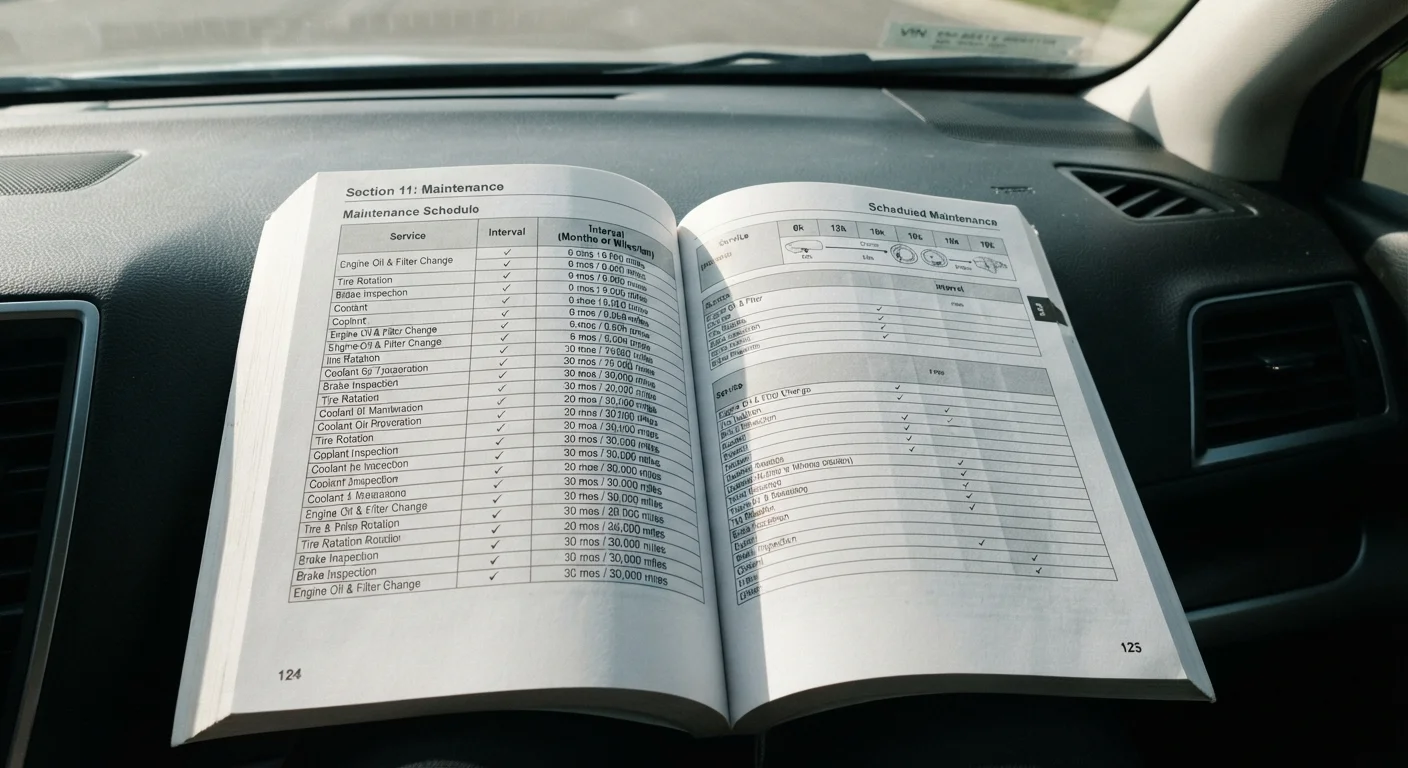
Photo: UltraSearches.com | Search Results You Can Trust editorial
Key Takeaways
- Your owner's manual schedule is engineered specifically for your engine - generic internet advice is not.
- Schedules use mileage and time triggers; whichever arrives first determines when service is due.
- 'Severe' driving conditions cover more situations than most drivers realize, including frequent short city trips.
- Following the schedule protects your powertrain warranty and supports resale value.
- Skipping or delaying services doesn't save money long-term - deferred maintenance compounds.
Why the Schedule Exists - and Who Built It
The maintenance schedule in your owner's manual isn't a generic checklist assembled by a marketing department. It reflects engineering decisions made during your vehicle's development - testing under heat, cold, load, and sustained use to identify when fluids degrade, belts stress, and filters clog. Each interval is a threshold the engineers determined balances component longevity against realistic driving patterns.
That specificity matters. A turbocharged engine running synthetic oil has different service needs than a naturally aspirated engine designed around conventional oil. A timing chain system has different inspection requirements than a timing belt. Generic third-party schedules can't account for these variables the way your manual can.
This is also why the popular car maintenance myths - like universal 3,000-mile oil changes - don't hold up. What your engine actually needs is written in the book that came with it.
~$1,200
Average annual vehicle maintenance cost per AAA estimates
AAA's annual Your Driving Costs study has consistently found that routine maintenance, including oil changes and tire care, averages around this figure for a typical American driver.
35%
Drivers who don't consult their owner's manual
A survey conducted by the Car Care Council found a significant share of drivers rarely or never reference their owner's manual for maintenance guidance.
Up to 150,000 mi
Timing belt replacement intervals on modern engines
Manufacturer-specified timing belt replacement intervals vary widely - some call for replacement as early as 60,000 miles, others extend to 150,000 miles depending on engine design.
How to Read a Maintenance Schedule
Most schedules are organized as tables with services listed in rows and mileage or time intervals across columns. Two triggers govern every item: mileage and elapsed time. Service is due at whichever arrives first. A vehicle that sits mostly unused still needs coolant and brake fluid checks on the time schedule, because those fluids degrade through heat cycles and moisture absorption regardless of mileage.
Look for two separate schedules in your manual - one for normal driving and one for severe conditions. Severe doesn't mean racing; it typically includes:
- Frequent short trips under five miles (especially in cold weather)
- Extended idling or stop-and-go city traffic
- Towing, hauling, or carrying heavy loads regularly
- Driving in extreme heat, extreme cold, or dusty environments
Many everyday urban commuters meet the definition of severe-condition driving, which means tighter service intervals apply to them - a fact that often goes unnoticed until a problem develops.
Find Your Schedule Without Digging Through the Glove Box
What the Schedule Actually Covers
A complete manufacturer schedule tracks far more than oil changes. Common items include:
- Engine oil and filter - protects internal engine components; interval depends on oil type and driving conditions
- Transmission fluid - often overlooked; degraded fluid accelerates gear and clutch wear
- Coolant (antifreeze) - loses pH buffering over time, allowing internal corrosion
- Brake fluid - absorbs moisture, which lowers boiling point and can compromise braking performance
- Spark plugs - misfires reduce efficiency and can damage catalytic converters if ignored
- Timing belt or chain inspection - timing belt failure is catastrophic on interference engines; replacement intervals are non-negotiable
- Air and cabin filters - affect engine efficiency and interior air quality respectively
- Tire rotation and wheel alignment - promote even wear and preserve handling
For a broader look at why intervals matter in practice, see what actually happens when you skip oil changes - the downstream damage is more predictable than most drivers expect.
Making the Schedule Work in Practice
Knowing the schedule is half the task; tracking it is the other half. A simple log - even a notes app or a dedicated section of a physical folder - lets you cross-reference what was done and when. This becomes critical if you ever need to make a warranty claim or if you sell the vehicle. Keeping solid maintenance records directly affects your negotiating position and your protection if a dispute arises.
If you drive a high-mileage vehicle, the schedule still applies - but additional vigilance is warranted. Components that were within tolerance at 60,000 miles may approach end-of-life by 120,000. The approach to maintaining a high-mileage car builds on the manufacturer schedule rather than replacing it.
Finally, when a shop hands you an estimate that includes services beyond your schedule, you're entitled to ask how each item maps to your manual's recommendations. Understanding what you're being quoted for - and why - is a reasonable expectation. The breakdown of how to read a mechanic's estimate can help you have that conversation confidently.
“The owner's manual is the single most underused document in vehicle ownership. Every question about what your car needs and when is answered there - written by the people who built it.”
— Rich White, Executive Director, Car Care Council
Frequently Asked Questions
The content on this site is for informational purposes only and is not a substitute for professional advice. Always consult a qualified professional for guidance specific to your situation.