
Tire Pressure and Why Your Car Cares So Much About It

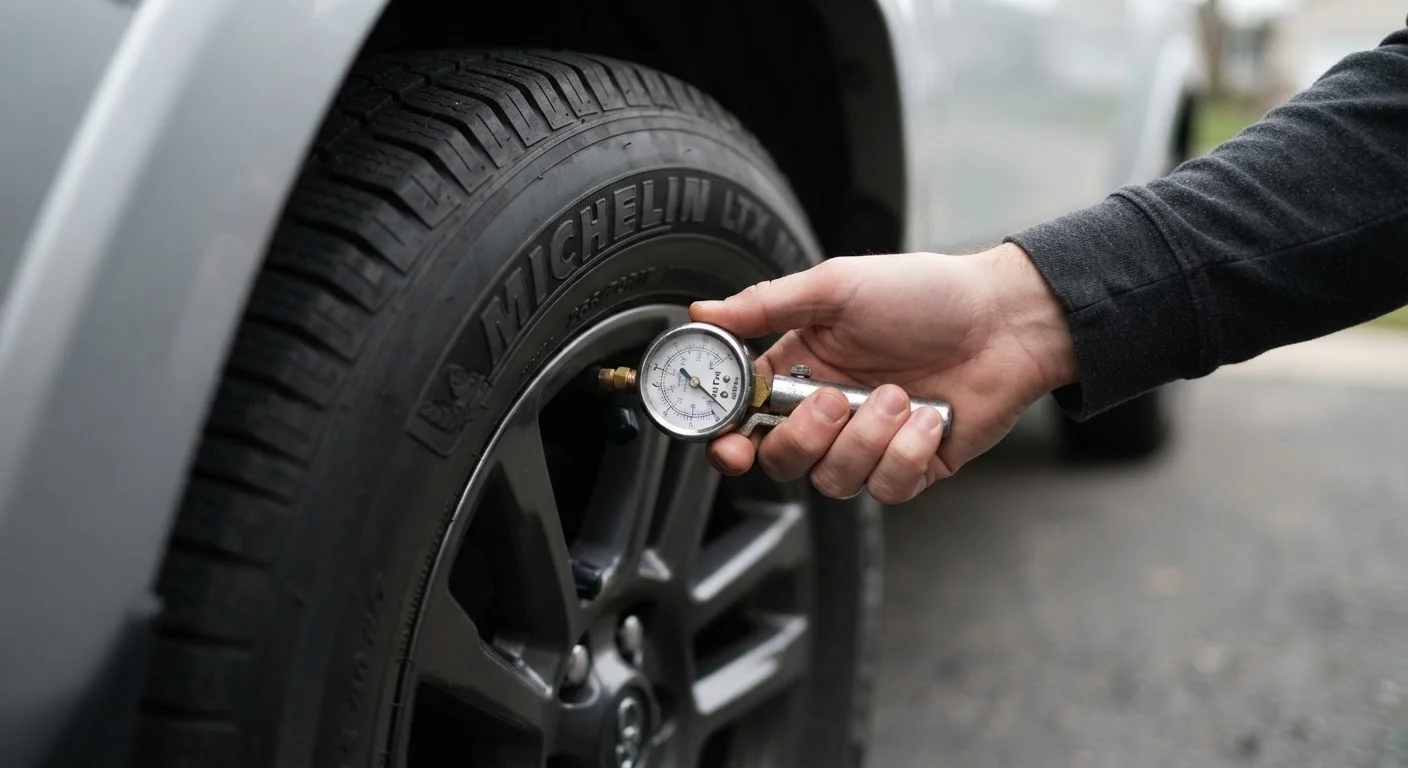
Photo: UltraSearches.com | Search Results You Can Trust editorial
Key Takeaways
- Your vehicle's recommended PSI is found on the driver's door jamb sticker, not on the tire sidewall.
- Tires lose roughly 1 PSI per month naturally, and about 1 PSI for every 10°F drop in temperature.
- Both underinflation and overinflation reduce safety - neither extreme is acceptable.
- Check tire pressure when tires are cold, before driving more than a mile.
- A quality tire gauge costs a few dollars and can prevent significantly more expensive repairs.
Why Tire Pressure Is Worth Your Attention
Tire pressure is one of those maintenance items that's easy to overlook - you can't see 5 PSI missing just by looking at a tire. But those invisible pounds of air affect nearly every interaction your car has with the road: braking distance, cornering stability, fuel consumption, and long-term tire life.
Proper inflation keeps the tire's contact patch - the area of rubber actually touching the pavement - at the shape engineers designed. Too little air and the contact patch distorts, causing uneven wear and excess heat buildup. Too much air and the center of the tread bears all the load, again causing uneven wear and reducing grip. As part of a broader maintenance routine, tire pressure sits alongside other basics covered in our routine maintenance guide.
Check Pressure Before You Drive
Reading the Numbers: What PSI Means and Where to Find It
PSI - pounds per square inch - is the unit used to measure how much air is compressed inside your tire. Every vehicle has a manufacturer-specified PSI range that reflects the car's weight, suspension design, and intended load.
The key number to use is on the driver's door jamb sticker. This is specific to your vehicle. The number molded into the tire sidewall (often labeled "Max Press" followed by a PSI value) is the tire's physical maximum - not the target for daily driving. Using that sidewall number can lead to overinflation.
Front and rear tires sometimes have different recommended pressures, especially on trucks and SUVs designed to carry loads. Check the door sticker carefully for both figures.
~1 PSI
Pressure lost per 10°F temperature drop
The U.S. Department of Energy and tire industry sources cite this as a general rule of thumb for seasonal pressure changes.
1 PSI/month
Natural air loss through normal permeation
Tires lose air gradually even without punctures, making monthly checks a practical maintenance baseline.
25% below
TPMS warning threshold (below recommended PSI)
Per NHTSA regulations, TPMS systems must warn drivers when pressure drops 25% or more below the vehicle manufacturer's recommended level.
How Pressure Changes - and Why Temperature Matters
Air expands when heated and contracts when cooled. This means tire pressure is not static - it shifts with the seasons, with time of day, and with driving. Tires typically lose about 1 PSI per month through normal permeation, even without a puncture. Cold weather accelerates that change: for roughly every 10°F drop in outside temperature, tire pressure falls about 1 PSI.
This is why winter mornings are a common time for a TPMS (Tire Pressure Monitoring System) warning light to appear. The sensor is doing its job, but by the time it lights up, pressure has already dropped noticeably below the recommended level. Manual monthly checks catch the drift before it becomes a problem. This also intersects with concerns explored in common car maintenance myths - temperature effects on tires are frequently misunderstood.
How to Check Tire Pressure Correctly
Checking pressure takes about five minutes and requires only a tire gauge, which can be purchased inexpensively at any auto parts store. Digital gauges tend to be more precise, but analog stick gauges also work reliably.
- Check when cold. Drive less than a mile before checking, or check before driving at all. Heat from driving temporarily raises pressure readings and produces inaccurate results.
- Remove the valve cap from the tire's stem - the short rubber or metal nozzle protruding from the rim.
- Press the gauge firmly onto the valve stem. A slight hiss is normal; a sustained hiss means the gauge isn't fully seated.
- Read the pressure and compare it to your door jamb specification.
- Add or release air as needed. Most gauges have a small release pin for letting air out. To add air, use a pump - portable electric pumps or gas station compressors both work.
For vehicles with higher mileage, consistent tire pressure checks become even more important. See our guide on keeping a high-mileage car on the road for context on how aging vehicles need closer attention to basics.
Spare Tires Need Checking Too
Signs Something Is Off - and What to Do
Beyond a TPMS warning light, several signs suggest your tires need attention:
- Uneven tread wear: Wear concentrated at the center suggests chronic overinflation; wear on both outer edges points to chronic underinflation.
- Pulling to one side: A significant pressure difference between left and right tires can cause the vehicle to drift.
- Rough or bouncy ride: Overinflated tires transmit more road imperfection into the cabin.
- Reduced fuel economy: If your MPG has dipped with no clear cause, underinflated tires are worth checking.
If a tire repeatedly loses pressure without an obvious puncture, the valve stem, wheel bead seal, or the TPMS sensor itself may be leaking. A qualified mechanic or tire shop can diagnose the source. Proper tire care connects naturally to the broader picture of fluid maintenance - both are easy wins that protect expensive systems.
This article provides general vehicle information for educational purposes. Always consult a qualified mechanic for diagnosis or repair of specific vehicle issues.
Frequently Asked Questions
The content on this site is for informational purposes only and is not a substitute for professional advice. Always consult a qualified professional for guidance specific to your situation.