
What's Actually Included in a Routine Tune-Up

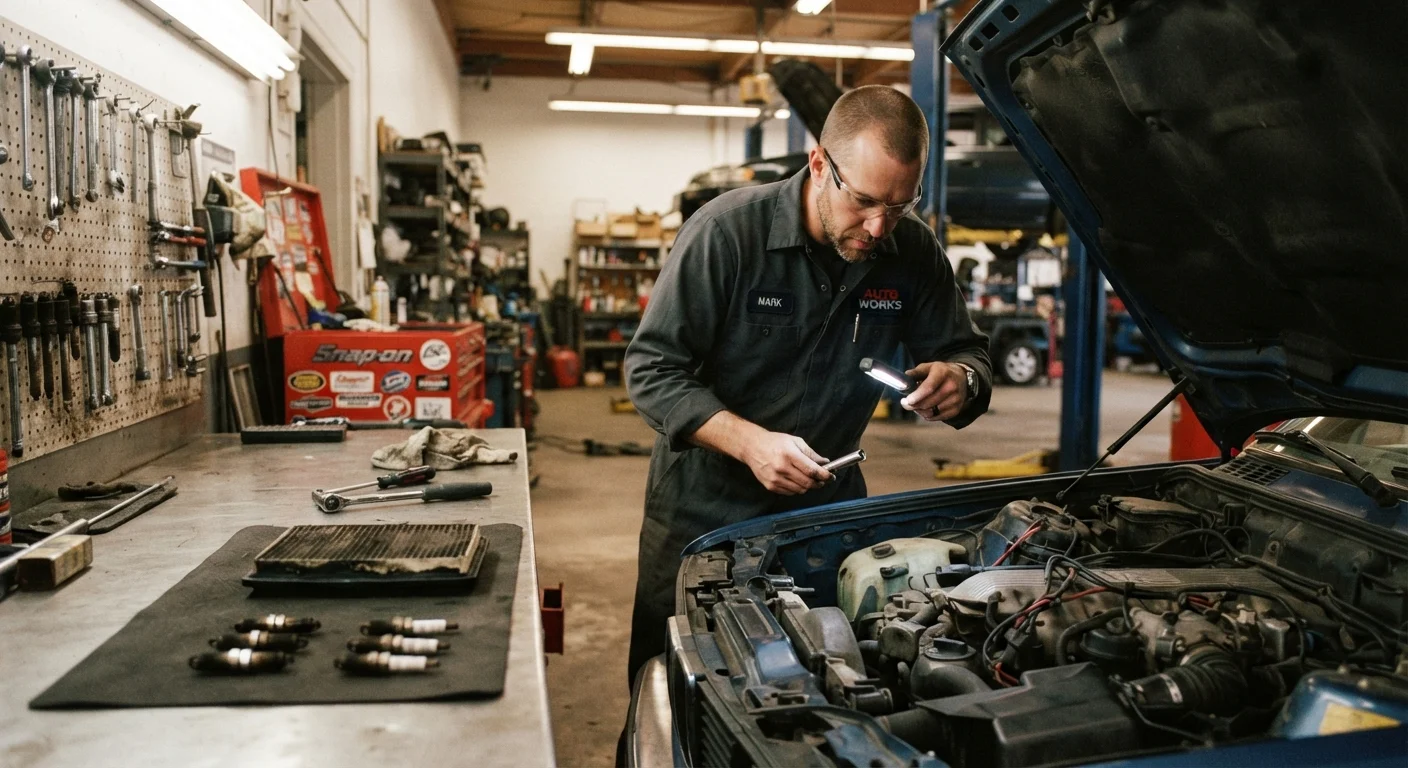
Photo: UltraSearches.com | Search Results You Can Trust editorial
Key Takeaways
- A tune-up has no single universal definition - the specific services vary by shop and vehicle.
- Spark plug replacement is the most consistent core component of any tune-up.
- Modern vehicles need tune-ups less frequently than older carbureted engines did.
- Always ask a shop to itemize exactly what a tune-up quote covers before authorizing work.
- Your owner's manual is the most reliable guide for what your specific vehicle actually needs and when.
Why 'Tune-Up' Means Different Things at Different Shops
Ask three mechanics what a tune-up includes and you may get three different answers. The term originated decades ago when gasoline engines used distributor caps, rotors, and breaker points that needed periodic adjustment to keep the ignition timing accurate. That's no longer how most vehicles work, but the label stuck - and shops now apply it to a range of services that can vary widely in scope and price.
For drivers, this ambiguity creates a real problem. Agreeing to a tune-up without knowing what's itemized is a bit like ordering a meal without seeing the menu. Before authorizing any service called a tune-up, ask the shop for a written list of exactly what they plan to inspect, replace, or adjust. That protects you from paying for redundant work and ensures nothing important is left out. For help interpreting what you're quoted, see our guide to reading a mechanic's estimate.
The Core Components Most Tune-Ups Cover
Despite the variation, certain services appear in nearly every tune-up across shops and vehicle types:
- Spark plugs: These ignite the air-fuel mixture in each cylinder. As they wear, they fire less reliably, causing misfires, rough idling, and reduced fuel efficiency. Replacing them is the most universally agreed-upon element of any tune-up.
- Air filter: A clogged engine air filter restricts airflow to the engine, which affects combustion efficiency. Replacement is inexpensive and straightforward.
- Cabin air filter: Separate from the engine filter, this keeps air circulating through the HVAC system clean. It's commonly bundled into tune-up packages even though it doesn't affect engine performance directly.
- Ignition components: On older vehicles, this means distributor caps and rotors. On many modern vehicles, it means inspecting coil-on-plug ignition components for wear or damage.
- Fuel system inspection: Some shops include a visual check of fuel injectors or add a fuel system cleaner, though the necessity of additives is debated among technicians.
30K-100K
Miles between spark plug replacements
Interval varies by plug type: copper plugs wear faster than iridium or platinum, per standard manufacturer guidance.
~15-25%
Potential fuel efficiency loss from worn plugs
The U.S. Department of Energy has noted that faulty or worn spark plugs can reduce fuel economy by a meaningful margin.
What a tune-up does not typically include: oil changes, tire rotations, brake service, or fluid top-offs - unless explicitly listed. These are separate maintenance tasks with their own schedules. See routine maintenance intervals your car actually needs for a broader view of what belongs on your maintenance calendar.
How Modern Engines Changed the Tune-Up
Fuel-injected engines with electronic ignition - standard on virtually all vehicles sold in the U.S. since the early 1990s - require far less frequent adjustment than their predecessors. There are no points to gap, no carburetor to rebuild, and no distributor timing to set manually. The engine control module (ECM) handles ignition timing dynamically.
The practical result: tune-up intervals are much longer. A car with copper spark plugs might need them replaced every 30,000 miles, but vehicles equipped with iridium or platinum plugs can often go 60,000 to 100,000 miles. The right interval for your car is in your owner's manual - not on a generic mileage sticker. Understanding how those intervals are determined is worth a read; our article on manufacturer maintenance schedules explains how your manual's timeline was built.
Start With Your Owner's Manual
When a Tune-Up Won't Solve the Problem
A tune-up is preventive maintenance, not a diagnostic service. If your check engine light is on, you're experiencing significant power loss, or your vehicle is running rough, a tune-up alone may not identify the root cause. A technician should run a diagnostic scan to pull any stored fault codes before recommending parts replacement.
Replacing spark plugs and filters in a car with an underlying sensor failure, vacuum leak, or fuel pressure problem won't resolve those symptoms - it just adds cost. When performance problems are the reason you're considering a tune-up, lead with diagnostics, then decide what services are actually warranted based on the findings.
This article is for general informational purposes only. Always consult a qualified mechanic for advice specific to your vehicle's condition and needs.
Frequently Asked Questions
The content on this site is for informational purposes only and is not a substitute for professional advice. Always consult a qualified professional for guidance specific to your situation.