
The Tradeoffs of Driving Assistance Technology: What It Can and Cannot Do

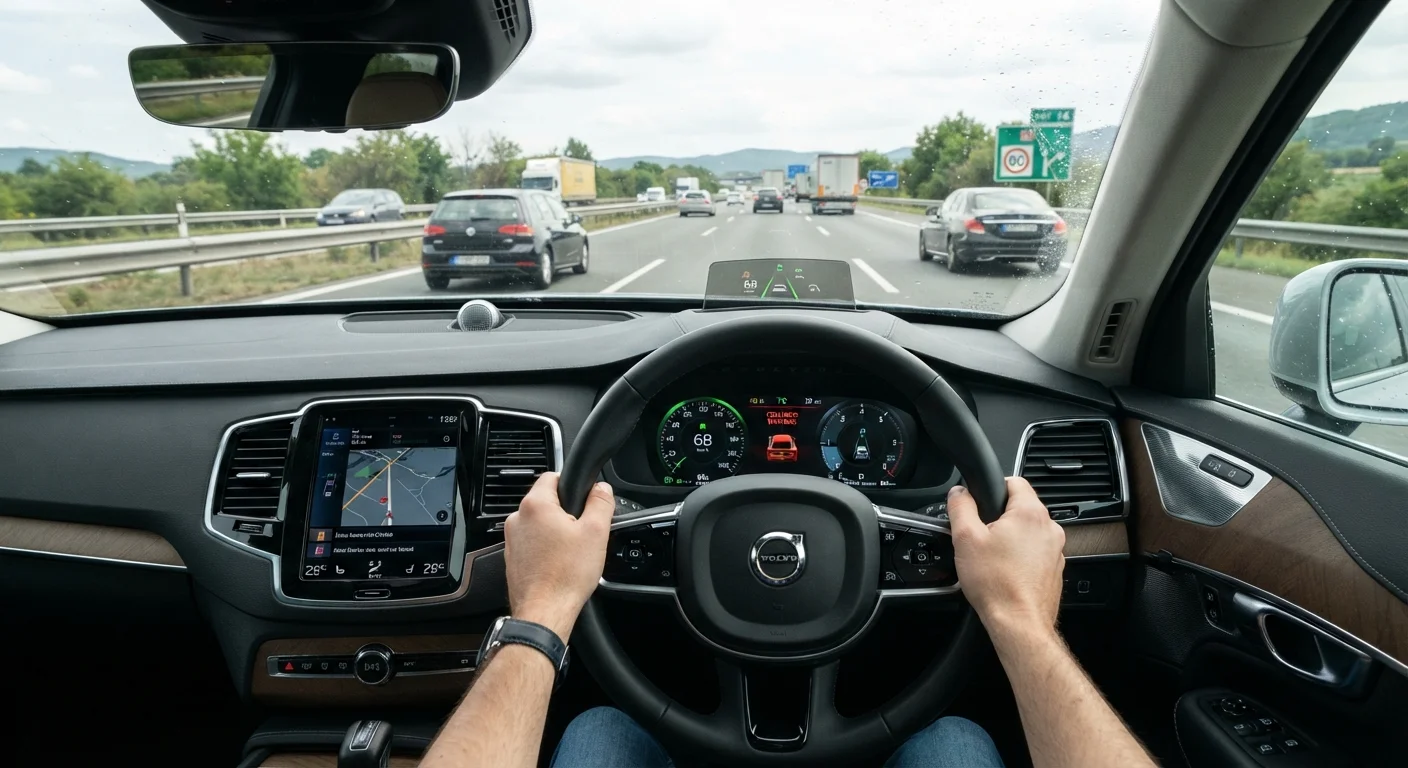
Photo: UltraSearches.com | Search Results You Can Trust editorial
Key Takeaways
- Driver assistance features like automatic emergency braking and lane-keeping assist reduce certain crash risks but cannot prevent all accidents.
- These systems perform best in clear conditions and may degrade in rain, snow, or heavy traffic.
- Over-reliance on driver assistance technology is a documented safety concern among researchers.
- Drivers retain full legal and practical responsibility for the safe operation of their vehicle.
- Understanding each feature's design limits helps you use it as a tool, not a substitute for attention.
Reduces rear-end collisions in controlled conditions
AEB systems have been shown in multiple highway safety studies to lower rear-end crash rates. The Insurance Institute for Highway Safety found vehicles equipped with AEB had significantly fewer rear-into-front crashes compared to vehicles without the feature.
Alerts drivers to blind-spot hazards they miss
Blind-spot monitoring catches vehicles that move into sensor range faster than a mirror check can confirm. This is particularly valuable during lane changes on multi-lane highways where traffic density is high.
Reduces fatigue-related lane drift on long drives
Lane-keeping assist can generate steering corrections or audible alerts when a vehicle drifts on long highway stretches, giving fatigued drivers a prompt before a minor drift becomes a serious incident.
Eases stop-and-go highway driving workload
Adaptive cruise control with low-speed follow capability reduces the physical demand of bumper-to-bumper traffic, which can lower driver frustration and micro-distraction events during slow commutes.
Supplements attention, not just reaction speed
Some systems monitor more input channels simultaneously than any human driver can - for example, tracking the vehicle ahead, adjacent lanes, and rear cross-traffic at the same time.
Sensor performance degrades in adverse weather
Cameras and radar can be obscured by heavy rain, snow, ice, or even road splash. Many systems display a warning and deactivate automatically, but drivers may not notice the system has gone offline.
Lane-keeping assist requires clear lane markings
Faded paint, construction zones, sharp curves, and intersections can cause lane-keeping systems to disengage or issue incorrect steering corrections. The system is not designed for unmarked or ambiguous road surfaces.
Automation complacency is a documented safety risk
Studies by AAA's Foundation for Traffic Safety indicate that drivers using partial automation features tend to reduce visual scanning and attentional engagement, creating a false sense that the system is fully managing the drive.
Systems cannot handle all collision geometries
AEB is typically optimized for straight-ahead rear-end scenarios. It often cannot detect crossing traffic, pedestrians in low-light conditions, or vehicles approaching from oblique angles outside the sensor's field of view.
False alerts can create driver frustration or distrust
Phantom braking - where AEB triggers unnecessarily due to shadows, overpasses, or stationary objects - has been widely reported. Repeated false alerts can lead drivers to disable useful systems entirely.
Repair and recalibration costs can be significant
ADAS sensors embedded in windshields, bumpers, and mirrors require precise calibration after even minor collisions or windshield replacements. Improper calibration can make a system unsafe without any visible indication.
What Driver Assistance Technology Actually Does
Modern vehicles increasingly come equipped with a suite of electronic systems grouped under the umbrella term Advanced Driver Assistance Systems, or ADAS. The most common include:
- Automatic Emergency Braking (AEB): Detects an imminent collision and applies brakes if the driver doesn't respond in time.
- Lane-Keeping Assist (LKA): Detects lane markings and nudges or steers the vehicle back if it drifts without a turn signal.
- Blind-Spot Monitoring (BSM): Alerts the driver when another vehicle enters a side blind zone.
- Adaptive Cruise Control (ACC): Maintains a set speed while automatically adjusting following distance behind the vehicle ahead.
- Rear Cross-Traffic Alert: Warns of approaching vehicles when reversing out of a parking space.
These systems rely on a combination of cameras, radar, ultrasonic sensors, and onboard computing. They are designed to reduce the consequences of specific, predictable driving errors - not to handle every situation the road presents.
For a broader view of how human habits compound or mitigate these risks, see our guide to defensive driving.
The Advantages: Where These Systems Add Real Value
When conditions align with a system's design parameters, driver assistance features can meaningfully reduce crash risk.
Reduces rear-end collisions in controlled conditions
AEB systems have been shown in multiple highway safety studies to lower rear-end crash rates. The Insurance Institute for Highway Safety found vehicles equipped with AEB had significantly fewer rear-into-front crashes compared to vehicles without the feature.
Alerts drivers to blind-spot hazards they miss
Blind-spot monitoring catches vehicles that move into sensor range faster than a mirror check can confirm. This is particularly valuable during lane changes on multi-lane highways where traffic density is high.
Reduces fatigue-related lane drift on long drives
Lane-keeping assist can generate steering corrections or audible alerts when a vehicle drifts on long highway stretches, giving fatigued drivers a prompt before a minor drift becomes a serious incident.
Eases stop-and-go highway driving workload
Adaptive cruise control with low-speed follow capability reduces the physical demand of bumper-to-bumper traffic, which can lower driver frustration and micro-distraction events during slow commutes.
Supplements attention, not just reaction speed
Some systems monitor more input channels simultaneously than any human driver can - for example, tracking the vehicle ahead, adjacent lanes, and rear cross-traffic at the same time.
50%
Reduction in rear-end crashes with AEB
The Insurance Institute for Highway Safety reported that vehicles equipped with forward collision warning plus automatic emergency braking had approximately 50% fewer rear-end crashes than vehicles without these features.
40%
Of drivers misunderstand automation capabilities
A AAA survey found that a significant share of drivers believe partial automation systems can drive the car independently, reflecting a widespread misunderstanding of how these features actually work.
Blind-spot monitoring addresses one of the most persistent dangers on multi-lane roads. Our highway driving safety guide covers why blind-spot neglect contributes so frequently to lane-change collisions and what habits complement the technology.
The Disadvantages: Where the Systems Fall Short
No driver assistance system works reliably in every scenario, and several well-documented limitations deserve serious attention.
Sensor performance degrades in adverse weather
Cameras and radar can be obscured by heavy rain, snow, ice, or even road splash. Many systems display a warning and deactivate automatically, but drivers may not notice the system has gone offline.
Lane-keeping assist requires clear lane markings
Faded paint, construction zones, sharp curves, and intersections can cause lane-keeping systems to disengage or issue incorrect steering corrections. The system is not designed for unmarked or ambiguous road surfaces.
Automation complacency is a documented safety risk
Studies by AAA's Foundation for Traffic Safety indicate that drivers using partial automation features tend to reduce visual scanning and attentional engagement, creating a false sense that the system is fully managing the drive.
Systems cannot handle all collision geometries
AEB is typically optimized for straight-ahead rear-end scenarios. It often cannot detect crossing traffic, pedestrians in low-light conditions, or vehicles approaching from oblique angles outside the sensor's field of view.
False alerts can create driver frustration or distrust
Phantom braking - where AEB triggers unnecessarily due to shadows, overpasses, or stationary objects - has been widely reported. Repeated false alerts can lead drivers to disable useful systems entirely.
Repair and recalibration costs can be significant
ADAS sensors embedded in windshields, bumpers, and mirrors require precise calibration after even minor collisions or windshield replacements. Improper calibration can make a system unsafe without any visible indication.
ADAS Does Not Equal Autonomous Driving
Over-reliance is perhaps the most insidious risk. Research from AAA and the Insurance Institute for Highway Safety has found that drivers who use semi-automated features regularly can become less attentive over time - a phenomenon sometimes called automation complacency. This connects directly to misconceptions drivers hold about hands-free and semi-automated systems. Our look at distracted driving myths unpacks how these false assumptions form.
Weather is a particular weak point. Rain, snow, mud, and frost can obscure the cameras and sensors these systems depend on. Driving in bad weather requires active skill adjustments that no current ADAS feature reliably compensates for.
What Drivers Should Actually Do
Understanding a feature's designed purpose is the starting point. Read your owner's manual - most describe exactly what conditions each system is tested to handle. Treat every assistance feature as a backup layer, not a primary one.
A few practical habits help:
- Keep sensors clean. Wipe camera lenses and radar units during winter or after driving on dusty roads. A blocked sensor can silently disable a system with no warning.
- Don't disengage your judgment. Adaptive cruise control following a vehicle ahead does not mean you can look away. The system cannot anticipate a stopped car around a curve or debris in the lane.
- Calibrate your expectations. Lane-keeping assist works best on clearly marked, straight highways. It may disengage or behave erratically on faded markings, tight curves, or construction zones.
- Know how to override. Every system can be overridden by deliberate driver input. Knowing when - and how - to take back manual control is a skill worth practicing.
If you're weighing vehicle features as part of a broader ownership decision, our resource on vehicle ownership essentials covers the financial and practical dimensions of choosing and maintaining a car. Insurance implications of ADAS features can also vary by provider - general information is available through resources like auto and home insurance basics.
This article provides general educational information about driver assistance technology and is not a substitute for professional automotive advice. Always consult your vehicle's manufacturer documentation and a qualified mechanic for guidance specific to your vehicle's systems.
The content on this site is for informational purposes only and is not a substitute for professional advice. Always consult a qualified professional for guidance specific to your situation.