
New Car, Used Car, or Certified Pre-Owned: What Each Option Actually Means

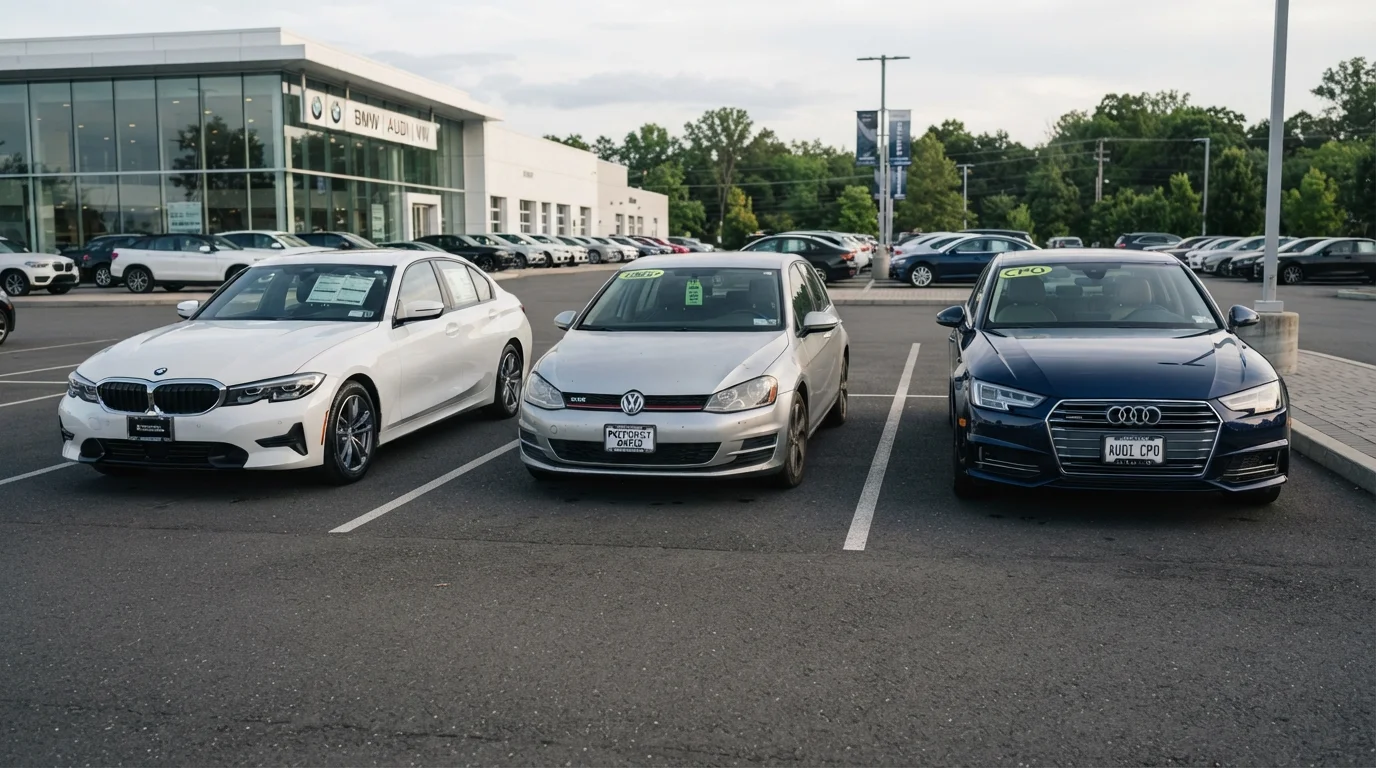
Photo: UltraSearches.com | Search Results You Can Trust editorial
Key Takeaways
- New cars offer the most warranty protection and latest features but depreciate fastest in the first year.
- Used cars carry the lowest purchase price but require more due diligence to avoid hidden problems.
- Certified Pre-Owned vehicles sit between the two: manufacturer-inspected with extended warranty coverage.
- CPO programs vary significantly by automaker - the label alone does not guarantee uniform standards.
- Financing rates, insurance costs, and long-term ownership expenses differ across all three categories.
What These Three Labels Actually Mean
Walking onto a car lot - or browsing online listings - you'll encounter three broad categories: new, used, and certified pre-owned (CPO). Each describes a distinct ownership history, inspection level, and warranty structure. Understanding what those distinctions mean in practice, not just in marketing language, is the starting point for any smart vehicle purchase.
New vehicles have never been titled or registered to a private owner. They come directly from the manufacturer through a franchised dealer, carry the full factory warranty, and reflect current model-year specifications. Used vehicles are any car that has been previously owned - this ranges from a one-year-old vehicle with low mileage to a decade-old car with a long service history. Certified Pre-Owned vehicles are a specific subset of used cars that have passed a manufacturer- or dealer-defined inspection process and typically come with an extended warranty backed by the automaker.
If you're approaching a major vehicle purchase for the first time, understanding key purchase fundamentals before you shop can help you evaluate any category more clearly.
New Cars: Full Protection, Fastest Depreciation
A new car's primary advantages are certainty and coverage. You know the full history - because there is none - and the factory warranty typically covers the powertrain for 5 years or 60,000 miles, with a bumper-to-bumper component warranty for 3 years or 36,000 miles (terms vary by manufacturer). New vehicles also carry the most current safety features, driver-assistance technology, and emissions compliance.
The significant trade-off is depreciation. New vehicles can lose a notable portion of their value within the first one to two years of ownership, making the first owner absorb the steepest portion of that loss. The sticker price is also the highest of the three options, which affects monthly payments, sales tax, and insurance premiums.
Check What's Left on the Factory Warranty
For a full picture of what new-car ownership actually costs beyond the purchase price, see our breakdown of the true cost of owning a car in America.
Used Cars: Lower Price, Higher Research Burden
A used vehicle's main appeal is price. Because depreciation has already reduced the vehicle's market value, buyers can access more vehicle for the same budget - or spend significantly less for equivalent transportation. Private-party sales and independent dealerships are the most common sources, though franchised dealers also sell used inventory.
The risk is proportional to the unknowns. Vehicle history reports (such as those from services that compile title, accident, and odometer data) reveal some of a car's past, but they don't capture every mechanical issue or deferred maintenance. This is why a pre-purchase inspection by an independent mechanic is a critical step - one that many buyers skip. Skipping an independent inspection carries real financial risk, as it can leave costly problems undetected until after the sale.
Used cars typically come with little to no remaining factory warranty unless the vehicle is still within the original coverage window. Extended service contracts are available from third parties but vary widely in terms, exclusions, and reliability.
| New Car | Used Car | Certified Pre-Owned | |
|---|---|---|---|
| Purchase Price | Highest | Lowest | Moderate - above used |
| Depreciation Risk | Steepest in year one | Absorbed by prior owner | Partially absorbed |
| Warranty Coverage | Full factory warranty | Little to none typically | Extended manufacturer-backed |
| Inspection Requirement | None needed | Independent inspection advised | Manufacturer multi-point required |
| Vehicle History | No prior history | Requires research and reports | Title and history verified |
| Financing Rates | Often lowest APR offers | Generally higher rates | Manufacturer rates may apply |
| Technology & Safety Features | Latest available | Varies by model year | Varies, within recent years |
Certified Pre-Owned: The Middle Path
CPO programs were developed by automakers to give buyers more confidence in used vehicles. To qualify, a vehicle generally must meet age and mileage thresholds (commonly under 5-6 years old and under 80,000 miles), pass a multi-point inspection, and have a clean title history. The automaker then backs an extended warranty - typically adding powertrain coverage beyond what remains from the original factory warranty.
The important caveat: CPO is not a universal standard. Each manufacturer defines its own inspection checklist, warranty terms, and eligibility criteria. A 172-point inspection from one brand may cover different items than a 150-point inspection from another. Reading the actual CPO program terms - not just the badge - matters.
CPO vehicles cost more than comparable non-certified used cars, sometimes by a meaningful margin. Whether that premium is worth it depends on how much warranty coverage remains on a non-CPO alternative, the vehicle's condition, and your risk tolerance. Once you've settled on a vehicle type, understanding your auto insurance options is the next practical step, since coverage costs differ by vehicle age, value, and use.
If you're also weighing how you'll pay for the vehicle, financing through a dealership vs. a bank or credit union involves trade-offs worth understanding before you sit down to sign.
~20%
Typical first-year depreciation on new cars
Industry data consistently shows new vehicles lose a significant share of value in the first 12 months, with the steepest drop occurring when the car is first driven off the lot.
2-3 yrs
Common CPO age eligibility limit
Many manufacturer CPO programs restrict eligibility to vehicles within approximately two to three model years of current production, though terms vary by brand.
The content on this site is for informational purposes only and is not a substitute for professional advice. Always consult a qualified professional for guidance specific to your situation.