
Reading Your Car's Dashboard Warning Lights

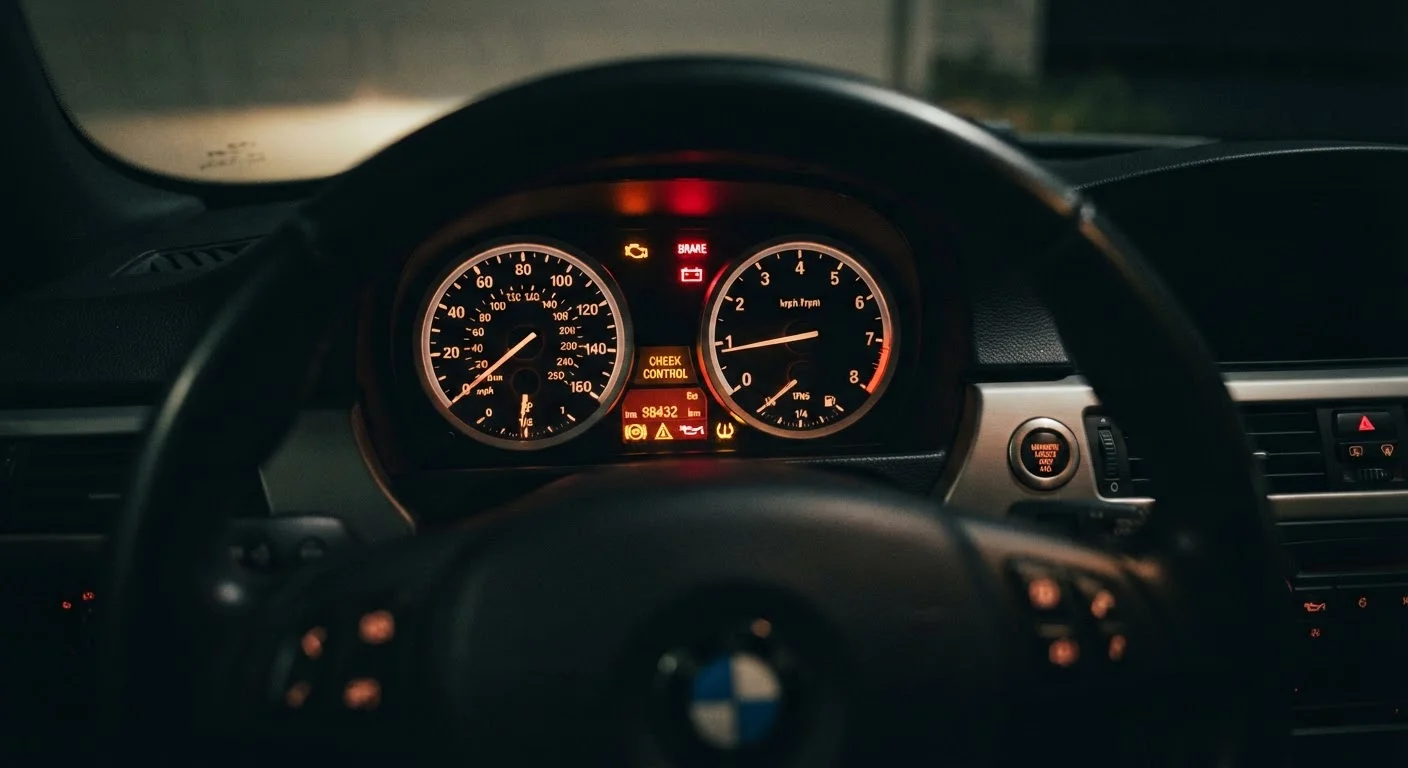
Photo: UltraSearches.com | Search Results You Can Trust editorial
Why Warning Light Color Matters First
Before decoding any individual symbol, understand the color system your vehicle uses. Most modern cars follow a consistent traffic-light logic:
- Red: Immediate action required. Stop driving when safe to do so.
- Amber/Yellow: Caution - service needed soon, but not necessarily an emergency.
- Green or Blue: System active notifications, not warnings (e.g., high beams on).
This framework applies across virtually all makes and models sold in the U.S., though the exact symbols can vary. Always cross-reference with your owner's manual. For a deeper look at what each symbol specifically means, see our full warning light decoder.
| Dashboard light color system | Red = stop now; Amber = service soon; Green/Blue = system active |
| Standardized OBD-II since | 1996 (all U.S. passenger vehicles) (U.S. EPA mandate) |
| Most commonly triggered light | Check Engine (General industry consensus) |
| Free fault code reads | Available at many auto parts retailers |
| Owner's manual reference | Always the authoritative source for your specific vehicle |
Red Lights: Stop and Take Action
Red dashboard lights signal conditions that can cause engine damage, brake failure, or safety hazards if ignored. The most critical ones include:
OBD-II
On-Board Diagnostics, second generation - a standardized system built into most vehicles sold in the U.S. after 1996 that monitors engine and emissions performance and stores fault codes readable by a scan tool.
TPMS
Tire Pressure Monitoring System - a sensor-based system that alerts the driver when one or more tires drops significantly below the recommended inflation pressure.
ABS
Anti-lock Braking System - an active safety feature that prevents wheels from locking up during hard braking, helping the driver maintain steering control.
Fault Code
A standardized alphanumeric code stored by the vehicle's onboard computer when a sensor or system reading falls outside expected parameters. A mechanic uses these codes as a diagnostic starting point.
Charging System
The combination of the alternator, battery, and related wiring that keeps the vehicle's electrical systems powered while the engine runs and recharges the battery.
- Oil Pressure Warning (oil can icon): Low or lost oil pressure. Pull over safely and shut off the engine immediately. Driving further can cause catastrophic engine damage within minutes.
- Engine Temperature (thermometer in water): Engine is overheating. Stop, turn off the engine, and do not open the radiator cap while hot.
- Battery/Charging System: The charging system has failed. Your car is running on battery reserve only - you may have limited time before it stalls.
- Brake System Warning: Could indicate low brake fluid, a brake system fault, or the parking brake being engaged. If the parking brake is off and this light remains on, have brakes inspected promptly. See our guide to brake wear signs for related symptoms to watch for.
- Seatbelt Reminder: A passenger or driver seatbelt is unfastened. Fasten belts before moving.
As a general rule: if a red light appears and you are unsure of the cause, err on the side of stopping.
Amber Lights: Schedule Service Soon
Yellow or amber lights generally indicate a developing issue that won't strand you immediately, but should not be deferred indefinitely. Ignoring them often leads to larger repair bills.
Flashing vs. Solid Check Engine Light
- Check Engine (engine silhouette): The onboard diagnostics system has logged a fault code. Causes range from a loose gas cap to a misfiring cylinder. A solid light means schedule service; a flashing light means reduce speed and seek service urgently.
- Tire Pressure Monitor (TPMS - exclamation point in a tire): One or more tires is significantly under- or over-inflated. Check pressures with a gauge; do not rely solely on the light to guide inflation level.
- Traction Control / Stability Control: System is actively working (flashing during a slip) or has been disabled/faulted (solid). A solid light warrants inspection.
- Transmission Temperature: Transmission fluid is running hot - often triggered by towing, heavy loads, or stop-and-go traffic in heat. Ease up on load and have fluid checked.
- ABS Warning: Anti-lock braking system has a fault. Standard braking still functions, but ABS assist may not engage in an emergency stop - a genuine safety concern requiring prompt repair.
Routine car maintenance appointments are the best defense against amber lights becoming red ones.
What to Do When a Light Comes On
Your immediate response should be proportional to the color and context:
- Note conditions: Was the light triggered after hitting a bump, during heavy rain, or at idle? This context helps your mechanic diagnose the issue.
- Check for obvious causes first: TPMS light? Check tire pressure. Battery light right after a jump-start? The alternator may not be charging.
- Do not assume it will reset itself: Some lights do clear after the issue resolves, but many require a diagnostic scan to confirm whether the underlying fault is gone.
- Get a diagnostic scan: Auto parts retailers often provide free OBD-II code reads. This gives you a starting point before authorizing repair work.
- Drive cautiously or stop: If road or weather conditions are already challenging, a warning light adds real risk. In poor conditions, maintaining control in bad weather becomes harder when a mechanical fault is also present.
This article is for general informational purposes only. For diagnosis and repair decisions, consult a qualified, licensed mechanic. Warning light behavior can vary by vehicle make, model, and year - always refer to your owner's manual.
The content on this site is for informational purposes only and is not a substitute for professional advice. Always consult a qualified professional for guidance specific to your situation.