
Selling Your Car Privately vs. Trading It In at a Dealership

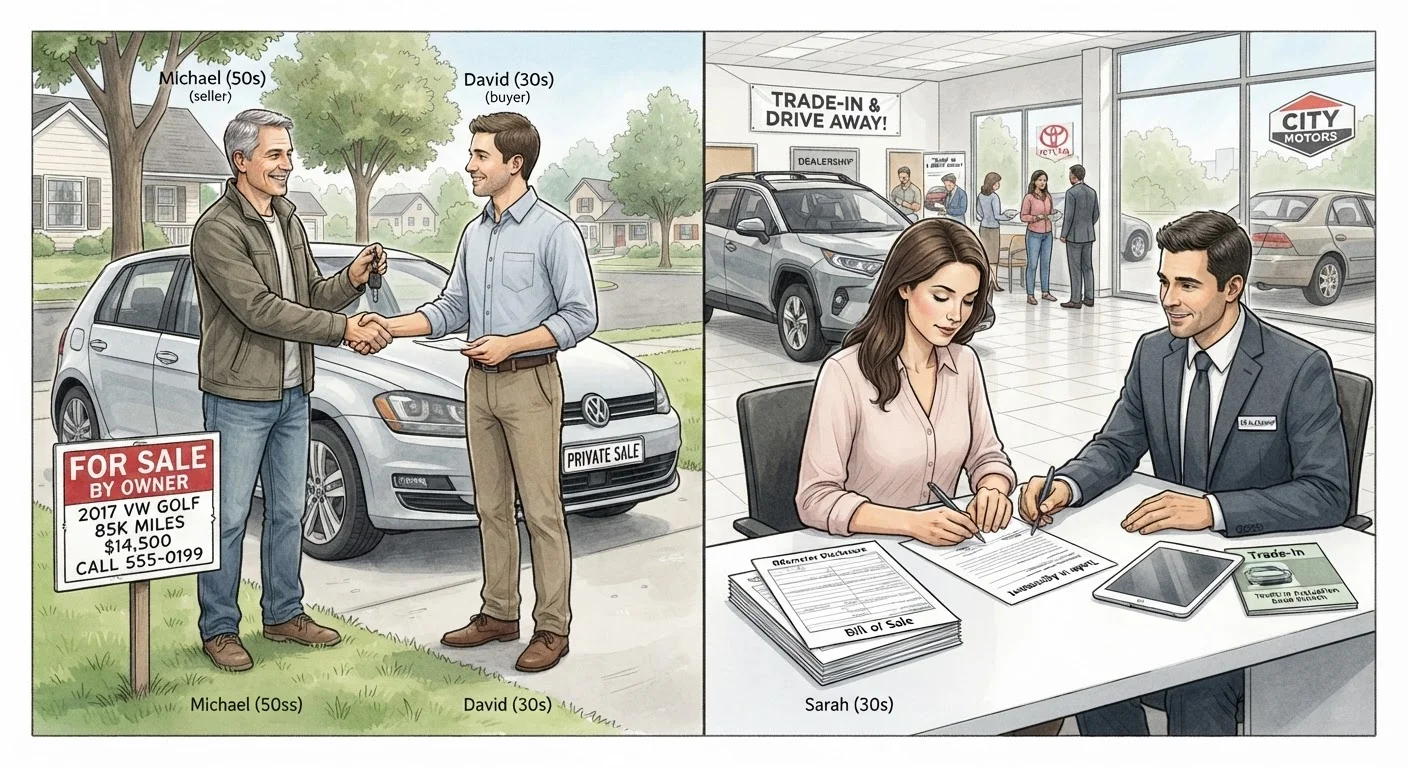
Photo: UltraSearches.com | Search Results You Can Trust editorial
Key Takeaways
- Private sales typically yield a higher sale price but require more time and effort from the seller.
- Dealership trade-ins are faster and more convenient but usually result in a lower offer.
- Tax savings on your next purchase may partially offset a lower trade-in value in some states.
- Paperwork and title transfer responsibilities differ significantly between the two routes.
- Your vehicle's condition, your timeline, and your tolerance for negotiation should guide the decision.
Higher potential sale price
Private buyers pay closer to market value because there's no dealer margin built in. The gap between a trade-in offer and a private-sale price is commonly several hundred to a few thousand dollars depending on the vehicle.
Full control over pricing and negotiation
You set the asking price, decide when to hold firm, and choose which offer to accept. This flexibility can be valuable if your vehicle is in strong demand.
No pressure to buy from the same seller
A private sale is a standalone transaction, so you're free to shop for your next vehicle completely independently without a bundled deal influencing either side.
Lower offer than private market value
Dealers factor in reconditioning costs, resale margin, and market risk when appraising a trade-in. Their offer will typically be below what a private buyer would pay.
Less negotiating leverage on the overall deal
When trade-in value and new-car price are negotiated together, it can be harder to evaluate whether you're getting a fair deal on each component independently.
Offer varies widely by dealership
Trade-in appraisals are not standardized. Getting multiple appraisals from different dealers is advisable before accepting an offer.
How Each Route Works
When you sell a car privately, you handle everything: setting the price, advertising, fielding inquiries, arranging test drives, negotiating, and completing the sale documents. When you trade in at a dealership, the dealer appraises your vehicle and applies its value toward your next purchase - handling most of the transaction for you.
Both paths result in you parting with your car, but the process, timeline, and financial outcome can differ substantially. Understanding the mechanics of each helps you choose with clear expectations rather than assumptions. For what happens after a sale is agreed, see our overview on how vehicle title transfers work.
The Case for Selling Privately
The primary draw of a private sale is price. Without the dealer's need to resell at a profit, you can list your car closer to its true market value and realistically expect more money than a trade-in offer.
Higher potential sale price
Private buyers pay closer to market value because there's no dealer margin built in. The gap between a trade-in offer and a private-sale price is commonly several hundred to a few thousand dollars depending on the vehicle.
Full control over pricing and negotiation
You set the asking price, decide when to hold firm, and choose which offer to accept. This flexibility can be valuable if your vehicle is in strong demand.
No pressure to buy from the same seller
A private sale is a standalone transaction, so you're free to shop for your next vehicle completely independently without a bundled deal influencing either side.
Platforms that connect private sellers with buyers have made listing a vehicle more accessible than it once was. That said, the seller bears full responsibility for screening buyers, arranging safe meeting locations, and ensuring payment is legitimate before handing over keys or title. Cashier's checks have historically been used in scams, so confirming funds is critical.
If your vehicle has a loan balance, you'll also need to coordinate payoff with your lender - a step that can complicate and slow the transaction.
The Case for Trading In
Trade-ins win on convenience and speed. The dealer appraises your car, cuts through the administrative complexity, and applies the value to your new purchase in a single visit. There's no need to field calls, meet strangers, or manage the title transfer yourself.
Lower offer than private market value
Dealers factor in reconditioning costs, resale margin, and market risk when appraising a trade-in. Their offer will typically be below what a private buyer would pay.
Less negotiating leverage on the overall deal
When trade-in value and new-car price are negotiated together, it can be harder to evaluate whether you're getting a fair deal on each component independently.
Offer varies widely by dealership
Trade-in appraisals are not standardized. Getting multiple appraisals from different dealers is advisable before accepting an offer.
One financial factor worth knowing: in many U.S. states, you pay sales tax only on the difference between the new vehicle's price and your trade-in value. Depending on your state's tax rate and the trade-in amount, this can partially offset the gap between a trade-in offer and a private-sale price. Consult your state's DMV or a tax professional to understand exactly how this applies where you live.
Sales Tax Offset: A State-by-State Variable
If you're also weighing how to pay for your next vehicle, our article on dealership financing vs. bank or credit union loans covers how those options compare.
Key Factors to Weigh Before You Decide
No single factor should make the decision for you. Consider the following together:
- Vehicle condition: Clean, well-maintained cars with service records often attract strong private offers. High-mileage or mechanically imperfect vehicles may be harder to sell privately and easier to offload via trade-in.
- Your timeline: If you need to move quickly - relocating, buying a new car today - a trade-in removes waiting time. Private sales can take days to weeks.
- Your comfort with negotiation: Private buyers negotiate. If that's uncomfortable or time-consuming for you, trade-ins offer a more structured process.
- Outstanding loan: If you owe more than the car is worth, both routes get complicated, but dealers are more experienced handling negative equity situations.
$1,000-$3,000+
Typical private vs. trade-in price gap
Industry observers and consumer automotive resources generally estimate private-sale prices exceed trade-in offers by this range, varying by vehicle type and condition.
Weeks vs. Hours
Average time to complete each transaction type
Trade-ins can close the same day as a new purchase, while private sales typically require listing, showing, and negotiating over days or weeks.
Whatever you decide, research your vehicle's current market value using independent pricing tools before entering any negotiation. Walking in with that number anchors the conversation and helps you evaluate any offer objectively. If you're simultaneously thinking about your next vehicle purchase, understanding the differences between new, used, and CPO vehicles can help clarify what you're buying into.
The content on this site is for informational purposes only and is not a substitute for professional advice. Always consult a qualified professional for guidance specific to your situation.