
Transferring a Vehicle Title in the US: What the Process Involves

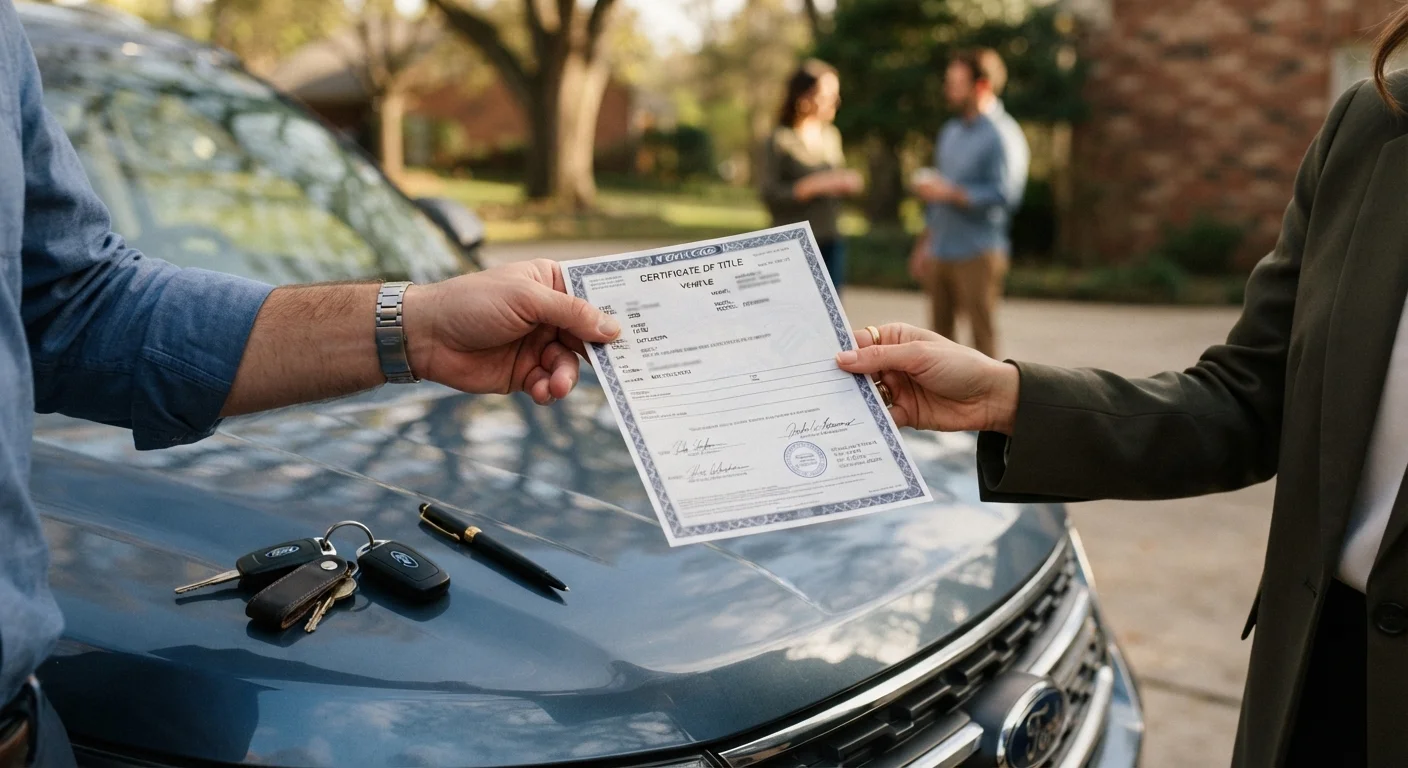
Photo: UltraSearches.com | Search Results You Can Trust editorial
Key Takeaways
- A vehicle title is the legal document that proves ownership of a car.
- Both buyer and seller must sign the title; errors can delay or void the transfer.
- Most states require the transfer to be completed within a set window - often 10 to 30 days.
- Title transfer fees, sales tax, and registration costs vary by state.
- Outstanding liens on a title must be resolved before ownership can legally change hands.
Why the Vehicle Title Matters
A vehicle title - sometimes called a "pink slip" - is the official legal document that establishes who owns a car. Without a clean title in your name, you do not have full legal ownership, regardless of whether you paid for the vehicle. This distinction has real consequences: you may struggle to register the car, obtain insurance, or sell it later.
Titles also reveal important history. A salvage title indicates the vehicle was previously declared a total loss by an insurer. A rebuilt title means it was subsequently repaired and passed inspection. A clean title signals no such events on record. Checking the title status is a standard part of evaluating any used vehicle - something worth considering alongside the guidance in our article on what new, used, and CPO vehicles actually mean.
Check Your State's Exact Requirements
What You'll Need Before Starting
Gathering the right documents upfront prevents delays at the DMV or motor vehicle agency. Requirements vary by state, but most transactions involve a common core set of materials.
What you will need
Vehicle Title (Original)
The primary legal document that must be signed over by the seller to initiate the transfer.
Bill of Sale
Documents the transaction price and terms; some states require it to calculate sales tax.
Odometer Disclosure Statement
Federal law requires sellers to disclose the odometer reading on most vehicles under 10 years old.
State-Specific Transfer Forms
Many states require additional DMV forms beyond the title itself; download these from your state's DMV website.
Proof of Insurance
Required at registration; the vehicle must be insured before it can be legally driven.
Vehicle History Report
Not required but recommended - confirms title status, accident history, and prior ownership.
Step-by-Step: Completing the Title Transfer
The steps below cover a standard private-party transaction. Dealership sales typically handle much of this on your behalf, but understanding the process helps you confirm nothing is missed. For context on the broader financial picture, see our breakdown of the true cost of owning a car in America.
Verify the title is clean and matches the seller
Before any money changes hands, confirm the name on the title matches the seller's ID, the VIN on the title matches the VIN on the dashboard and door jamb, and there are no active liens listed. Request a vehicle history report to cross-check the title status.
Complete the seller's section of the title
The seller must print and sign their name exactly as it appears on the title, enter the odometer reading, fill in the sale price, and date the document. Most states prohibit correction fluid (white-out) on titles - a single error typically requires a duplicate title application before the transfer can proceed.
Prepare a bill of sale
Both parties should sign a bill of sale that includes the vehicle's year, make, model, VIN, the agreed sale price, the date, and both parties' names and addresses. This protects the seller if the buyer delays registration and protects the buyer if a price dispute arises with the tax authority.
Submit the paperwork to your state's DMV
The buyer typically takes the signed title, bill of sale, odometer disclosure, any state-required forms, proof of insurance, and payment to the local DMV office or submits them by mail, depending on the state. Pay the title transfer fee, registration fee, and any applicable sales or use tax. The DMV will issue a new title in the buyer's name.
Receive and store the new title
Once processed, the DMV will mail a new title listing you as the registered owner. If you financed the purchase, the lender may hold the title until the loan is paid off. Store the title in a secure location - replacing a lost title requires an application and fee, and can slow a future sale.
Never Buy a Car Without a Title
Liens, Loans, and Complications
If the seller still owes money on the vehicle, a lender holds a lien on the title. The lien must be satisfied - meaning the loan paid off - before a clean title can be issued to the buyer. In practice, this often involves the buyer's payment going directly to the lender, who then releases the title. Your state's DMV can explain the exact procedure for lien releases.
Buying from a private seller is generally more paperwork-intensive than going through a dealership. Our article on selling privately vs. trading in at a dealership covers how these dynamics differ from the seller's side. Similarly, if you're financing the purchase, the lender may hold the title until the loan is repaid - a standard arrangement worth clarifying upfront, as explained in our piece on financing through a dealership vs. a bank or credit union.
This article provides general educational information about vehicle title transfers in the US. Requirements vary by state. Always verify the current rules with your state's DMV or motor vehicle agency before completing a transaction.
The content on this site is for informational purposes only and is not a substitute for professional advice. Always consult a qualified professional for guidance specific to your situation.