
Actual Cash Value vs. Replacement Cost in Home and Auto Claims

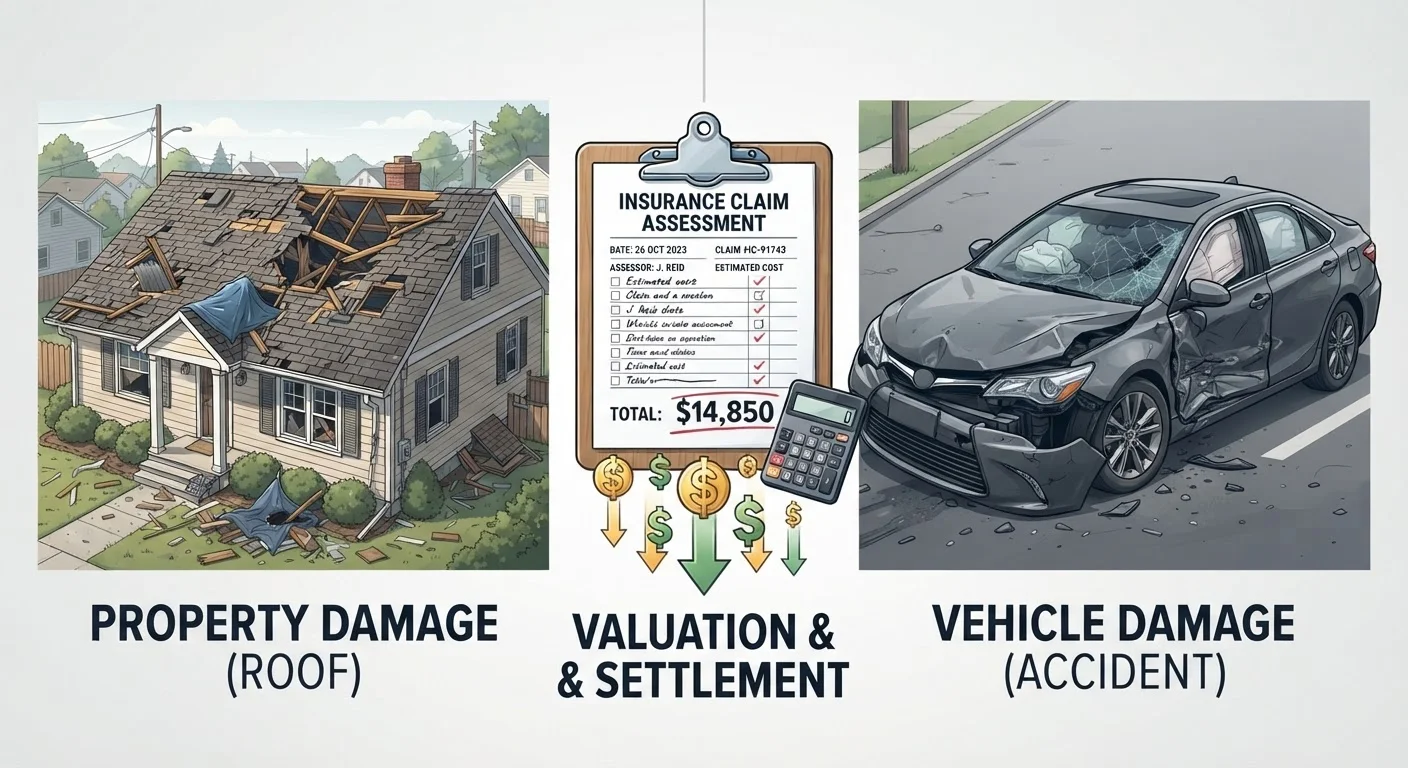
Photo: UltraSearches.com | Search Results You Can Trust editorial
Key Takeaways
- ACV pays out your property's depreciated value - what it's worth now, not what you paid.
- Replacement cost pays what it actually costs to repair or replace with new, comparable items.
- The gap between ACV and RCV can be thousands of dollars on a single home or auto claim.
- RCV coverage typically carries higher premiums than ACV coverage.
- Some policies pay ACV upfront and release the depreciation holdback once repairs are completed.
- Always read your policy's valuation clause carefully - terms vary significantly by insurer and state.
What the Two Valuation Methods Actually Mean
When you file a property or auto insurance claim, your insurer doesn't simply hand you whatever amount you feel you've lost. The payout is calculated using a valuation method spelled out in your policy - and the two most common are Actual Cash Value (ACV) and Replacement Cost Value (RCV).
Actual Cash Value is calculated by taking the cost to replace the damaged item and subtracting depreciation - the reduction in value caused by age, wear, and obsolescence. If a five-year-old roof costs $15,000 to replace but has depreciated by 40%, your ACV payout would be approximately $9,000, leaving you to cover the $6,000 difference out of pocket.
Replacement Cost Value pays the actual cost to repair or replace damaged property with new materials of like kind and quality, without a depreciation deduction. Using the same example, an RCV policy would pay the full $15,000 (minus your deductible). To understand how deductibles interact with either valuation method, see how deductibles work across auto and home policies.
| Criterion | Actual Cash Value (ACV) | Replacement Cost Value (RCV) |
|---|---|---|
| Payout basis | Depreciated market value today | Full cost to repair or replace new |
| Depreciation deducted | Yes - reduces payout | No - depreciation not subtracted |
| Premium cost | Generally lower | Generally higher |
| Out-of-pocket gap after loss | Potentially significant | Minimal (subject to deductible) |
| Best suited for | Older property, budget-conscious policyholders | Newer property, financed assets, risk-averse buyers |
| Common in home policies | Personal property (contents) default | Dwelling structure (standard option) |
| Common in auto policies | Standard total-loss valuation | Available as endorsement (new cars) |
How Depreciation Creates the Dollar Gap
Depreciation is the engine behind the ACV shortfall. Insurers use depreciation schedules - based on an item's expected useful life - to determine how much value has been consumed. A roof, HVAC system, or set of kitchen appliances all depreciate on different timelines, and the older the item, the steeper the reduction.
In auto insurance, this dynamic is especially pronounced. A car begins losing value the moment it leaves the dealership. Vehicle depreciation can strip 20% or more of a new car's value within the first year alone. If your car is declared a total loss and you carry ACV coverage, the insurer pays the vehicle's current market value - which may be well below what you still owe on a loan.
This gap is one reason lenders require comprehensive and collision coverage on financed vehicles, and why some drivers add GAP insurance - which covers the difference between ACV and the outstanding loan balance. For a broader view of how depreciation fits into total vehicle ownership, see the true cost of owning a car in America.
~20%
Average first-year vehicle depreciation
Industry data consistently shows new vehicles lose roughly 15-25% of their value within the first 12 months of ownership, widening the ACV gap early.
$6,000+
Typical depreciation gap on a mid-age roof claim
On a 10-year-old asphalt shingle roof, ACV payouts can fall $5,000-$8,000 short of actual replacement cost, based on general insurance industry examples.
Policy Structures Worth Understanding
Not every RCV policy pays the full replacement amount immediately. Many use a depreciation holdback structure: the insurer pays ACV upfront, then releases the withheld depreciation amount once you provide proof that the repairs or replacement have actually been completed. This protects insurers from paying out for work that never happens.
Homeowners should also be aware of extended replacement cost and guaranteed replacement cost riders - upgrades that go beyond standard RCV by covering cost overruns caused by material shortages or local labor inflation after a widespread disaster. These are distinct from standard RCV and typically carry additional premium.
On the auto side, some insurers offer new car replacement coverage as an endorsement - paying the cost of a brand-new equivalent vehicle rather than the depreciated market value, usually within the first year or two of ownership. These products vary significantly by insurer and state, so reading the specific policy language matters. For context on how different levels of auto coverage interact with valuation, see liability vs. full coverage auto insurance.
Valuation Terms Vary by Policy and State
Making the Right Call for Your Situation
Choosing between ACV and RCV is a trade-off between premium cost and financial exposure. RCV coverage costs more - because the insurer's potential payout is higher - but it significantly reduces the out-of-pocket burden after a significant loss.
A few practical considerations when reviewing your policy:
- Age of your home and its systems: Older roofs, HVAC units, and plumbing depreciate substantially. An ACV payout on a 20-year-old roof may not cover half the actual repair bill.
- Vehicle age and loan status: On a newer financed car, ACV may leave you underwater. On an older paid-off vehicle, the premium savings from ACV coverage may be worth accepting the lower potential payout.
- Your emergency reserves: ACV coverage is a calculated risk. If you have adequate savings to bridge the depreciation gap, it can be a cost-effective choice.
If you're planning to file a home insurance claim and want to maximize your payout under either valuation type, understanding the documentation process matters as much as the coverage itself. See filing a home insurance claim without undermining it for a step-by-step walkthrough.
This article is for general informational purposes only and does not constitute personalized insurance, financial, or legal advice. Coverage terms, valuation methods, and regulations vary by insurer, policy, and state. Always review your actual policy documents and consult a licensed insurance agent or adviser for guidance specific to your situation.
The content on this site is for informational purposes only and is not a substitute for professional advice. Always consult a qualified professional for guidance specific to your situation.