
Liability vs. Full Coverage Auto Insurance

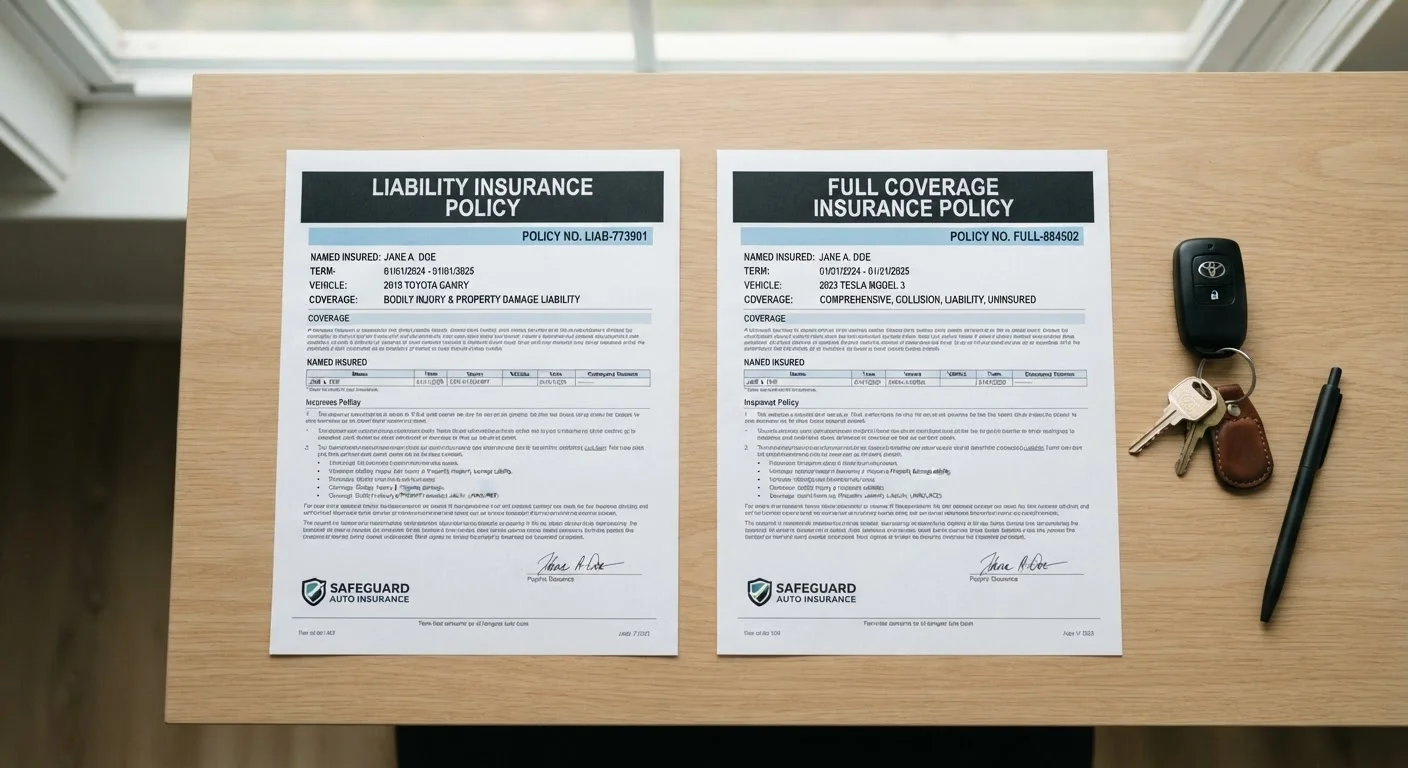
Photo: UltraSearches.com | Search Results You Can Trust editorial
Key Takeaways
- Liability coverage is legally required in nearly every state and protects other people - not your own vehicle.
- Full coverage adds collision and comprehensive protection, covering damage to your own car.
- Lenders typically require full coverage on financed or leased vehicles.
- The right choice depends on your vehicle's value, your savings, and your financial risk tolerance.
- Neither term is precisely defined by law - always read your actual policy documents carefully.
What Liability Coverage Actually Means
Liability coverage is the foundation of any auto insurance policy - and in most U.S. states, it is legally required to operate a vehicle. Despite its central role, it is often misunderstood. Liability coverage pays for harm you cause to other people and their property when you are at fault in an accident. It does not pay to repair your own vehicle or cover your own injuries.
A standard liability policy has two components:
- Bodily injury liability: Covers medical expenses, lost wages, and legal costs for people injured in an accident you caused.
- Property damage liability: Pays to repair or replace another driver's vehicle or property you damage.
State minimums for liability coverage vary considerably. A state might require limits expressed as 25/50/25 - meaning $25,000 per injured person, $50,000 per accident for bodily injury, and $25,000 for property damage. These minimums may be inadequate in a serious accident, so many policyholders carry higher limits. For a plain-language breakdown of these coverage types, see our auto insurance basics guide.
Uninsured and Underinsured Motorist Coverage
What "Full Coverage" Adds to the Picture
"Full coverage" is not a single, standardized product - it is an informal term that typically refers to a policy combining liability, collision, and comprehensive coverage. Understanding each layer clarifies what you are actually buying.
- Collision coverage: Pays to repair or replace your vehicle after a crash, regardless of fault - whether you hit another car, a guardrail, or a tree.
- Comprehensive coverage: Covers non-collision damage to your vehicle, including theft, fire, hail, flooding, falling objects, and animal strikes.
Together, these two coverages extend protection to your own vehicle. Most lenders and leasing companies require both when a car is financed or leased, as the vehicle serves as collateral on the loan. The cost of full coverage depends on many factors, including your vehicle's value, your driving history, and the deductible you select. For more on where coverage gaps often appear, see what your auto policy actually covers.
| Criterion | Liability-Only | Full Coverage |
|---|---|---|
| Covers damage to others | Yes | Yes |
| Covers your own vehicle damage | No | Yes (collision + comprehensive) |
| Covers theft or weather damage | No | Yes (comprehensive) |
| Required by state law | Generally yes (minimums) | Not by law, but by lenders |
| Typical premium cost | Lower | Higher |
| Deductible applies | No (for third-party claims) | Yes (for collision/comprehensive) |
| Best suited for | Older, lower-value vehicles | Newer or financed vehicles |
Making the Decision: Key Factors to Weigh
Choosing between liability-only and full coverage involves weighing your vehicle's value against the ongoing premium cost and your own financial cushion. There is no universal correct answer - the calculation is personal.
~13%
Estimated uninsured drivers on U.S. roads
The Insurance Research Council has estimated that roughly 1 in 8 drivers may be uninsured, underscoring why adequate liability limits matter.
$4,700+
Average collision claim payout
Industry data from the Insurance Information Institute indicates average collision claims have exceeded several thousand dollars, illustrating the financial exposure of going without collision coverage.
Vehicle value is typically the starting point. A common rule of thumb is to compare the annual cost of collision and comprehensive coverage against roughly 10% of the car's market value. If the coverage costs more than that benchmark, dropping to liability-only may be worth considering. However, this is a general heuristic, not a guarantee of the right outcome for your situation.
Your savings and risk tolerance also matter. If your car were totaled tomorrow, could you cover the gap or replace the vehicle without significant financial hardship? If not, retaining full coverage provides a meaningful safety net.
Life changes can shift the calculus. Paying off a loan, purchasing a newer car, or adding a teen driver to the policy are all moments when your coverage needs may change. Our article on reviewing coverage after major life changes walks through this process in detail.
If your liability limits feel insufficient, you may also want to explore whether a umbrella policy could extend your protection beyond standard auto policy limits. And for clarity on how claim payouts are calculated - particularly the difference between actual cash value and replacement cost - see our guide on actual cash value vs. replacement cost.
This article is for general informational and educational purposes only and does not constitute personalized insurance, financial, or legal advice. Coverage terms, exclusions, limits, and requirements vary by insurer and by state. Always read your policy documents carefully and consult a licensed insurance agent or adviser before making coverage decisions.
The content on this site is for informational purposes only and is not a substitute for professional advice. Always consult a qualified professional for guidance specific to your situation.