
Carrying a Balance Won't Help Your Credit Score

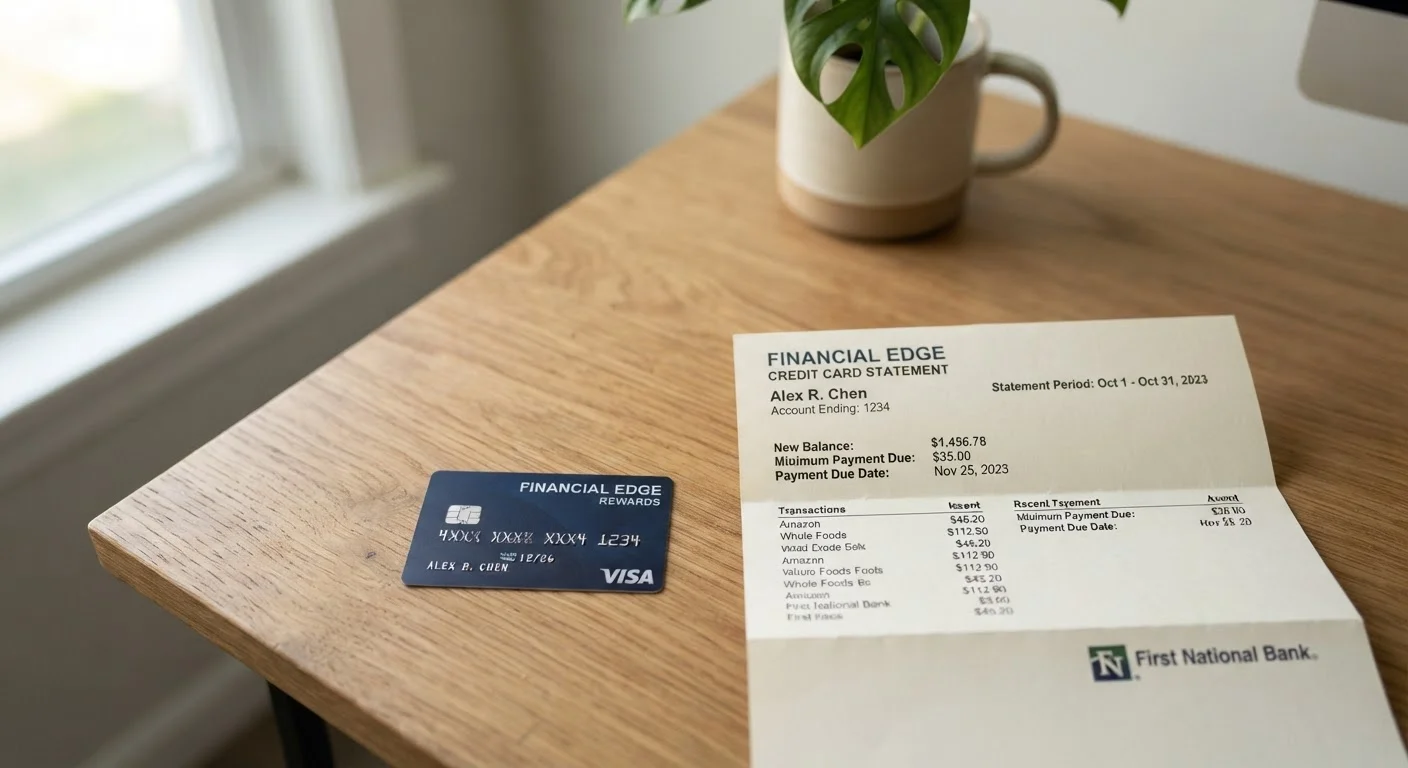
Photo: UltraSearches.com | Search Results You Can Trust editorial
Key Takeaways
- Paying your balance in full each month does not hurt your credit score.
- Credit scores reward on-time payments and low utilization, not carried balances.
- Interest charges from carrying a balance provide zero scoring benefit.
- Credit utilization above 30% can actively drag your score down.
- Using your card regularly and paying in full is the optimal credit-building habit.
Where the Myth Comes From
Ask around and you'll still find people who swear that leaving a small balance on a credit card - say, $10 or $20 - helps build credit faster than paying it off entirely. The logic sounds almost reasonable: if you owe something, you're demonstrating that you use credit responsibly, right?
Wrong. This myth likely spread because people conflated using credit (good) with carrying a balance (unnecessary and costly). The two are not the same thing. To understand why, it helps to know what credit scores actually measure. Our credit score explainer breaks down every scoring factor in plain terms.
Myth
Leaving a small balance on your credit card each month shows lenders you're actively using credit and helps your score.
Fact
Paying your balance in full every month is better for your score and costs you nothing in interest.
Credit scoring models have no mechanism that rewards you for carrying a balance or paying interest. What they do track is whether you pay on time and how much of your available credit you're using. Paying in full satisfies both criteria perfectly - your payment history stays clean and your utilization stays low.
Myth
If you pay off your card completely, the issuer won't report any activity and your score won't improve.
Fact
Card activity is reported regardless of whether you carry a balance; a paid-in-full account still shows up as active and responsibly managed.
Card issuers typically report your account status, credit limit, and statement balance to the credit bureaus each month - whether you owe $0 or $500. An account showing regular use and a zero or near-zero balance after payment is a positive signal to scoring models, not a neutral one.
Myth
A higher balance means you're using more credit, which proves creditworthiness to lenders.
Fact
Higher balances relative to your credit limit raise your utilization ratio, which can lower your score.
Creditworthiness, in the eyes of scoring models, is demonstrated by managing credit responsibly - not by carrying debt. High utilization suggests financial strain to lenders, even if you intend to pay it off. Keeping balances low relative to limits is a straightforward way to signal reliability.
Myth
You need to pay interest to a lender before they'll consider you a real credit user.
Fact
Interest payments go to the lender's revenue - they are not a factor in any credit scoring formula.
Credit bureaus and scoring models do not have access to whether you paid interest or paid in full. They see your balance, your limit, your payment history, and your account age. None of those inputs change based on whether your lender earned interest from you that month.
What Actually Moves Your Score
Credit scores - whether FICO or VantageScore - are built from a defined set of factors. None of those factors reward you for paying interest to a lender. The two that matter most are payment history (roughly 35% of a FICO score) and amounts owed, which includes your credit utilization ratio (roughly 30%).
~35%
Share of FICO score from payment history
According to FICO's published scoring criteria, payment history is the single largest factor in a standard FICO score calculation.
~30%
Share of FICO score from amounts owed
FICO's framework counts amounts owed - including credit utilization - as the second most heavily weighted scoring factor.
Under 30%
Commonly recommended utilization ceiling
Consumer finance educators and credit counselors broadly recommend keeping revolving credit utilization below 30% to avoid negative scoring pressure.
Credit utilization is the percentage of your available revolving credit that you're using at any given time. Carrying a $500 balance on a $1,000-limit card puts you at 50% utilization - a level that most scoring models view negatively. Keeping utilization low, ideally under 30% and preferably under 10%, is one of the most reliable ways to support a strong score. For a deeper look at how this ratio works, see our guide on credit utilization and your score.
Paying your statement balance in full each month keeps utilization low, avoids interest entirely, and still demonstrates active, responsible card use - which is exactly what lenders want to see.
The Real Cost of Following This Myth
Beyond doing nothing for your score, carrying a balance actively costs you money. Credit card interest rates are typically high, and interest compounds monthly. A small balance you thought was helping you build credit is, in practice, a recurring fee with no benefit attached.
High APRs Make Carried Balances Expensive Fast
There's also a subtler risk: habitually leaving balances makes it easier to let them grow. What starts as $30 can drift to $300. That trajectory is explored in detail in our piece on why minimum payments feel like quicksand. And some behaviors tied to balance-carrying - like missing a payment during a tight month - can quietly undermine a score you've been working to build. Our article on habits that erode credit scores covers those patterns.
On-Time Payment Is the Single Biggest Lever
The bottom line is straightforward: use your credit card, pay the statement balance in full by the due date, and repeat. That habit - not a lingering balance - is what actually builds a strong credit profile over time.
This article is for general informational and educational purposes only and does not constitute personalized financial or credit advice. For guidance specific to your financial situation, consult a qualified financial professional.
The content on this site is for informational purposes only and is not a substitute for professional advice. Always consult a qualified professional for guidance specific to your situation.