
Credit Utilization: The Ratio That Quietly Shapes Your Score

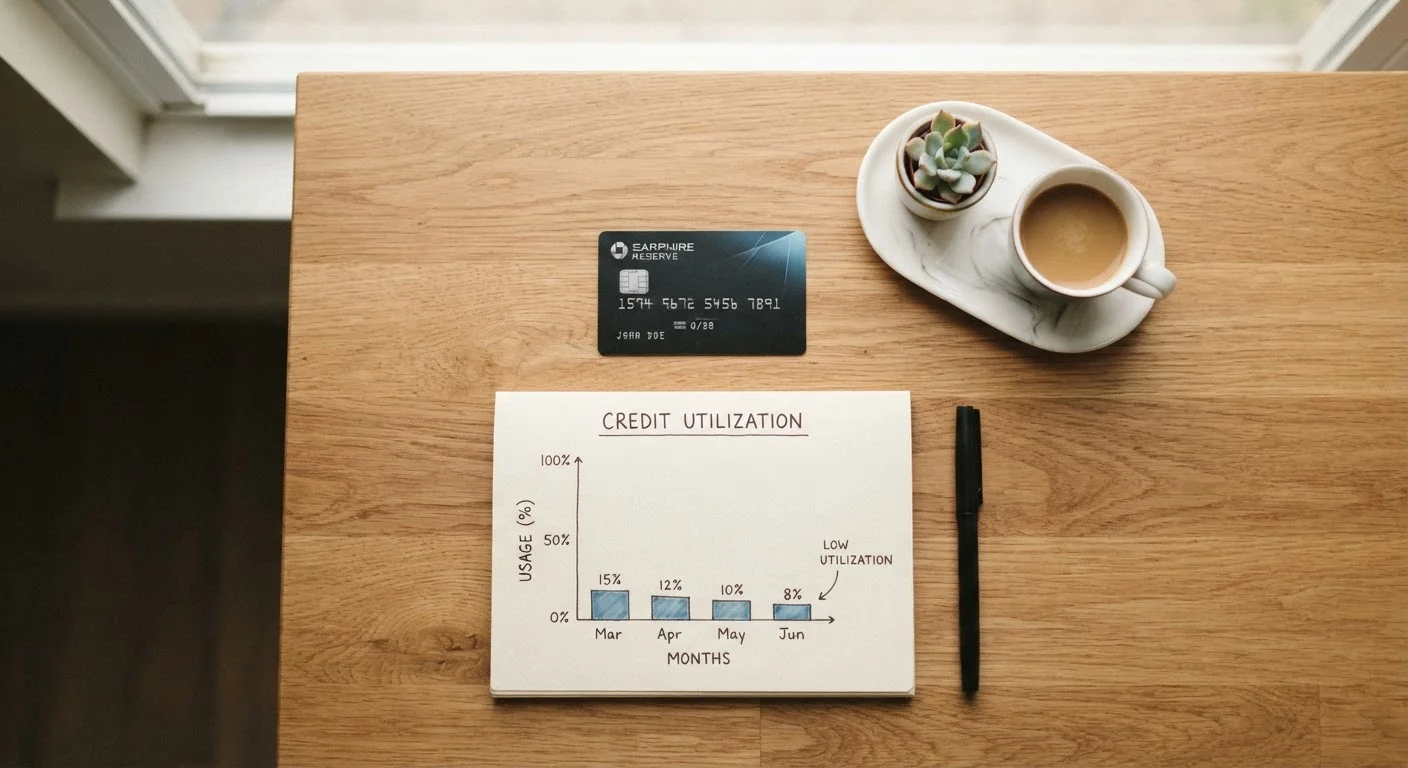
Photo: UltraSearches.com | Search Results You Can Trust editorial
Key Takeaways
- Credit utilization typically accounts for roughly 30% of a FICO score, making it the second-largest scoring factor.
- Most credit experts suggest keeping utilization below 30%, though lower is generally better for your score.
- Scoring models capture a snapshot of your balances, usually when issuers report to bureaus - often around your statement date.
- Paying down balances or requesting a credit limit increase can reduce utilization and potentially improve your score.
- Closing a credit card reduces your total available credit, which can push utilization higher even if your balances stay the same.
How Credit Utilization Is Calculated
The math is straightforward. Add up all your revolving credit balances - primarily credit cards and lines of credit - then divide that total by your combined credit limits across those accounts. Multiply by 100 to get a percentage.
Example: Three cards with limits of $3,000, $4,000, and $3,000 give you $10,000 in total available credit. If your balances are $800, $500, and $200, your aggregate utilization is $1,500 ÷ $10,000 = 15%.
Installment loans - like auto loans or mortgages - are generally not included in utilization calculations, though they factor into other parts of your score. For a full picture of what drives your number, see Credit Scores Decoded.
~30%
Share of FICO score driven by amounts owed
FICO's publicly disclosed score factor breakdown places "amounts owed," dominated by credit utilization, as the second-largest category in its scoring model.
Under 30%
Commonly recommended utilization ceiling
While no scoring model publishes a hard cutoff, credit counselors and financial educators broadly cite 30% as a practical guideline for maintaining a healthy score.
1-2 cycles
Typical time for utilization changes to appear in score
Because issuers report balances monthly, paying down a balance can reflect in your credit score within one to two billing cycles - much faster than most other scoring factors.
Why Lenders and Scoring Models Care
High utilization signals that a borrower may be stretched thin or heavily reliant on credit to cover expenses - both patterns that correlate with higher default risk. Scoring models reward borrowers who use credit but don't lean on it too hard.
Under the FICO scoring model, the "amounts owed" category - which is dominated by utilization - accounts for approximately 30% of your score. Only payment history, at roughly 35%, carries more weight. That means a sustained spike in utilization can drag a strong score down meaningfully, even if you've never missed a payment.
“Amounts owed is about more than just how much you owe - it's about how much of your available credit you're actually using. Using a high percentage of available credit can indicate that a person is overextended and more likely to make late or missed payments.”
— myFICO.com, Consumer education resource operated by Fair Isaac Corporation (FICO)
It's also worth noting that utilization is one of the most responsive factors in credit scoring. Unlike a derogatory mark, which can linger for years, a high utilization ratio resets as soon as your balance drops and the issuer reports the change.
Common Mistakes That Push Utilization Higher
Several routine financial moves can quietly raise your utilization without you realizing it:
- Closing old cards: When you close a card, you lose its credit limit. If your balances stay the same, utilization rises. This is one of the habits that quietly erode a good credit score over time.
- Putting large purchases on a single card: Even if you plan to pay it off, the balance may be reported before you do, temporarily spiking that card's individual utilization.
- Carrying a balance intentionally: Some people believe leaving a small balance improves their score - that's a myth. Paying in full is better for both your wallet and your utilization. Carrying a balance won't help your credit score.
Time Your Payments Strategically
Practical Steps to Lower Your Utilization
Reducing utilization doesn't require a dramatic overhaul - a few targeted actions can make a measurable difference:
- Pay down balances before the statement closes, not just before the due date. This reduces the balance your issuer reports to bureaus.
- Make multiple payments per month if you carry a balance, to keep the reported figure lower.
- Request a credit limit increase on existing cards - the same balance becomes a smaller percentage of a larger limit. Be aware this may trigger a hard inquiry.
- Spread spending across multiple cards rather than concentrating charges on one, to avoid high per-card utilization.
- Avoid closing unused cards unless there's a compelling reason (like an annual fee you can't justify), since open accounts contribute to your total available credit.
You can track your balances and limits by regularly reviewing your credit report. Our field guide to reading your credit report walks through every section worth monitoring.
This article is for general informational and educational purposes only and does not constitute personalized financial or credit advice. Consult a qualified financial professional for guidance tailored to your individual situation.
Frequently Asked Questions
The content on this site is for informational purposes only and is not a substitute for professional advice. Always consult a qualified professional for guidance specific to your situation.